Author: admin

  • Smart Security: The Shift to Automated Key Control Systems in Commercial Real Estate

    Smart Security: The Shift to Automated Key Control Systems in Commercial Real Estate

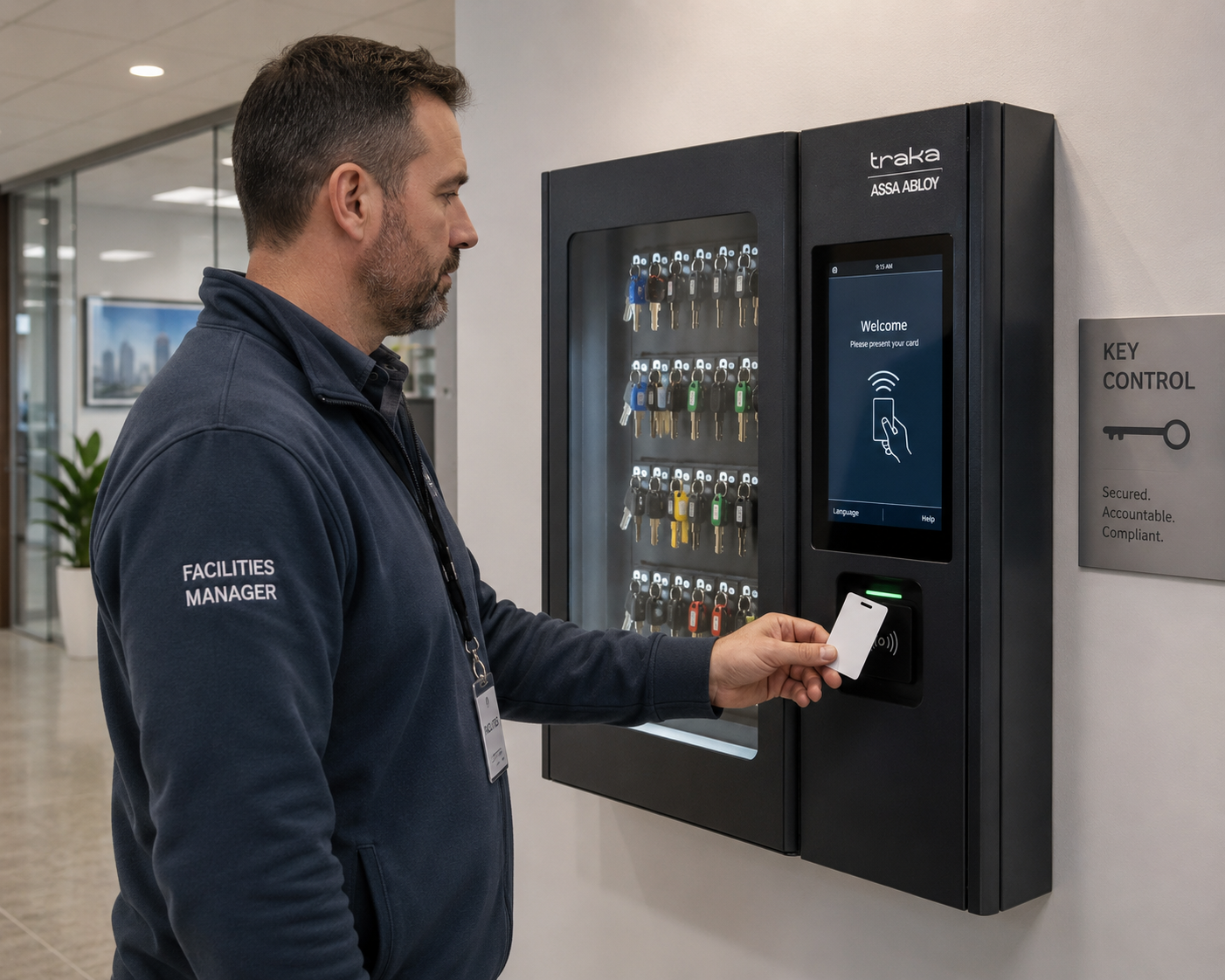
    In the fast-paced world of property management, the physical key remains a vital yet highly vulnerable asset. For high-rise offices, retail hubs, and multi-tenant facilities across the UK, managing thousands of master, mechanical, and service keys is an absolute operational challenge. Traditional methods—like manual logbooks, open pegboards, or simple key boxes—frequently lead to accountability gaps, expensive rekeying, and administrative gridlock. To protect high-value spaces and ensure seamless operations, forward-thinking property management teams are replacing obsolete setups with automated key control systems.

    At Keysystem, as a trusted reseller of enterprise-grade security tech, we help facility managers transition from manual tracking to precise, digital oversight. Installing a digital key cabinet for commercial buildings is the single most effective way to eliminate human error, lower liabilities, and completely future-proof your building’s perimeter.

    The Operational Risk of Manual Key Management

    Before exploring the financial and security benefits of a modern system, it is vital to analyze why legacy systems fail. In a busy commercial complex, keys constantly rotate between facility managers, maintenance technicians, security personnel, and third-party contractors.

    If a master key goes missing in a standard paper-based tracking setup, identifying the last holder is almost impossible. The real-world consequence isn’t just the small cost of a replacement key—it is the catastrophic expense of changing dozens of mechanical locks across the premises to maintain security compliance. By shifting to automated key control systems, businesses instantly gain 100% accountability, ensuring no key is unaccounted for or leaves the property without authorization.

    How a Digital Key Cabinet for Commercial Buildings Operates
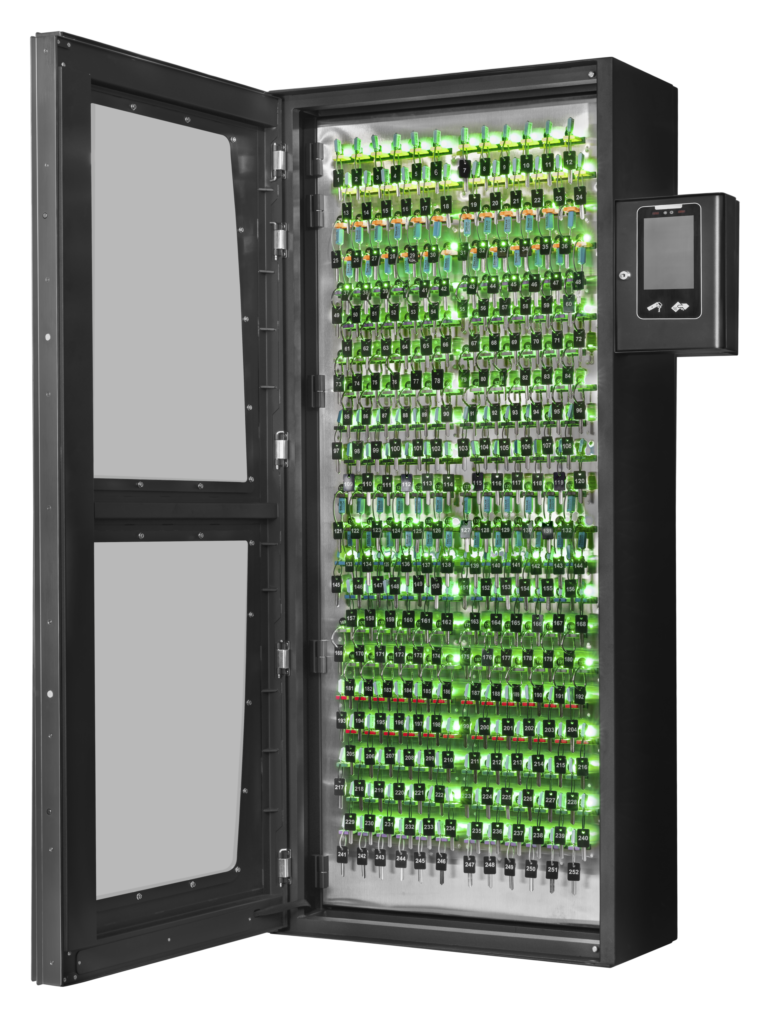
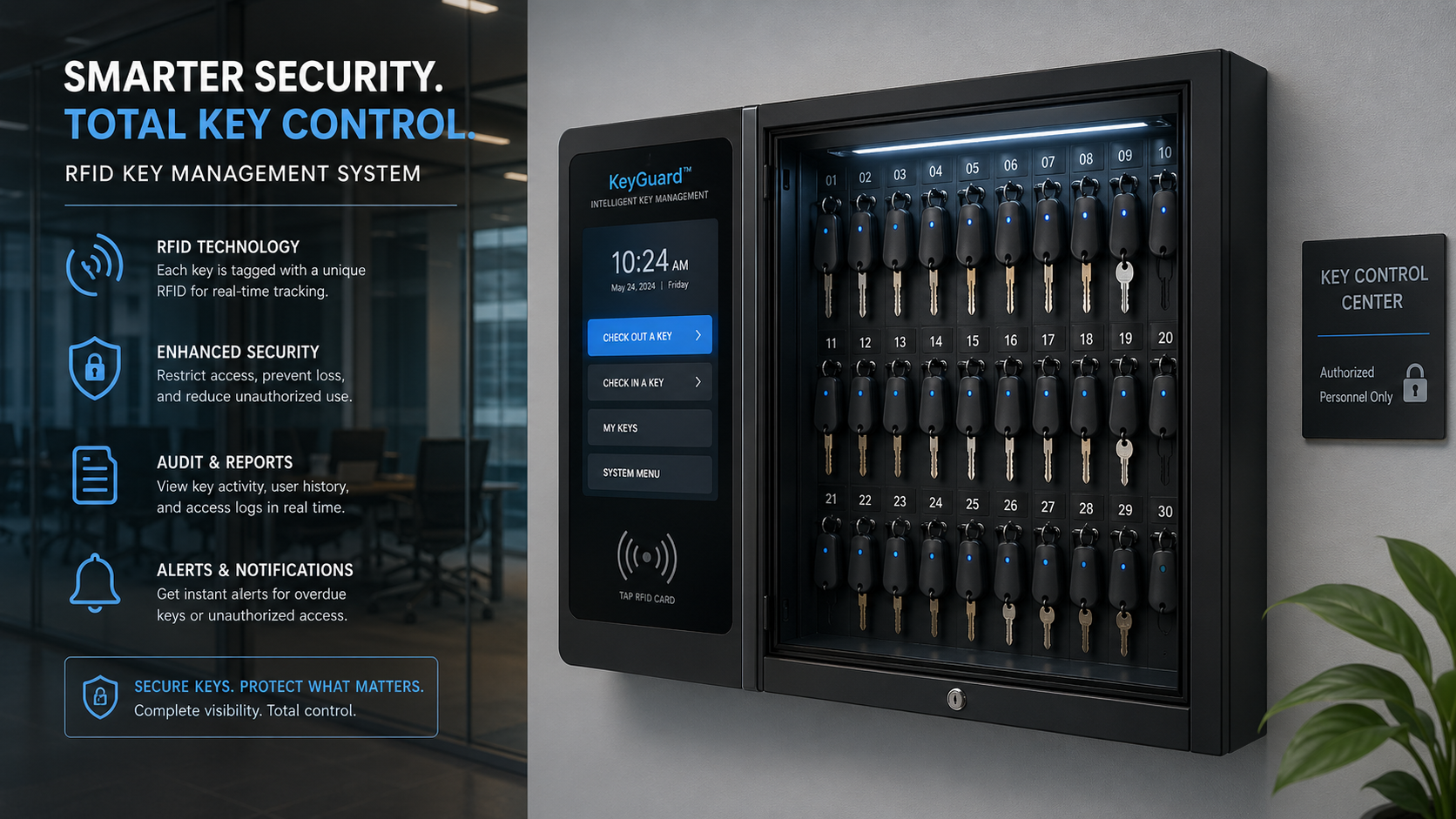
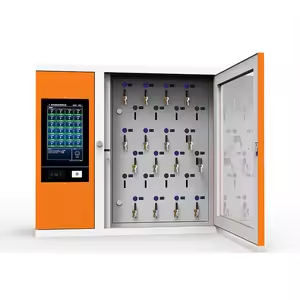
    A professional digital key cabinet for commercial buildings is far more than a simple locking box; it functions as an intelligent, network-connected asset management portal. These systems feature heavy-duty steel enclosures integrated with smart locking slots.

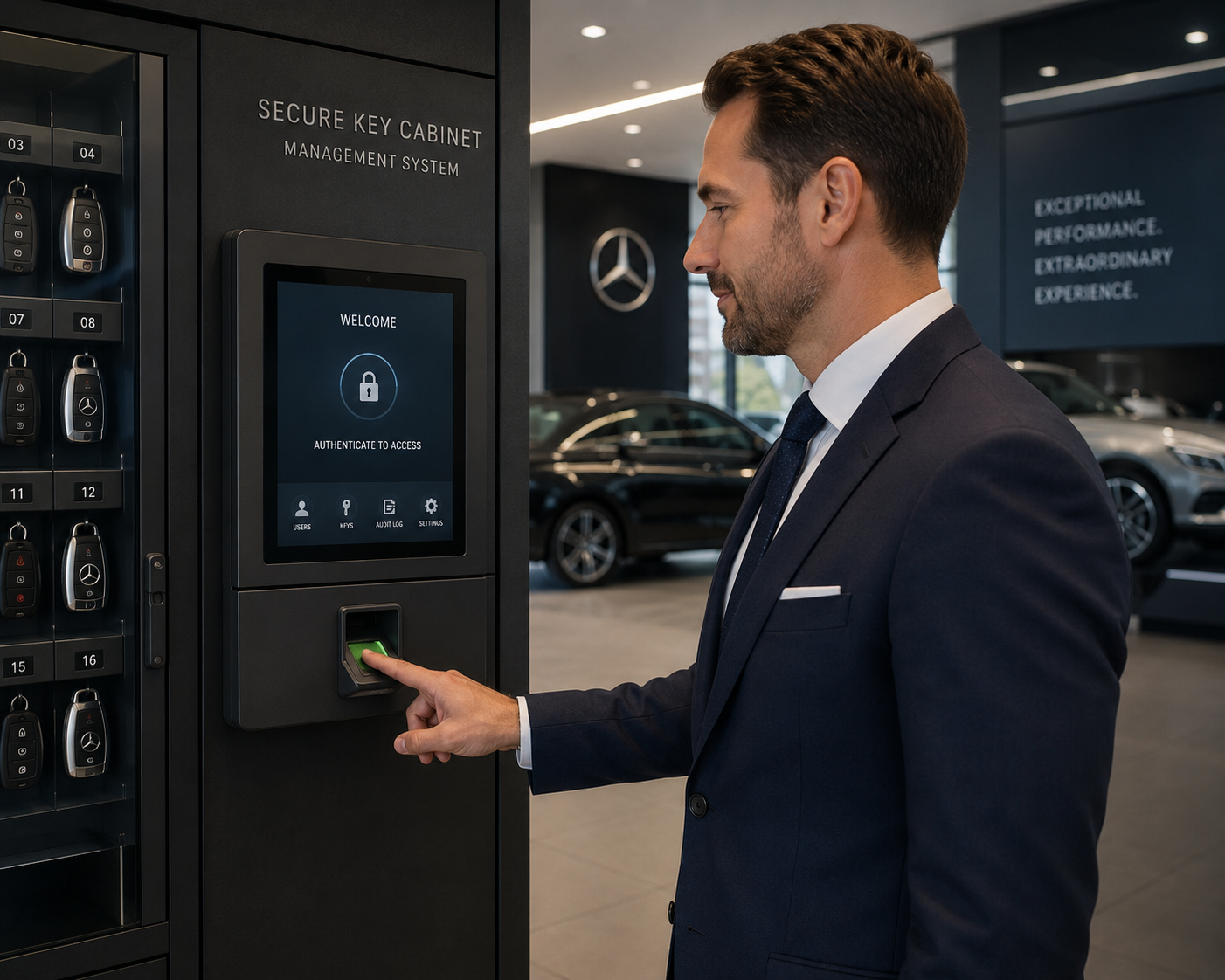
    When you deploy automated key control systems, every individual key or key ring is permanently attached to an RFID-enabled smart fob. To access a key, employees must first identify themselves at the cabinet interface using a secure PIN, an authorized RFID staff badge, or a biometric scanner. The system instantly verifies their authorization and opens the door, unlocking only the specific key required for their shift. This exact level of control turns physical keys into fully traceable, digital assets.

    Essential Features of Automated Key Control Systems

    When choosing a digital key cabinet for commercial buildings, it helps to focus on key specifications that match a high-traffic corporate environment. The best platforms use a mix of robust hardware and intuitive software to streamline security management:

    • Real-Time Audit Trails: Every single access event—including pickups, returns, and failed login attempts—is logged automatically. Security directors can generate comprehensive compliance reports in seconds.
    • Customizable Time Windows: Automated key control systems can be configured to restrict specific keys to precise times. For example, a cleaning contractor’s token can be programmed to work only between 6:00 PM and 10:00 PM.
    • Instant Alarm Notifications: If a high-security master key is not returned by the end of a shift, the system automatically triggers an SMS or email alert to the facility manager.
    • Scalable Modular Design: Commercial facilities grow, and your tech should too. Modern automated key control systems allow you to easily link expansion cabinets to your main control unit, managing thousands of keys across a sprawling campus from a single software dashboard.

    Maximizing Efficiency for Facility and Building Managers

    From an operational standpoint, deploying a digital key cabinet for commercial buildings drastically cuts down on daily administrative tasks. Security guards and facilities staff no longer have to spend hours checking keys in and out manually or hunting down missing fobs.

    Instead, the automated key control systems handle everything independently. Contractors can pick up their assigned service keys via a pre-approved PIN, finish their tasks, and return them without needing direct supervision from your security team. This secure, self-service workflow frees up your personnel to focus on higher-priority security tasks, boosting overall site productivity.

    Enhancing Compliance and Lowering Insurance Premiums

    For large commercial properties, maintaining compliance with corporate regulations and building insurance policies is an absolute priority. Unsecured keys are an immediate liability flag during risk audits.

    Implementing automated key control systems demonstrates to insurers that your business takes a proactive approach to risk mitigation. Being able to present a digital, tamper-proof record of exactly who accessed restricted areas—like server rooms, executive offices, or electrical vaults—can lead to lower corporate insurance premiums. It also provides invaluable forensic data if an internal investigation ever becomes necessary.

    Why Partner with Keysystem?

    Selecting the right digital key cabinet for commercial buildings requires a partner who understands the operational flow of your facility. As a specialized reseller, Keysystem acts as your consultant, ensuring you get the perfect balance of hardware durability and software sophistication.

    We don’t believe in one-size-fits-all products. Our technical experts work directly with your IT and security teams to smoothly integrate our automated key control systems into your existing building management network. From initial site evaluation and custom cabinet configuration to staff training and long-term technical support, Keysystem delivers an elite, end-to-end security solution.

    Conclusion: Secure Your Commercial Assets Today

    The commercial real estate market is evolving rapidly, and keeping your building secure requires moving away from outdated manual tracking. Transitioning to automated key control systems is an investment in your property’s long-term safety, efficiency, and professional credibility.

    By utilizing a high-performance digital key cabinet for commercial buildings, you protect your physical assets, reduce operational friction, and eliminate the costly disruptions of lost keys.

    Ready to upgrade your building’s asset tracking? Contact Keysystem today for a tailored technical consultation, and let us help you find the ideal solution to protect your facility for 2026 and beyond.
  • The Real Cost of Perimeter Security: Navigating the UVSS Scanner Price and Technology Matrix

    The Real Cost of Perimeter Security: Navigating the UVSS Scanner Price and Technology Matrix

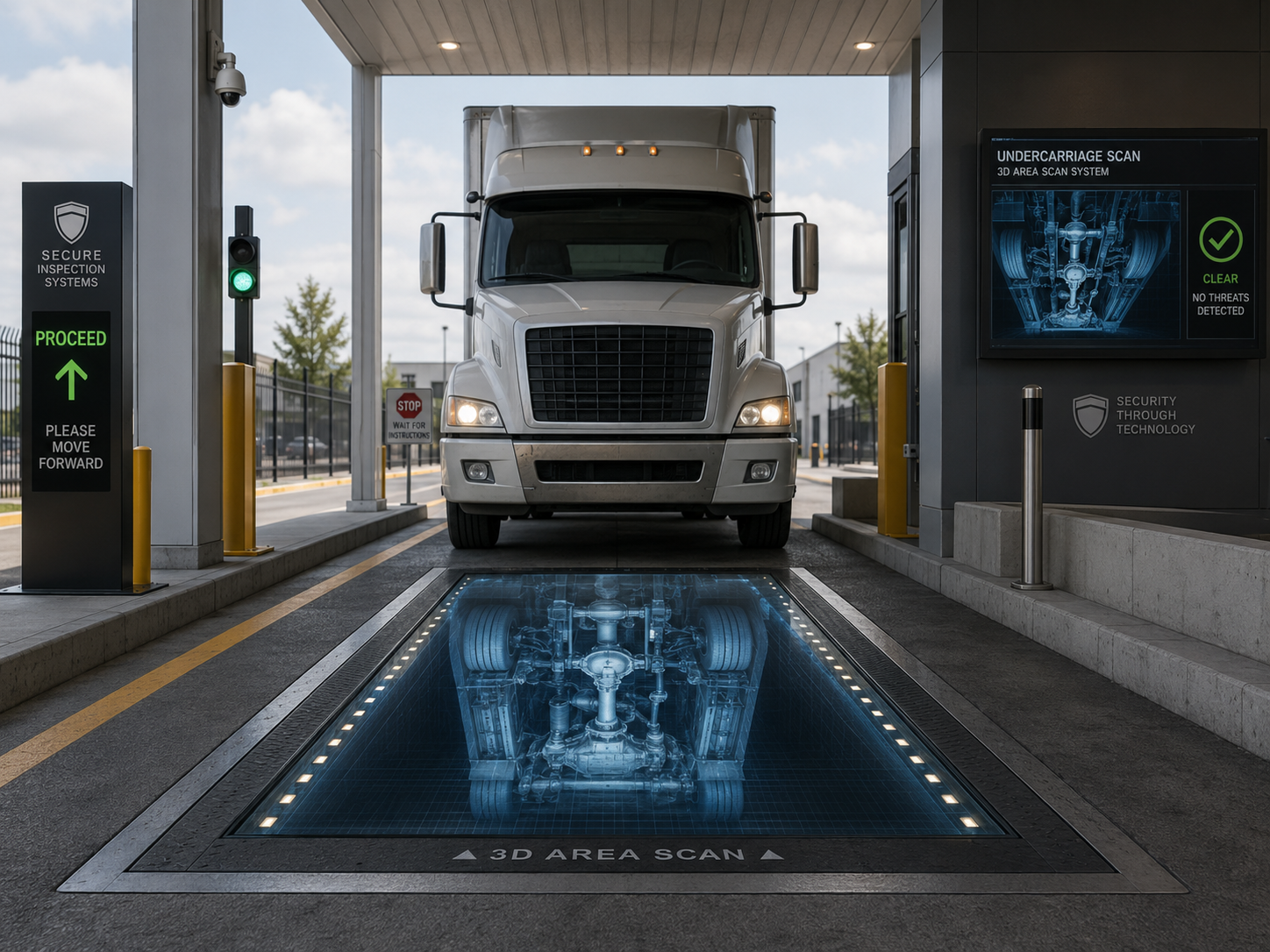
    When it comes to securing a high-risk facility—be it a military checkpoint, an international airport, or a corporate data center—the undercarriage of a vehicle remains one of the most critical vulnerabilities. For years, security teams relied on manual mirrors, but today’s threat landscape requires digital speed and automation. As procurement managers and security heads look to upgrade their entry points, two questions dominate the conversation: “What is the uvss scanner price?” and “Should we invest in a 2d vs 3d under vehicle scanner?”

    At UVSS, as a premier global reseller of perimeter protection hardware, we believe that an informed buyer is a secure buyer. Navigating the uvss scanner price landscape isn’t just about finding the lowest number on a quote; it is about understanding how different technological capabilities impact your total cost of ownership (TCO) and your facility’s safety. In this comprehensive guide, we will break down the true drivers of market pricing and analyze the core differences between a 2d vs 3d under vehicle scanner.

    Understanding the Spectrum of the UVSS Scanner Price

    When you begin requesting quotes for security infrastructure, you will quickly notice that the uvss scanner price can vary wildly. A entry-level portable unit might cost a few thousand pounds, while a fully integrated, automated military-grade system can run into tens of thousands.

    This variance exists because a uvss scanner price is not determined by the camera alone. Instead, the final cost is a combination of physical ruggedness, software capabilities, and structural installation needs.

    The primary factors influencing the uvss scanner price include:

    • Civil Engineering Requirements: Flush-mounted permanent systems require road excavation, drainage installation, and concrete work. This structural integration will naturally increase the initial uvss scanner price compared to a surface-mounted, portable ramp system.
    • Environmental Protection Rating: Systems engineered to withstand harsh environments—such as freezing winters or scorching desert heat—utilize IP68-rated stainless steel housings and integrated heating/cooling units, which shift the uvss scanner price upward.
    • Throughput Speed Capabilities: High-speed checkpoints require line-scan cameras that can capture clear images at speeds up to 30 km/h. The processing power needed to stitch these images instantly impacts the final system cost.

    Technological Showdown: 2D vs 3D Under Vehicle Scanner

    The biggest architectural choice you will make during procurement involves selecting the imaging style. When analyzing a 2d vs 3d under vehicle scanner, the difference isn’t just cosmetic—it fundamentally changes how your security team identifies hidden threats.

    The 2D Scanner: Standard Digital Surveillance

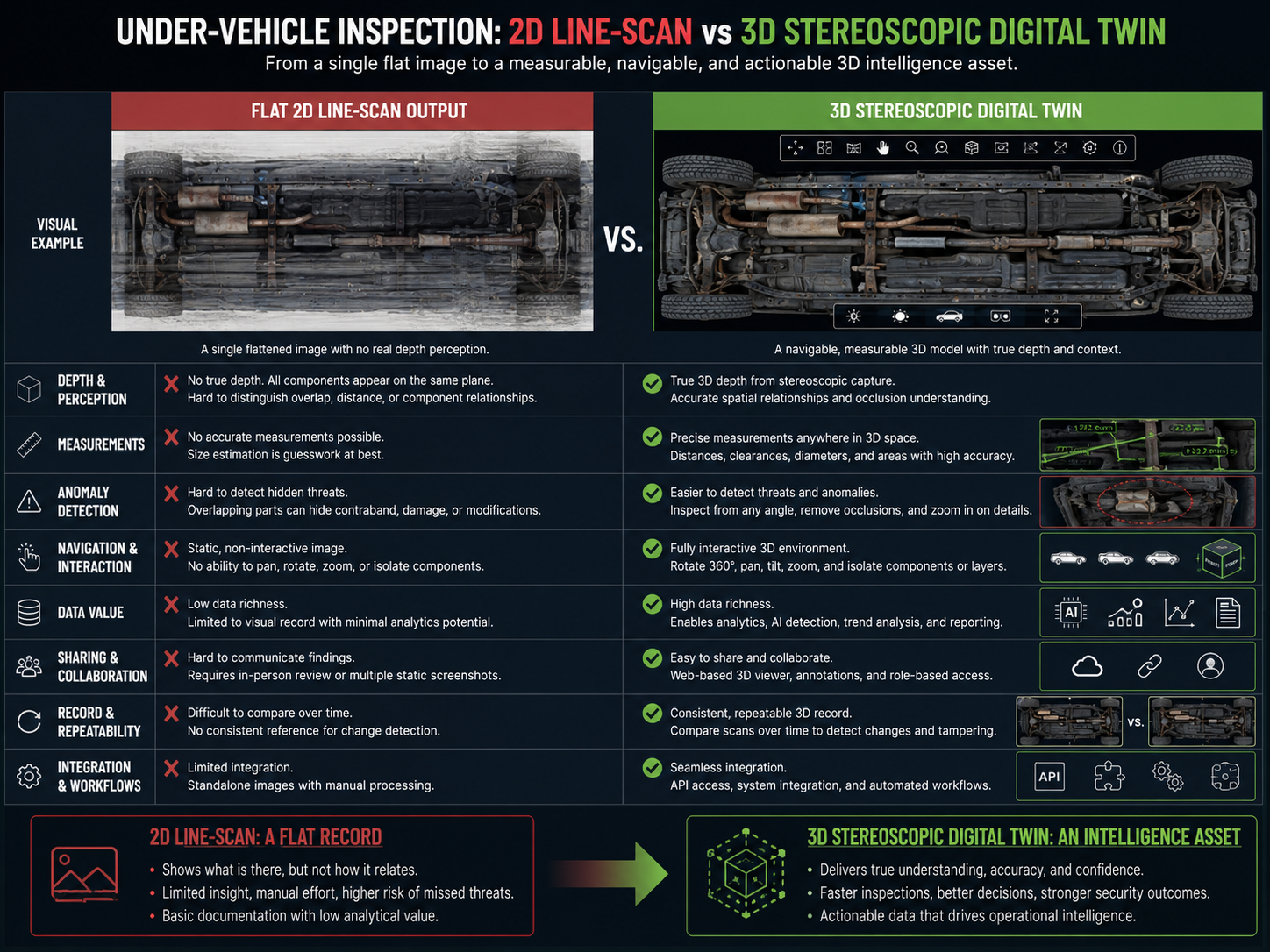
    A traditional 2D system uses a linear optical camera to capture slices of the undercarriage as the car drives over it, creating a single, flat composite image.

    • The Advantage: A lower initial uvss scanner price. It is a reliable upgrade from hand-held mirrors and provides a clean digital record of entry.
    • The Disadvantage: Flat images lack depth. If a weapon or a tracking device is tucked deep inside a wheel well or behind the exhaust manifold, the shadows in a 2D image can completely obscure the threat.

    The 3D Scanner: The Next-Generation Digital Twin

    A 3D system, such as our advanced stereoscopic units, uses multi-angled sensor arrays to capture structural depth. It builds a complete three-dimensional model of the underbody.

    • The Advantage: In the debate of a 2d vs 3d under vehicle scanner, 3D wins on security every time. It eliminates blind spots by allowing operators to rotate the image digitally, seeing “around” pipes and structural beams.
    • The Disadvantage: A 3D architecture commands a higher premium, which is reflected in the initial uvss scanner price.

    Why the 2D vs 3D Under Vehicle Scanner Choice Dictates Your ROI

    For a facility manager, looking solely at the upfront uvss scanner price can be a costly mistake. If you purchase a cheaper 2D system but require your guards to manually inspect flagged anomalies because of bad lighting or shadows, you haven’t actually automated your checkpoint. You’ve simply moved the bottleneck.

    When you invest the extra capital into a 2d vs 3d under vehicle scanner platform that utilizes 3D technology, you are unlocking advanced automatic threat detection software. Because the software understands the depth profile of a vehicle, it can automatically flag foreign objects—such as a magnetic box attached to the frame—without requiring a guard to spot it manually. The reduction in human error and faster vehicle processing times mean the higher uvss scanner price pays for itself over a multi-year lifecycle.

    Low-Difficulty LSI Features to Consider Before Purchase

    To ensure your system integrates flawlessly with your existing security booth, look closely at these secondary system specifications, which can subtly alter your total uvss scanner price:

    • Automatic License Plate Recognition (ALPR): Linking the undercarriage scan to a specific license plate creates a searchable database.
    • Driver Face Cameras: Capturing both the driver’s identity and the car’s structural profile simultaneously provides total situational awareness.
    • LED Illumination Matrix: Ensure the system utilizes heavy-duty LED arrays that don’t burn out easily, as replacing lighting components can add to your long-term maintenance costs.

    Why Procure Your Scanner Through UVSS?

    As a dedicated reseller of the world’s leading vehicle inspection technologies, UVSS doesn’t believe in selling you more technology than you actually need. We look at your daily vehicle volume, your site topology, and your specific threat level to find the ideal point on the uvss scanner price curve.

    Whether your facility is perfectly suited for a cost-effective 2D portable unit for temporary events, or you require a permanent installation of a premium 2d vs 3d under vehicle scanner with AI automation, our team provides the engineering support to make the rollout a success. We manage the vendor relationships, handle the technical commissioning, and provide the ongoing maintenance training that keeps your checkpoint running smoothly.

    Conclusion: Future-Proofing Your Entry Points

    Perimeter defense is only as strong as its weakest link. Leaving the underside of a delivery van or employee vehicle unchecked is a risk that modern operations simply cannot afford. While the initial uvss scanner price is an important budgetary consideration, it must be weighed against the immense cost of a physical breach.

    Understanding the operational differences of a 2d vs 3d under vehicle scanner allows you to make a strategic decision that aligns with your organization’s risk profile.

    Ready to get an accurate quote for your facility? Contact the team at UVSS today. Let us provide you with a transparent breakdown of the uvss scanner price for your project and help you choose the best technology to secure your perimeter for 2026 and beyond.

  • Beyond 2D: How UVSS 3D Area Scan Helps with More Visibility and Better Protection

    Beyond 2D: How UVSS 3D Area Scan Helps with More Visibility and Better Protection

    The threat landscape surrounding critical infrastructure, corporate campuses, and high-profile checkpoints is constantly shifting. For years, security directors have relied on traditional under-vehicle surveillance to monitor entry points. However, as concealment methods become more sophisticated, the limitations of standard imaging are becoming a glaring vulnerability. To truly harden a perimeter, facilities must look beyond flat, two-dimensional images and embrace volumetric scanning. Understanding exactly how UVSS 3D area scan helps with more visibility and better protection is fast becoming a core operational requirement for security integrators and facility managers alike.

    At UVSS, as an industry-leading reseller of elite perimeter technology, we specialize in high-performance checkpoint security. We know that a traditional under vehicle scanning systems layout can leave dangerous blind spots. In this deep dive, we will analyze the technical mechanics behind stereoscopic data capture, compare it to older scanning frameworks, and demonstrate why a 3D architecture is the ultimate tool for proactive threat mitigation.

    The Blind Spots of Legacy Under Vehicle Scanning Systems

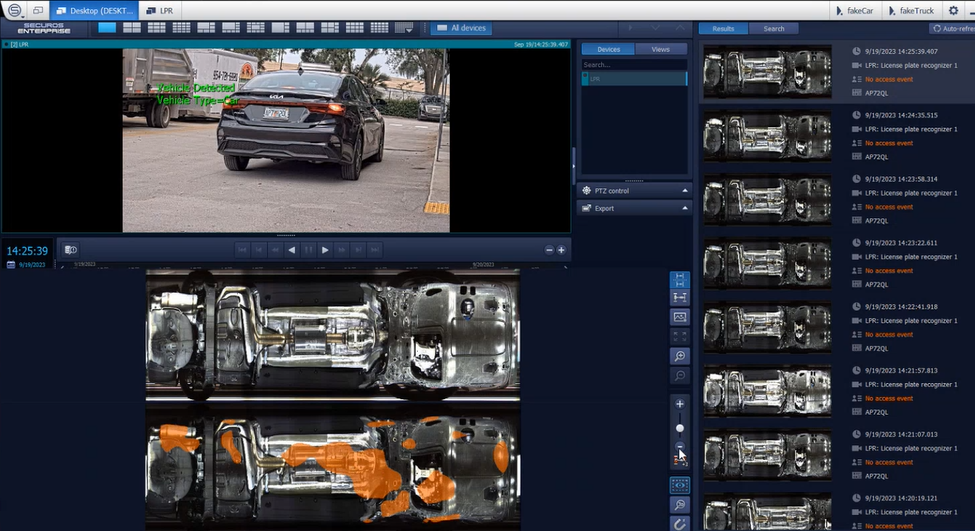
    To appreciate the value of a volumetric upgrade, it is necessary to examine the constraints of traditional linear technology. Standard under vehicle scanning systems typically utilize line-scan cameras. As a vehicle drives over the sensor array, the camera captures flat digital “slices” of the chassis and stitches them together into a long 2D image.

    While this provides a basic visual record, it introduces significant operational challenges:

    • Perspective and Shadow Distortion: A flat camera lens looking straight up cannot see “around” mechanical obstructions. Deep recesses, heat shields, and areas above the exhaust pipe remain shrouded in shadow.
    • Speed Dependency: Line-scan cameras require a highly consistent driving speed to prevent the final image from looking stretched or squished. If a driver accelerates or taps the brakes over the scanner, the image becomes distorted, rendering automatic comparison features ineffective.
    • Manual Fatigue: Because 2D images lack depth data, security guards must manually inspect the screen, hunting for anomalies among a chaotic landscape of pipes and wires. In high-traffic zones, this manual reliance inevitably leads to oversight.

    How UVSS 3D Area Scan Helps with More Visibility and Better Protection

    The transition to a 3D area scan framework redefines the checkpoint paradigm. Instead of taking a flat photograph, an advanced area-scan sensor captures multi-angle, overlapping stereoscopic viewpoints simultaneously. This spatial data is compiled in real-time to generate a true, high-resolution 3D digital twin of the vehicle’s undercarriage.

    Let’s break down precisely how UVSS 3D area scan helps with more visibility and better protection:

    1. Complete Structural Depth Perception

    Chassis architectures are complex, three-dimensional terrains filled with alcoves and hidden compartments. The primary way how UVSS 3D area scan helps with more visibility and better protection is through true depth processing. By capturing stereoscopic angles, the system maps the exact elevation, depth, and volume of every component. If an object is tucked horizontally behind a frame rail, the multi-angled area sensors capture it, completely eliminating the shadows that cripple 2D systems.

    2. Speed-Agnostic Imaging Accuracy

    Because area scanning captures full frames rather than thin lines, it does not rely on a perfectly steady vehicle velocity. Whether a vehicle drives over the checkpoint at a crawl, accelerates rapidly, or comes to a complete stop directly over the array, the volumetric layout remains completely undistorted. This speed-agnostic capability is a massive reason how UVSS 3D area scan helps with more visibility and better protection in high-throughput environments like border crossings, toll plazas, and logistics hubs.

    3. Automated AI Change Detection

    When you look at how UVSS 3D area scan helps with more visibility and better protection from a software perspective, the integration of Artificial Intelligence is the true game-changer. Rather than forcing a guard to guess if a component belongs to a car, the 3D software automatically fingerprints the vehicle’s unique volumetric profile. When that vehicle returns, the system compares the live 3D model against its historical baseline. If a foreign object—like a magnetic tracking device, a hidden compartment, or a contraband package—has been attached, the AI instantly flags the precise coordinate in red.

    Key Applications for High-Risk Perimeters

    Implementing advanced under vehicle scanning systems equipped with 3D area-scan tech is critical across several key commercial and civil sectors:

    • Data Centers & Corporate Hubs: Guarding against corporate espionage and physical tampering requires strict access control. A 3D area scan ensures that no tracking devices or unauthorized modifications enter the property.
    • Government & Diplomatic Facilities: For embassies and parliament buildings, the threat of vehicle-borne improvised explosive devices (VBIEDs) is an evergreen concern. Knowing how UVSS 3D area scan helps with more visibility and better protection gives security forces the ability to detect tightly concealed packages instantly.
    • Logistics & Border Security: Preventing smuggling and human trafficking requires an exhaustive check of heavy commercial trucks. 3D area sensors pierce through the complex underbellies of large trailers far more effectively than manual mirrors or flat scanners.

    Integrating the Smart Checkpoint

    A standalone scanner is only one piece of the puzzle. At UVSS, we advocate for an interoperable security architecture. By pairing a 3D area-scan unit with Automatic Number Plate Recognition (ANPR) and driver-facing cameras, facility managers build a comprehensive, 360-degree digital audit trail.

    The moment a vehicle passes over the checkpoint, its license plate, driver identity, and 3D underbody model are linked together under a single timestamped entry. This unified ecosystem maximizes forensic accuracy and streamlines the workflow for security operators in a remote command center.

    Why Partner with UVSS for Your Security Upgrade?

    As a premier reseller of enterprise-grade security platforms, UVSS is committed to delivering more than just a box of hardware. We partner with your technical teams to evaluate your specific driveway constraints, traffic volumes, and local environmental factors.

    We understand the granular mechanics of how UVSS 3D area scan helps with more visibility and better protection, and we help you maximize the return on your investment. From selecting rugged, all-weather, IP68-rated flush mounts to configuring the central AI threat-detection alerts, our team ensures your checkpoint operates flawlessly from day one.

    Conclusion: Future-Proofing Your Facility Entry

    The methods used by bad actors are becoming increasingly sophisticated, meaning traditional, flat-image surveillance is no longer a viable defense strategy. Moving to a volumetric framework is the most definitive way to secure your facility’s blind spots.

    Investing in a platform after seeing how UVSS 3D area scan helps with more visibility and better protection ensures that your security personnel have the data they need to act quickly and decisively. By automating the threat detection process and eliminating speed-related image distortion, you dramatically lower operational risk.

    Don’t leave the underbelly of your perimeter exposed. Contact the expert team at UVSS today for a technical consultation, and let us help you upgrade your under vehicle scanning systems to the gold standard of 3D protection.

  • Commercial Key Management Systems: The Smartest Investment Fleet Companies Are Making

    Commercial Key Management Systems: The Smartest Investment Fleet Companies Are Making

    Managing keys sounds simple — until you’re running a fleet. A missing vehicle key at 6 AM delays a driver, disrupts a delivery schedule, and costs your business real money. Across industries, fleet operators are discovering that outdated key control methods — pegboards, logbooks, manually signed-out keys — are liabilities dressed up as processes. That’s why commercial key management systems have moved from a “nice to have” to an operational necessity for businesses that run on wheels.

    At Keysystem, we work with fleet companies across industries — logistics, construction, transport, utilities, and more — and we’ve seen firsthand how the right solution transforms day-to-day operations. This blog covers everything you need to know: what commercial key management systems are, why fleet businesses need them, and what to look for when choosing the best solution for your operation.


    What Are Commercial Key Management Systems?

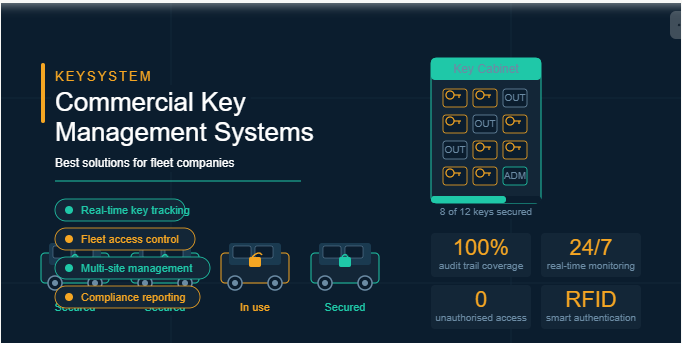
    Commercial key management systems are secure, automated solutions designed to control, monitor, and manage access to physical keys within a business environment. Unlike residential key organizers or basic lockboxes, these systems are built for high-traffic, multi-user environments where accountability, speed, and security must coexist.

    A modern commercial key management system typically includes:

    • Electronic key cabinets with individual locking key slots
    • User authentication via PIN, RFID card, fingerprint, or mobile credential
    • Audit trail software that logs every key transaction in real time
    • Alerts and notifications for overdue returns, unauthorized access, or missing keys
    • Integration capability with fleet management software, HR systems, and access control platforms

    These aren’t glorified key hooks. They are intelligent systems that bring discipline and visibility to one of the most overlooked assets in any operation — your keys.


    Why Fleet Companies Cannot Afford to Ignore Key Control

    Fleet businesses operate with tight margins and zero tolerance for preventable downtime. Yet many still manage vehicle keys informally. Here’s what that actually costs:

    Unauthorized vehicle use — Without a commercial key management system, any employee with cabinet access can take a vehicle key without detection. This creates insurance liability, fuel theft, and potential accidents in your company’s name.

    Delayed dispatches — When a driver can’t find a key, every minute of delay costs productivity. A manual logbook tells you who signed out a key but nothing about where it is right now.

    Key duplication risk — Untracked keys can be copied and returned undetected, creating long-term security vulnerabilities.

    Compliance gaps — Industries like transport and utilities often have regulatory requirements around vehicle access. Paper-based key logs rarely meet auditor standards.

    Lost key replacement costs — Modern vehicle transponder keys can cost hundreds of pounds to replace. Losing them isn’t just inconvenient — it’s expensive.

    These are not hypothetical risks. They are daily operational realities for fleet companies that haven’t yet invested in commercial key management systems.


    Best Key Management Solutions for Fleet Companies: What the Market Offers

    Searching for the best key management solutions for fleet companies means filtering through a growing market of hardware, software, and hybrid products. Let’s break down the key categories and what distinguishes a genuinely good solution from one that looks impressive in a brochure.

    1. Intelligent Electronic Key Cabinets

    The foundation of any serious fleet key management setup is an intelligent electronic key cabinet. These units house individual secured key slots — each locked and released based on user authentication. Every transaction is logged automatically.

    What makes a cabinet right for fleet use:

    • Scalable capacity — From 16-key units for small fleets to 100+ key cabinets for large depots
    • Multi-site compatibility — Centralized software that manages cabinets across multiple locations
    • Rugged build quality — Fleet environments aren’t office environments. Cabinets need to withstand industrial settings
    • Fast access — Drivers have tight schedules. Authentication and key retrieval should take seconds, not minutes

    At Keysystem, our key cabinet solutions are designed with fleet operations in mind — fast to deploy, easy to manage, and built to handle the volume a busy depot demands.

    2. Cloud-Based Key Management Software

    Hardware alone isn’t enough. The best key management solutions for fleet companies pair physical cabinets with powerful software dashboards that give fleet managers complete visibility from any device.

    Essential software features for fleet operations:

    • Real-time key status — Know instantly which keys are in, which are out, and who has them
    • Driver-specific access permissions — Only authorised drivers can access specific vehicle keys
    • Automated reporting — Generate compliance-ready reports without manual data entry
    • Return reminders and alerts — Automatic notifications if a key hasn’t been returned by a set time
    • Integration with fleet telematics — Some advanced platforms connect key data with GPS and mileage tracking

    3. Multi-Factor Authentication Options

    One of the defining features that separates enterprise-grade commercial key management systems from basic electronic lockers is authentication flexibility. Fleet environments often have workers who don’t sit at desks — they need fast, reliable access methods.

    Common authentication methods include:

    • PIN codes — Simple and fast, suitable for secure internal environments
    • RFID/proximity cards — Ideal for environments where drivers already use access cards
    • Biometric fingerprint — Highest level of individual accountability; no card-sharing risk
    • Mobile app credentials — Increasingly popular for modern fleets with tech-savvy drivers

    The best fleet key management solutions offer multiple authentication options within the same system, so you can match the method to the environment and the user.

    4. Audit Trail and Compliance Reporting

    For transport companies, logistics operators, and anyone managing commercial vehicles, the audit trail is everything. A good commercial key management system should produce tamper-proof, timestamped records of every key transaction — who accessed which key, when, and for how long.

    This data is valuable in multiple ways:

    • Internal accountability — Address disputes or investigate incidents with factual logs
    • Insurance purposes — Demonstrate due diligence in vehicle key control
    • Regulatory compliance — Meet industry standards and operator licence requirements
    • HR and disciplinary processes — Objective records remove subjectivity from investigations

    Look for systems that store data securely (ideally cloud-hosted with backup) and allow easy export for audits and reporting.

    5. Scalable, Multi-Site Management

    Fleet companies rarely operate from a single location. The best key management solutions for fleet companies are built to scale — starting with one depot and expanding to cover an entire national operation through a single software platform.

    Centralised management means:

    • One login for all sites
    • Consistent access policies applied across every location
    • Aggregated reporting across the entire fleet
    • Remote troubleshooting and user management without on-site visits

    This is where commercial key management systems prove their enterprise value. It’s not just about controlling keys at one site — it’s about controlling them everywhere, consistently.

    5 Signs Your Fleet Needs a Commercial Key Management System Now

    Still on the fence? Here are five clear indicators that your current approach isn’t working:

    1. You’ve had at least one key go missing in the last 12 months — One lost key is an incident. A pattern is a system failure.
    2. You can’t tell in real time who has which vehicle key — If you have to ask around to find a key, you’ve already lost control.
    3. Your drivers wait for keys during shift changes — Manual key handovers create queues and delays that compound over a week.
    4. Your audit logs are paper-based — Paper logs can be falsified, lost, or simply never filled in properly.
    5. You’ve had an unauthorized vehicle use incident — This is the highest-stakes warning sign. An untracked vehicle is an uninsured liability.

    The Business Case: ROI of Investing in Fleet Key Management

    Fleet managers often ask whether the investment in commercial key management systems is justified. The answer is almost always yes — and quickly.

    Consider the following:

    Cost Without a SystemSavings With a System
    One lost transponder key: £200–£500Eliminated with tracked, returned keys
    Unauthorized vehicle use incident: £1,000–£10,000+Prevented by access-controlled release
    Compliance audit failure: significant finesAudit-ready reports on demand
    Dispatcher time managing key queries: 30+ mins/dayAutomated real-time visibility
    Driver delays at shift start: 5–15 mins per incidentInstant authenticated access

    Choosing the Right Partner, Not Just the Right Product

    The market for commercial key management systems includes many hardware providers selling similar-looking cabinets. What separates a good investment from an expensive mistake is the partner behind the product.

    When evaluating providers, ask:

    • Do they offer post-installation support or just sell hardware?
    • Can the software integrate with your existing fleet management tools?
    • Is the system scalable as your fleet grows?
    • Do they have verifiable experience with fleet operations specifically?
    • What does their training and onboarding process look like?

    At Keysystem, we don’t just sell key cabinets — we build long-term key management programmes that grow with your business.

    📞 Contact Keysystem today

  • Comparing Portable vs Fixed Under Vehicle Scanners for High-Security Checkpoints

    Comparing Portable vs Fixed Under Vehicle Scanners for High-Security Checkpoints

    In the modern security landscape, the entry point of a facility is the first and most critical line of defense. For security directors and facility managers, the challenge is no longer just about who is entering, but what might be hidden beneath the vehicles themselves. This has led to a pivotal debate in procurement: Portable vs Fixed Under Vehicle Scanners. Choosing the right configuration is essential for maintaining operational flow while ensuring uncompromised safety.

    At UVSS, as a premier reseller of advanced checkpoint technology, we understand that there is no one-size-fits-all solution. Whether you are securing a temporary high-profile event or a permanent government installation, understanding the technical nuances of Portable vs Fixed uvss is the first step toward a hardened perimeter. In this guide, we will explore the strengths of each setup and provide a deep dive into how under vehicle scanners detect threats to keep your assets secure.


    Understanding the Choice: Portable vs Fixed Under Vehicle Scanners

    When evaluating Portable vs Fixed Under Vehicle Scanners, the decision typically hinges on the permanency of the site and the volume of traffic. Both systems utilize high-resolution imaging to inspect the chassis, but their physical deployment serves different strategic goals.

    The Case for Fixed Systems

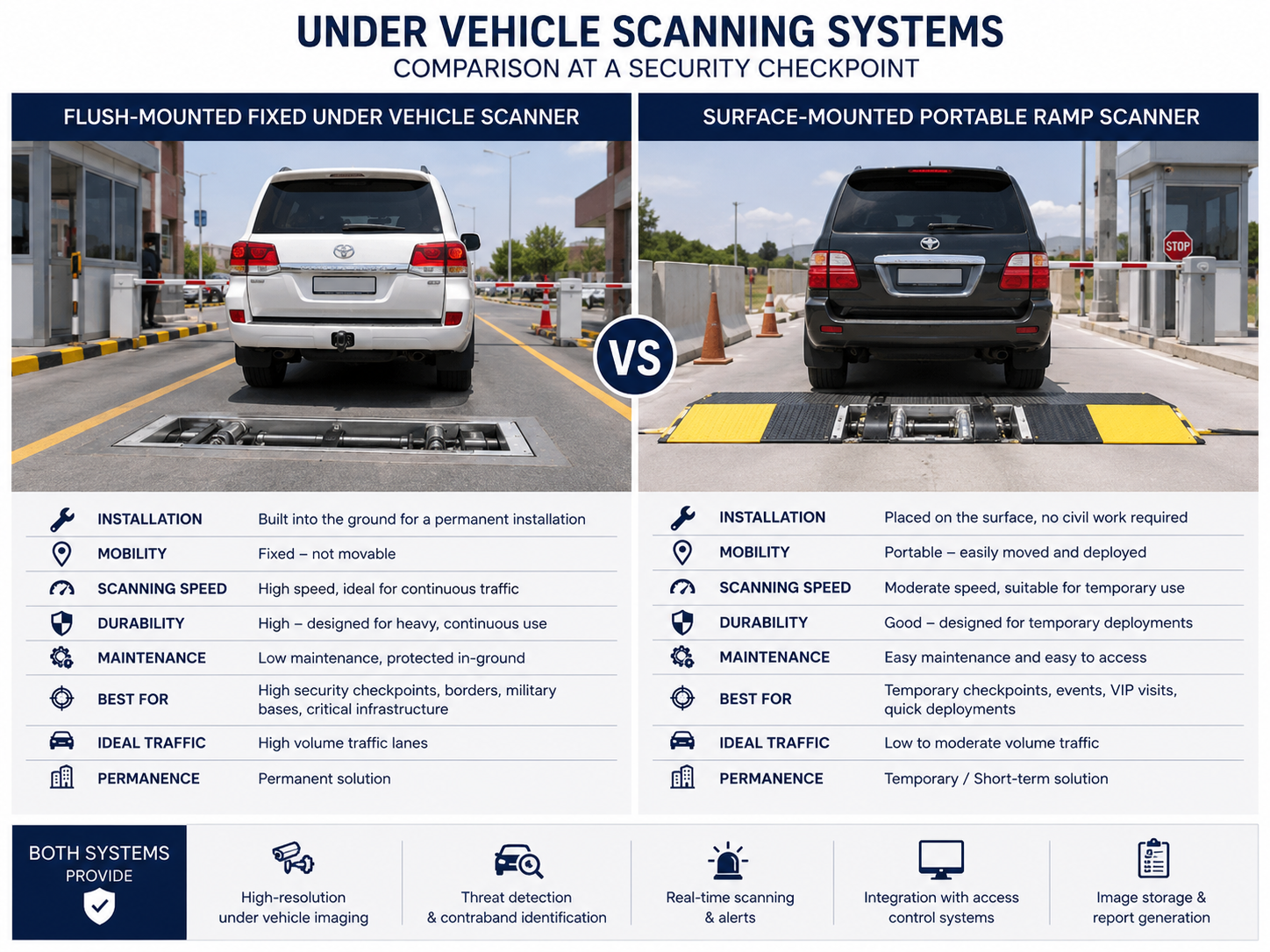
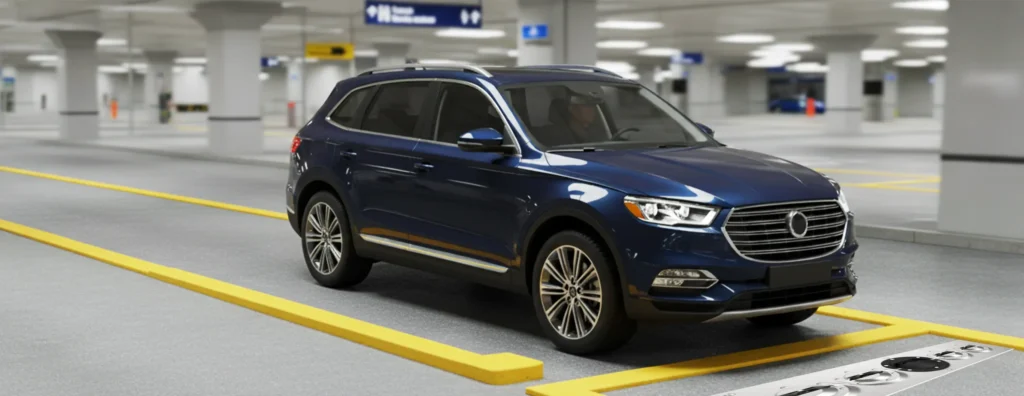
    Fixed systems are the gold standard for permanent installations such as airports, military bases, and data centers. In the comparison of Portable vs Fixed Under Vehicle Scanners, fixed units are flush-mounted into the roadway. This requires civil works for installation but offers a seamless, “zero-profile” look. Because they are integrated into the ground, they are highly durable and capable of handling heavy-duty cycles with minimal wear.

    The Versatility of Portable Systems

    On the other side of the Portable vs Fixed Under Vehicle Scanners debate are the rapid-deployment units. Portable scanners are surface-mounted, often featuring a heavy-duty ramp that vehicles drive over. These are ideal for temporary security checkpoints, such as summits, sports championships, or construction sites. They can be set up in under ten minutes, providing immediate high-tech surveillance without the need for road excavation.


    How Under Vehicle Scanners Detect Threats: The Technology Behind the Image

    To make an informed choice between Portable vs Fixed Under Vehicle Scanners, one must understand the underlying science. The question of how under vehicle scanners detect threats is answered through a combination of high-speed imaging, powerful illumination, and sophisticated software.

    1. High-Resolution Line Scanning

    Whether you choose Portable vs Fixed Under Vehicle Scanners, the core technology involves a line-scan camera. As the vehicle moves over the unit, the camera captures thousands of thin “slices” of the undercarriage. The software then stitches these slices together to create a single, high-definition image of the entire chassis. This allows security personnel to see objects as small as a cigarette pack hidden in the complex architecture of the vehicle.

    2. Advanced Illumination

    A critical part of how under vehicle scanners detect threats is the lighting array. Underbodies are naturally dark and filled with shadows. Modern systems use high-intensity LED arrays that “flood” the underside with light, ensuring that even the deepest recesses of the fuel tank or exhaust system are visible.

    3. AI and Automated Comparison

    The most advanced answer to how under vehicle scanners detect threats lies in Artificial Intelligence. Modern systems feature “Change Detection” software. When a vehicle returns to a facility, the system automatically compares the current scan against a previous “clean” image of that same vehicle. If an anomaly is found—such as a new wire, a magnetic box, or a package—the system triggers an instant alarm for the operator.


    Key Considerations in the Portable vs Fixed Under Vehicle Scanners Debate

    When you partner with UVSS to procure your hardware, we walk you through a specific set of criteria to settle the Portable vs Fixed Under Vehicle Scanners question for your unique site:

    • Traffic Speed: Fixed systems typically allow for slightly higher drive-over speeds (up to 30 km/h) compared to the ramps of portable units, which usually require a slower approach for safety.
    • Environmental Resilience: In the Portable vs Fixed Under Vehicle Scanners comparison, fixed units are better protected against the elements as they are recessed. However, high-quality portable units from UVSS are IP68-rated, ensuring they can withstand heavy rain and dust during outdoor events.
    • Budget and Labor: While the Portable vs Fixed Under Vehicle Scanners hardware costs can be similar, fixed systems involve higher initial labor costs due to the required roadwork. Portable systems offer a lower “total cost of entry” for short-term projects.

    Enhancing Security with Integrated Technology

    Regardless of your choice in the Portable vs Fixed Under Vehicle Scanners category, the most effective security comes from integration. By combining your scanner with Automatic Number Plate Recognition (ANPR) and driver-facing cameras, you create a 360-degree digital “fingerprint” of every vehicle.

    This integration is a massive leap forward in how under vehicle scanners detect threats. Instead of just looking at a picture, you are building a searchable database. If a threat is detected, you have the license plate, the driver’s face, and the high-res chassis scan all linked to a single timestamped event. This is essential for forensic investigations and real-time threat mitigation.


    Why Choose UVSS as Your Reseller?

    At UVSS, we don’t just sell equipment; we provide perimeter confidence. We have carefully vetted the global market to bring you the most reliable options in both the Portable vs Fixed Under Vehicle Scanners categories. Our mission is to ensure that you have the right tool for the job.

    When you consult with us, we don’t just explain how under vehicle scanners detect threats—we show you. We provide technical support, installation guidance, and staff training to ensure that your security team can operate these sophisticated systems at peak efficiency. In a world of evolving threats, your under-vehicle surveillance must be flawless.


    Conclusion: Making the Right Choice for Your Perimeter

    The decision between Portable vs Fixed Under Vehicle Scanners ultimately comes down to your operational environment. Fixed systems offer a permanent, high-durability solution for long-term facilities, while portable units provide the agility needed for the modern, fast-moving security landscape.

    Understanding how under vehicle scanners detect threats through 3D imaging, AI comparison, and high-intensity LEDs proves that these systems are an essential upgrade from manual mirrors. By eliminating human error and providing a digital audit trail, you are significantly hardening your facility against the unseen.

    Are you ready to eliminate the blind spots under your vehicles? Contact UVSS today for a technical consultation. Whether you need a temporary rapid-deployment kit or a permanent high-security installation, we have the expertise to secure your entry points for 2026 and beyond.

  • The Competitive Edge: Implementing a Professional Key Management System for Car Dealerships

    The Competitive Edge: Implementing a Professional Key Management System for Car Dealerships

    In the fast-paced environment of a modern automotive showroom, time is the most valuable currency. Whether it is a high-volume franchise or a boutique luxury pre-owned center, the sales process depends on a single, physical object: the key fob. Yet, in many facilities, the management of these assets remains a chaotic bottleneck. For owners looking to protect their inventory and maximize staff productivity, a specialized key management system for car dealerships is no longer a luxury—it is an operational requirement.

    At Keysystem, as a global reseller of elite security hardware, we have seen how “key chaos” can derail a promising sale. When a salesperson spends twenty minutes searching for a fob while a customer waits, the professional image of the dealership is compromised. In this guide, we will explore how a secure key cabinet management system can transform your workflow and why digital oversight is the only way to manage a modern fleet.


    The Hidden Cost of Manual Key Handling

    Many dealerships still rely on traditional “pegboards” or unlocked drawers. While these methods seem cost-effective initially, they carry significant hidden expenses. A manual system offers zero accountability; if a key goes missing, there is no digital trail to identify who last held it.

    Furthermore, the physical loss of a modern smart key can cost a dealership anywhere from £200 to £600 once programming and labor are factored in. When you multiply this by the number of keys lost in a typical year, the ROI for a key management system for car dealerships becomes undeniable. By transitioning to a secure key cabinet management system, you are essentially buying an insurance policy against human error and internal shrinkage.


    How a Secure Key Cabinet Management System Works

    A professional key management system for car dealerships replaces the open board with a tamper-proof digital key cabinet. These units are constructed from heavy-gauge steel and feature electronically locked slots that only release a specific key when an authorized user authenticates themselves via a PIN, RFID badge, or biometric scan.

    The intelligence of the system lies in the key control software. When a salesperson needs to pull a key for a test drive, they log into the cabinet. The system records the user, the timestamp, and the specific vehicle. If the key is not returned within a pre-set window, the key tracking software can automatically send an alert to the sales manager’s smartphone. This real-time visibility ensures that your inventory is always accounted for.


    Streamlining the Sales Floor with Key Tracking Software

    The primary benefit of a key management system for car dealerships is the boost in operational efficiency. In a traditional setup, “key hunting” is a daily ritual that drains morale. With a smart key locker, every key has a designated, tracked home.

    If a customer asks to see a specific SUV, the salesperson can check the key tracking software from their tablet or workstation. They can instantly see if the key is in the cabinet, if another salesperson has it out for a viewing, or if the vehicle is currently in the service bay. This transparency allows the sales team to manage customer expectations accurately and close deals faster.


    Service Department Integration and Smart Key Lockers

    The utility of a key management system for car dealerships extends far beyond the showroom floor. The service department often manages hundreds of customer keys simultaneously. A smart key locker provides a secure hand-off point between departments.

    When a vehicle moves from the sales lot to the service center for a pre-delivery inspection (PDI), the key transfer is logged digitally. This eliminates the “he-said, she-said” disputes regarding misplaced fobs. For after-hours drop-offs or pickups, a secure key cabinet management system can even provide a secure interface for customers to leave their keys, knowing they are protected by military-grade encryption and physical security.


    Enhancing Security and Compliance

    Car dealerships are prime targets for both opportunistic theft and organized crime. An unsecured key board is an invitation for trouble. A secure key cabinet management system hardens your facility by ensuring that even if a bad actor gains access to the building, they cannot easily access the keys to the vehicles.

    Moreover, many insurance providers now offer lower premiums to dealerships that can demonstrate a robust key control software protocol. Being able to produce an unalterable audit report showing exactly who accessed which vehicle provides a level of forensic security that manual systems cannot match. In the event of a vehicle being damaged or stolen, your key management system for car dealerships provides the essential evidence needed for insurance claims and police investigations.


    Why Choose Keysystem as Your Reseller?

    As an authorized reseller of the world’s leading digital key cabinet brands, Keysystem provides more than just hardware. We provide a tailored security strategy. We understand that a high-volume Ford dealership has different needs than a Ferrari showroom.

    Our team helps you configure your key management system for car dealerships to match your specific workflow:

    • Custom User Permissions: Ensure junior staff can only access certain inventory levels.
    • Multi-Site Management: Use our key tracking software to manage keys across multiple branch locations from a single corporate office.
    • Rugged Hardware: We supply cabinets designed to withstand the high-traffic environment of a busy service bay.

    Conclusion: Investing in Your Dealership’s Future

    The automotive industry is becoming increasingly digital, from the way cars are engineered to the way they are sold online. It is only logical that your physical security follows suit. A key management system for car dealerships is an investment in your brand’s reputation, your staff’s productivity, and your bottom line.

    By implementing a secure key cabinet management system, you are eliminating the friction that kills sales. You are moving from a reactive “search and rescue” culture to a proactive, data-driven operation.

    Don’t let a missing key fob stand between you and your next sale. Contact Keysystem today for a technical consultation. Let us help you find the perfect digital key cabinet and key tracking software to take your dealership to the next level in 2026.

  • Hardening the Perimeter: The Power of a High Security Vehicle Inspection System

    Hardening the Perimeter: The Power of a High Security Vehicle Inspection System

    In the landscape of modern defense and infrastructure protection, the entry point is the most critical link in the security chain. For years, ground-level threats were monitored using basic mirrors and manual labor—methods that are now considered obsolete against sophisticated modern risks. To truly secure a facility in 2026, security directors are turning to the high security vehicle inspection system (UVSS). This technology provides a comprehensive, digital view of a vehicle’s most vulnerable area: the undercarriage.

    At UVSS, as an expert reseller of globally recognized scanning hardware, we understand that “security” is only as effective as the data it produces. A high security vehicle inspection system acts as a digital sentry, ensuring that no vehicle enters your site without its underbody being fully analyzed for anomalies, explosives, or contraband. In this guide, we will explore the mechanics of this technology and answer the critical question for many procurement officers: how does a 3d under vehicle scanner work?


    The Evolution of Undercarriage Inspection Technology

    Traditional inspection methods were once limited by what the human eye could see in a reflection. Modern undercarriage inspection technology has changed the game by utilizing high-speed, high-resolution cameras that capture images as a vehicle drives over a scanning unit. However, a standard high security vehicle inspection system in the past only provided 2D images, which could be easily confused by shadows or complex mechanical parts.

    The modern high security vehicle inspection system has evolved into an AI-powered UVSS. These systems don’t just take pictures; they analyze them. By utilizing deep-learning algorithms, an automated vehicle screening process can identify the specific make and model of a vehicle and compare its underbelly to a “perfect” factory-standard image. This ensures that even the smallest addition—such as a magnetic tracker or a disguised explosive device—is immediately flagged for the operator.


    Understanding the Mechanics: How Does a 3D Under Vehicle Scanner Work?

    For technical security integrators and facility managers, understanding the “how” is just as important as the “why.” So, how does a 3d under vehicle scanner work in a real-world scenario?

    Unlike 2D systems that stitch together a flat strip of images, a 3D scanner utilizes stereoscopic imaging or structured light technology. To explain how does a 3d under vehicle scanner work, imagine two cameras positioned at different angles (similar to human eyes). As the vehicle passes over the unit, these cameras capture the underbody from multiple perspectives simultaneously.

    1. Depth Perception: The system calculates the distance to every point on the chassis, creating a volumetric “point cloud.”
    2. Shadow Elimination: Because the cameras see from multiple angles, they can “look around” obstructions like exhaust pipes or fuel tanks that would normally cast shadows in a 2D scan.
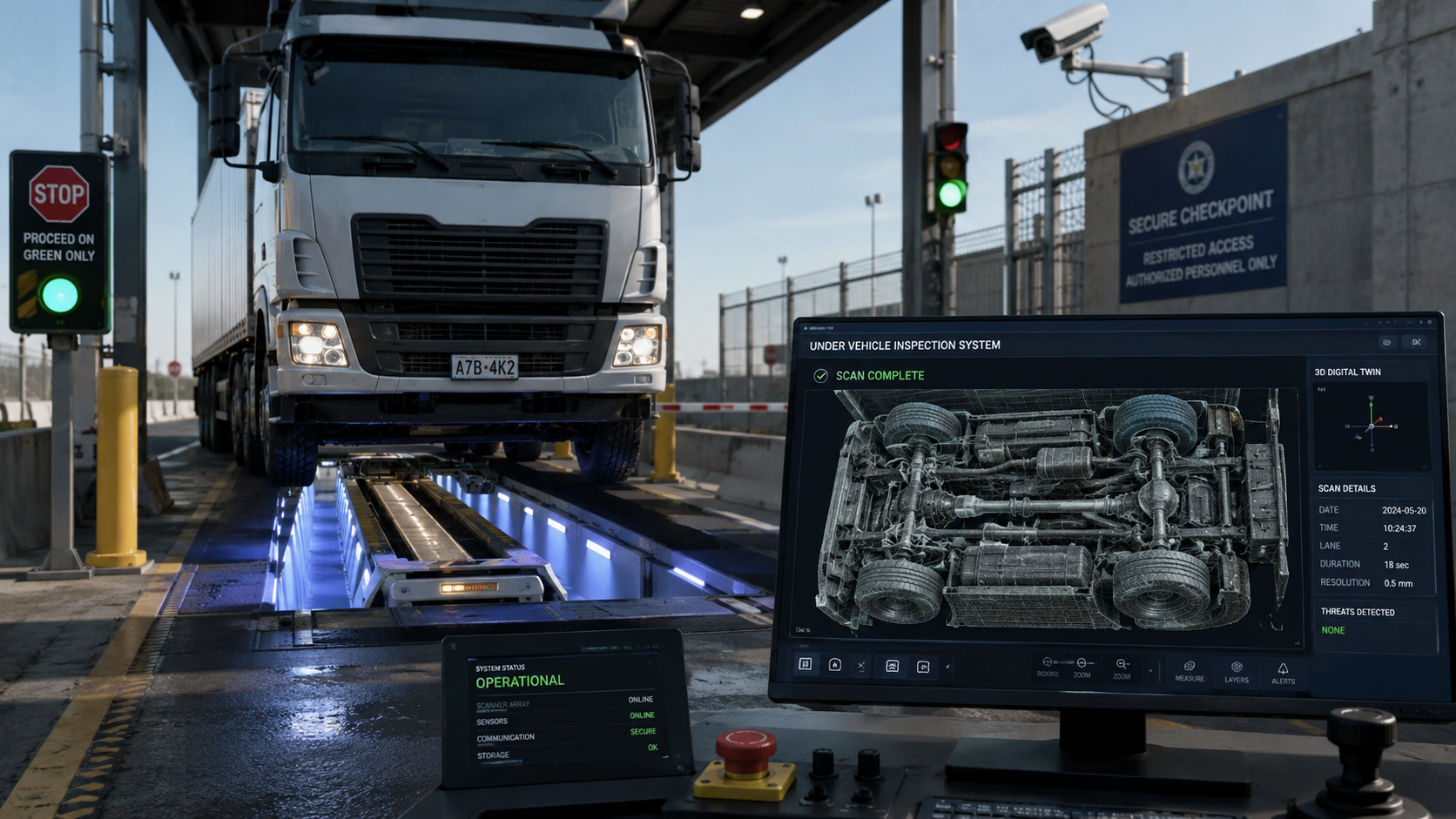
    3. Digital Twin Creation: This data is processed in milliseconds to create a high-definition 3D model. When you understand how does a 3d under vehicle scanner work, you realize that the operator can rotate and zoom into this digital model, inspecting the vehicle from angles that were previously impossible to reach.

    Why Invest in a High Security Vehicle Inspection System?

    Choosing a high security vehicle inspection system is a strategic move for any high-value target, such as an embassy, airport, or data center. As a reseller, we often highlight that the true value of a high security vehicle inspection system lies in its ability to provide vehicle threat detection without slowing down traffic.

    A high security vehicle inspection system is designed for high-throughput areas. Because it is a drive-through solution, there is no need for the vehicle to stop, which prevents “gate congestion”—a common vulnerability that attackers often exploit. By integrating automated vehicle screening with license plate recognition (ANPR), you create a complete security profile for every vehicle on your property.


    AI-Powered UVSS: The Future of Automated Vehicle Screening

    The transition to an AI-powered UVSS is the most significant advancement in recent years. Manual inspection is prone to fatigue and human error; a guard might miss a small package taped to a dark corner of a truck frame. An AI-powered UVSS, however, never gets tired.

    This automated vehicle screening software performs a “change detection” analysis. If a car enters a government parking lot every day, the high security vehicle inspection system remembers its “fingerprint.” If that car returns with a foreign object attached to the axle, the vehicle threat detection software triggers an instant alarm. This level of automation is why a high security vehicle inspection system is considered a force multiplier for security teams.


    Sector-Specific Applications of the High Security Vehicle Inspection System

    At UVSS, we supply a wide range of industries with these solutions. Every sector has unique requirements, but all benefit from the hardened perimeter a high security vehicle inspection system provides:

    • Military and Border Control: Where vehicle threat detection is a matter of national safety, these systems provide a non-intrusive way to scan for weapons and smuggled goods.
    • Government Buildings: Implementing a high security vehicle inspection system ensures that diplomatic and administrative hubs are protected from VBIED (Vehicle Borne Improvised Explosive Device) threats.
    • Logistics and Warehousing: For high-value distribution centers, undercarriage inspection technology prevents theft by ensuring that inventory isn’t being smuggled out attached to the underside of delivery trucks.

    Why Partner with UVSS for Your Security Needs?

    As a dedicated reseller of the world’s most advanced undercarriage inspection technology, UVSS provides more than just hardware. We provide the expertise to ensure your high security vehicle inspection system is integrated perfectly into your existing security stack.

    We help our clients understand the technical nuances, such as how does a 3d under vehicle scanner work in extreme weather conditions or how to optimize AI-powered UVSS algorithms for specific vehicle types. Our goal is to ensure that your investment in a high security vehicle inspection system translates into absolute peace of mind.


    Conclusion: Securing the Unseen

    The space beneath a vehicle is no longer a hiding place for threats. With a modern high security vehicle inspection system, the invisible becomes visible. By combining automated vehicle screening with the depth-perception of 3D technology, you are closing a critical gap in your facility’s defense.

    Now that you know how does a 3d under vehicle scanner work and why an AI-powered UVSS is essential for 2026, the next step is implementation. Don’t wait for a security breach to reveal the weaknesses in your perimeter.

    Contact UVSS today for a consultation and customized quote on the highest-performing vehicle inspection systems in the industry.

  • The New Frontier of Perimeter Security: Why an AI Based Vehicle Inspection System is Vital

    The New Frontier of Perimeter Security: Why an AI Based Vehicle Inspection System is Vital

    In an era where security threats are becoming increasingly sophisticated, relying on manual inspection methods for vehicle checkpoints is a gamble that high-stakes facilities can no longer afford to take. The underside of a vehicle—the chassis—remains one of the most vulnerable “blind spots” for security personnel. Traditionally, guards used mirrors on poles, a method that is not only slow and ergonomically taxing but also highly subjective and prone to human error. Today, the shift toward an ai based vehicle inspection system is transforming how we secure our borders, government buildings, and corporate campuses.

    At UVSS, we specialize in reselling world-class automatic under vehicle scanner system technology designed to eliminate the guesswork.

    By replacing manual labor with high-resolution digital imaging and artificial intelligence, facilities can achieve a level of thoroughness that was previously impossible. In this guide, we will explore how automated vehicle security scanning is redefining safety standards globally.


    The Architecture of an AI Based Vehicle Inspection System

    An ai based vehicle inspection system is not just a camera; it is a complex ecosystem of hardware and software working in tandem. The process begins when a vehicle approaches a checkpoint. As it drives over a scanning unit—often flush-mounted into the roadway—the vehicle underbody inspection technology captures a high-resolution, stitched image of the entire chassis.

    What sets an ai based vehicle inspection system apart from older digital versions is the “brain” behind the image. Modern systems utilize deep learning algorithms to analyze the scan. This vehicle threat detection system can automatically identify anomalies, such as attached foreign objects (magnets, improvised explosive devices, or contraband) by comparing the current scan against a massive database of factory-standard vehicle undercarriages.

    This automation ensures that the automatic under vehicle scanner system provides a consistent, unblinking eye on every vehicle that enters your site.


    Precision Meets Speed: Automatic Under Vehicle Scanner System Benefits

    For facility managers and security directors, the primary challenge is balancing high security with smooth traffic flow. A manual search creates bottlenecks. In contrast, an automatic under vehicle scanner system allows for a “drive-through” experience. Vehicles can move at speeds up to 30 km/h while the system captures crystal-clear imagery.

    When you implement an ai based vehicle inspection system, you are investing in:

    • Real-Time Analysis: The vehicle threat detection system alerts guards to potential dangers in seconds, allowing for immediate intervention.
    • Unmatched Image Quality: Unlike a mirror, which offers a distorted, partial view, an ai based vehicle inspection system provides a flat, high-definition panoramic view of the underbody.
    • Non-Invasive Security: This automated vehicle security scanning method does not require the driver to exit the vehicle or the guard to get close to a potentially dangerous underside, keeping personnel safe.

    License Plate Recognition Integration: Creating a 360-Degree Profile

    A standalone scan is powerful, but its utility is doubled when combined with license plate recognition integration. When a vehicle passes over the automatic under vehicle scanner system, the software simultaneously captures the license plate number.

    This integration allows the ai based vehicle inspection system to create a historical profile of every vehicle. If a delivery truck returns to a corporate facility, the system recognizes the plate and automatically retrieves the previous underbody scan. The ai based vehicle inspection system then performs a “change detection” analysis, highlighting exactly what has changed on the underbody since the last visit. This level of vehicle underbody inspection technology makes it virtually impossible for unauthorized modifications or hidden items to go unnoticed over time.


    Why Procurement Managers Prioritize Automated Vehicle Security Scanning

    From a commercial perspective, the ROI of an ai based vehicle inspection system is found in labor savings and risk mitigation. Manual searches require multiple guards per lane to be effective. An automatic under vehicle scanner system allows a single operator to monitor multiple lanes from a central, secure command center.

    Furthermore, as a reseller, UVSS emphasizes that an ai based vehicle inspection system acts as a powerful psychological deterrent. Bad actors are significantly less likely to target a facility that clearly utilizes automated vehicle security scanning and vehicle threat detection system technology. The mere presence of a high-tech automatic under vehicle scanner system signals that your perimeter is a “hard target.”


    Operational Reliability in Harsh Environments

    At UVSS, we understand that security doesn’t stop for bad weather. The automatic under vehicle scanner system hardware we provide is built to withstand extreme temperatures, heavy rain, and corrosive road salt.

    The vehicle underbody inspection technology is typically housed in IP68-rated enclosures, featuring self-cleaning glass and internal heating elements to prevent fogging. Whether you are operating a border crossing in a desert or a port in a freezing climate, your ai based vehicle inspection system remains the first line of defense, 24/7.


    Industry Applications for AI Based Vehicle Inspection Systems

    The versatility of an ai based vehicle inspection system makes it suitable for a wide range of high-security environments:

    1. Government & Military: Protecting sensitive installations from VBIEDs (Vehicle-Borne Improvised Explosive Devices) using an automatic under vehicle scanner system.
    2. Transportation Hubs: Ensuring airports and maritime ports remain secure with automated vehicle security scanning.
    3. Corporate Headquarters: Using license plate recognition integration to manage executive and visitor parking safely.
    4. Correctional Facilities: Preventing the smuggling of contraband into prisons via the undercarriage of delivery vehicles.

    Partnering with UVSS for Your Automatic Under Vehicle Scanner System

    Choosing the right ai based vehicle inspection system requires a partner who understands the nuances of the technology. As a dedicated reseller, UVSS doesn’t just sell equipment; we provide a complete security solution.

    We help you navigate the technical specifications of vehicle underbody inspection technology, ensuring that your automatic under vehicle scanner system is perfectly calibrated for your site’s specific vehicle types and traffic volume. Our systems are designed for easy integration with existing CCTV and access control platforms, providing a seamless “smart checkpoint” experience.


    Conclusion: Future-Proofing Your Perimeter

    The shift toward AI and automation is inevitable in every sector, and security is no exception. An ai based vehicle inspection system represents the current pinnacle of checkpoint technology. By combining automated vehicle security scanning with a sophisticated vehicle threat detection system, you are eliminating the human factor and significantly raising the security bar.

    Investing in an automatic under vehicle scanner system is an investment in certainty. At UVSS, we are committed to providing the most advanced ai based vehicle inspection system options on the market. Don’t let your facility’s safety depend on a mirror and a flashlight.

    Secure your perimeter with the intelligence of AI. Contact UVSS today for a consultation on the best automatic under vehicle scanner system for your facility and see how our ai based vehicle inspection system can transform your security operations.

  • Hardening Your Facility: A Deep Dive into How Much Does a Key Management System Cost?

    Hardening Your Facility: A Deep Dive into How Much Does a Key Management System Cost?

    In the modern operational landscape, physical keys remain a fundamental yet often overlooked security vulnerability. For businesses managing high-value assets, fleets, or large facilities, a single lost master key is more than an inconvenience—it is a significant financial and security liability. When decision-makers begin looking for a robust key tracking system for businesses, the conversation almost always starts with a critical question: how much does a key management system cost?

    At Keysystem, we specialize in reselling world-class security hardware. We understand that Facility Managers and IT Directors need to justify their security spend with clear ROI data. In this guide, we will break down the variables that dictate how much does a key management system cost and why investing in a key control and tracking system is the most cost-effective way to protect your perimeter in 2026.


    The Hidden Costs of Manual Key Management

    Before analyzing the price of hardware, we must look at the “invisible” expenses of outdated methods. If your staff is currently using a manual logbook or a simple pegboard, you are likely losing money in:

    • Labor Hours: Time spent searching for missing keys or manually auditing logs.
    • Rekeying Fees: The massive expense of changing locks across an entire facility when a master key disappears.
    • Liability: The potential cost of a security breach or theft due to unauthorized key access.

    A modern key tracking system for businesses eliminates these variables. By shifting to a digital key cabinet system, you are trading an unpredictable liability for a manageable, high-utility asset.


    Understanding the Variables: How Much Does a Key Management System Cost?

    There is no “one-size-fits-all” price tag because these systems are highly modular. When asking how much does a key management system cost, you have to consider the following primary drivers:

    1. Cabinet Capacity

    The most basic factor is the number of keys. A 10-key digital key cabinet system for a small office will naturally have a lower entry point than a 500-key system for a major airport or hospital. Most enterprise key management solutions are modular, allowing you to add more capacity as your business grows.

    2. RFID Key Management Technology

    The level of intelligence within the system changes the price. RFID key management uses fobs with embedded chips that identify each key individually. This allows the system to know exactly which key is in which slot. While systems without RFID exist, they lack the “forced return” and high-accuracy auditing that a professional key access control system provides.

    3. Authentication Methods

    How much does a key management system cost also depends on how users log in. PIN code access is the standard, but many UK businesses now prefer biometric integration (fingerprint or facial recognition). While biometrics increase the initial how much does a key management system cost, they provide the highest level of non-repudiation—ensuring the person taking the key is exactly who they say they are.

    4. Software and Integration

    Is the system standalone, or does it talk to your existing security network? A key tracking system for businesses that integrates with your CCTV and HR software provides a 360-degree view of your facility. Software licensing and cloud-hosting features will influence the total how much does a key management system cost.


    The ROI of a Key Tracking System for Businesses

    For many of our clients at Keysystem, the system pays for itself within the first 12 to 18 months. Consider a car dealership: if the sales team spends 30 minutes a day looking for fobs, that is hours of lost productivity every week. A key tracking system for businesses ensures every key is accounted for in real-time.

    Furthermore, a secure key storage solution acts as a powerful deterrent. When employees know that a key control and tracking system is recording every transaction with a timestamp, the likelihood of “casual” theft or unauthorized vehicle use drops to near zero.


    Selecting the Right Secure Key Storage Solution

    As a reseller, Keysystem helps you navigate the market to find the best value. When evaluating how much does a key management system cost, we recommend looking at the “Total Cost of Ownership” (TCO). A cheaper, off-brand cabinet may have a lower upfront how much does a key management system cost, but if it lacks technical support or has a high failure rate, it will cost you more in the long run.

    We focus on systems that offer:

    • Durability: Heavy-gauge steel cabinets that withstand tampering.
    • Scalability: The ability to link multiple cabinets across different sites into one digital key cabinet system.
    • Compliance: Systems that provide the audit trails required for ISO and insurance standards.

    How Much Does a Key Management System Cost: A General Estimate

    While we provide custom quotes based on site surveys, a professional-grade key access control system typically falls into three brackets:

    • Entry-Level (10–20 keys): Ideal for small businesses or specific departments.
    • Mid-Range (50–100 keys): Perfect for car dealerships, hotels, and medium-sized offices.
    • Enterprise (Multiple cabinets/Global sites): Designed for critical infrastructure and multi-national corporations.

    To get an accurate answer to “how much does a key management system cost for my specific needs?”, a consultation with a Keysystem expert is the best next step.


    Conclusion: Investing in Peace of Mind

    Your keys are the “passwords” to your physical world. You wouldn’t leave your server passwords on a sticky note; why leave your facility keys on a hook? While the question of how much does a key management system cost is important, the cost of not having one is almost always higher.

    By implementing a key tracking system for businesses, you are taking control of your facility’s security. Whether you are looking for RFID key management to track high-value assets or a simple secure key storage solution to organize your office, Keysystem is here to help.

    Ready to secure your keys? Contact Keysystem today. Our team will provide a transparent breakdown of how much does a key management system cost and help you design a key control and tracking system that fits your budget and your security goals.

  • Hardening Industrial Perimeters: 3D Vehicle Undercarriage Scanner Benefits for Factories

    Hardening Industrial Perimeters: 3D Vehicle Undercarriage Scanner Benefits for Factories

    In the modern industrial landscape, the security of a factory or manufacturing plant extends far beyond the front gate. As global supply chains face increasing threats from theft, corporate espionage, and safety hazards, facility managers are looking for more than just a camera at the entrance. The underside of a vehicle remains one of the most significant “blind spots” in perimeter defense. While manual mirrors were once the standard, the shift toward a 3D vehicle undercarriage scanner is revolutionizing how industrial sites manage entry and exit.At UVSS, we specialize in reselling high-performance security technology designed for the rigors of heavy industry. Understanding the specific 3D vehicle undercarriage scanner benefits is essential for any procurement head or facility manager tasked with protecting a high-value production site.

    From automated anomaly detection to seamless logistics flow, the transition to 3D imaging is a strategic investment in both safety and efficiency.


    Why Standard Inspections Fail in Factory Environments

    Factories and large-scale industrial plants present unique challenges for security. High volumes of delivery trucks, raw material shipments, and contractor vehicles enter and exit daily. Traditional mirrors or 2D line-scan cameras often struggle with the complex, multi-axle chassis found on heavy-duty industrial vehicles.

    This is where an under vehicle inspection system for factories becomes indispensable. Unlike manual checks that put security guards at risk and slow down traffic, an undercarriage inspection system allows for a non-intrusive, contactless review of every vehicle.

    By utilizing a 3D vehicle undercarriage scanner, security teams can “see around” mechanical components, ensuring that a hidden tracking device or a modified compartment isn’t overlooked due to the flat perspective of a 2D image.


    Top 10 3D Vehicle Undercarriage Scanner Benefits

    When evaluating security hardware, the Return on Investment (ROI) is found in the specific technical advantages of the system. Here are the primary 3D vehicle undercarriage scanner benefits that are driving adoption in industrial zones:

    1. Depth Perception and Geometry Mapping: A 3D vehicle undercarriage scanner creates a volumetric map of the chassis. This allows the system to recognize depth, making it significantly harder for threats to be concealed within the vehicle’s natural recesses.
    2. Automated Threat Recognition: Modern automatic vehicle inspection system software uses AI to compare the live scan against a manufacturer’s baseline. If a factory-standard chassis has an added magnetic box or a suspicious wire, the system flags it instantly.
    3. High-Speed Throughput: One of the most tangible 3D vehicle undercarriage scanner benefits is the speed of inspection. Vehicles can drive over the unit at speeds up to 30 km/h without stopping, preventing the “gate anxiety” and traffic bottlenecks that plague industrial checkpoints.
    4. Forensic Detail: A 3D vehicle imaging scanner provides high-resolution data that can be zoomed and rotated. This level of detail is invaluable for post-incident investigations or insurance audits.
    5. Deterrence of Theft: Factories often struggle with internal theft. Knowing that an undercarriage inspection system is recording every vehicle’s exit acts as a massive psychological deterrent against smuggling high-value inventory out of the site.
    6. Safety from Hazardous Materials: An under vehicle inspection system for factories can identify fluid leaks (oil, fuel, or chemicals) on incoming trucks, preventing hazardous spills on your production floor.
    7. Weather and Durability Resilience: These units are built to withstand the weight of 18-wheelers and the harsh environmental conditions of an industrial yard, from extreme heat to heavy rain.
    8. Reduced Manpower Costs: An automatic vehicle inspection system allows a single guard to manage multiple entry lanes from a remote command center, significantly lowering long-term operational costs.
    9. Seamless ANPR Integration: By linking the 3D vehicle undercarriage scanner with Automatic Number Plate Recognition, you create a complete digital audit trail for every vehicle registration that enters your facility.
    10. Elimination of Human Error: Unlike guards who may suffer from fatigue or distraction, a vehicle scanning security technology performs with the same high level of scrutiny on the 100th vehicle as it did on the first.

    Strategic Implementation: Under Vehicle Inspection System for Factories

    Implementing an under vehicle inspection system for factories requires a partner who understands the industrial workflow. At UVSS, we don’t just sell equipment; we help you integrate vehicle scanning security technology into your existing perimeter layers.

    For a factory, the “cost of security” is often measured in “lost time.” If a shipment of raw materials is delayed at the gate for 15 minutes for a manual search, that delay ripples through the entire production line. The 3D vehicle undercarriage scanner benefits include the total elimination of this friction. By moving to a 3D vehicle imaging scanner, you ensure that security becomes an enabler of logistics, not a barrier.


    Future-Proofing with AI and 3D Imaging

    As threats evolve, so must your defense. Legacy 2D systems are prone to false alarms caused by mud, snow, or shadows. One of the standout 3D vehicle undercarriage scanner benefits is its “Vibration Immunity” and lighting-independent scanning. Because the 3D vehicle imaging scanner maps the actual structure of the vehicle, it is far more reliable in the messy, high-vibration environment of a busy factory gate.

    Furthermore, a modern automatic vehicle inspection system is “future-ready.” Software updates can be pushed to the unit to recognize new vehicle models or emerging threat patterns, ensuring your under vehicle inspection system for factories remains effective for years to come.


    Conclusion: Securing the Unseen

    For the modern factory, security must be both invisible and impenetrable. Relying on outdated mirrors or basic cameras leaves a critical vulnerability at your most basic entry point. The 3D vehicle undercarriage scanner benefits are clear: improved detection accuracy, faster vehicle processing, and a safer environment for your staff.

    At UVSS, we are proud to be the trusted reseller of choice for industrial facilities across the globe. We help you turn the “blind spot” under your vehicles into a high-definition, 3D asset of intelligence and safety.

    Is your industrial facility truly secure? Contact UVSS today for a consultation on the best under vehicle inspection system for factories and discover how a 3D vehicle undercarriage scanner can harden your perimeter while accelerating your operations.