Author: admin

  • Hardening the Perimeter: Choosing the Right Under Vehicle Inspection Solution for High-Security Facilities

    Hardening the Perimeter: Choosing the Right Under Vehicle Inspection Solution for High-Security Facilities

    In the modern threat landscape, a facility’s perimeter security is only as strong as its weakest link. While multi-layered defenses like biometric access control, facial recognition, and automated bollards protect the visible entry points, an overlooked vulnerability remains close to the ground. The undercarriage of a vehicle provides ample space for hiding contraband, weapons, tracking devices, or vehicle-borne improvised explosive devices (VBIEDs). To mitigate these high-stakes risks, integrating a digital under vehicle inspection solution into your checkpoint operations is an absolute operational necessity.

    For decades, security personnel relied on manual mirrors on wheels to peek underneath oncoming traffic. However, in 2026, this legacy method is universally recognized as a major liability: it is slow, subjective, highly prone to human error, and places security guards directly in harm’s way. Moving toward a digital, automated under vehicle inspection solution allows organizations to secure their perimeters with absolute confidence.

    At UVSS, as an industry-leading reseller of elite checkpoint and screening technologies, we work alongside critical infrastructure managers, corporate campus directors, and government procurement offices. We understand that maximizing throughput while maintaining zero-fail security standards is a delicate balance. In this comprehensive guide, we will break down how a modern under vehicle inspection solution works, its primary business benefits, and how to choose the right system for your facility.

    Why Your Facility Needs an Automated Under Vehicle Inspection Solution

    When evaluating security hardware budgets, it is vital to assess the hidden liabilities of manual inspection methods. A physical check using a mirror takes anywhere from one to three minutes per vehicle, creating immediate traffic bottlenecks during peak commuting hours. Furthermore, a human guard cannot mentally store and compare thousands of vehicle chassis variants, meaning minor structural modifications are easily missed.

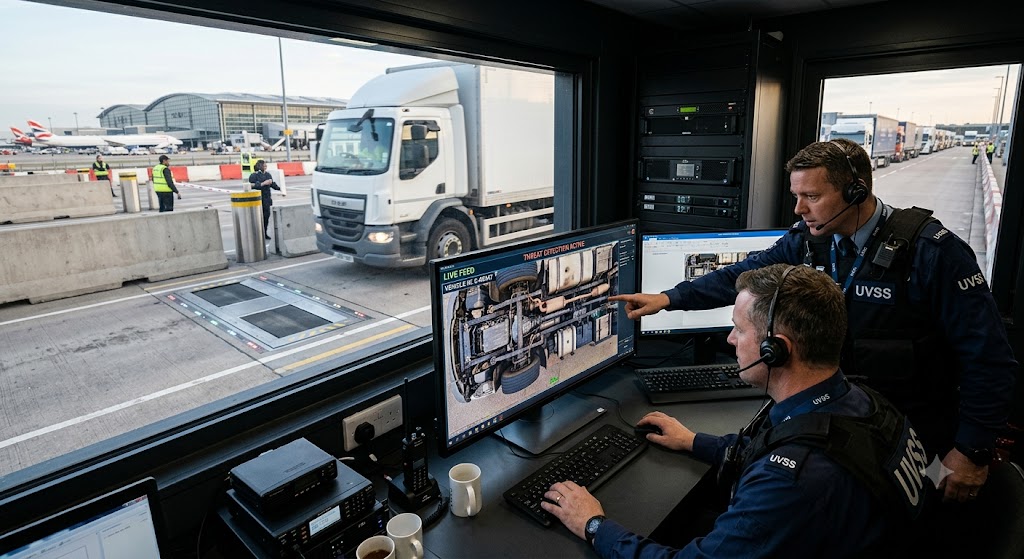
    By implementing an automated under vehicle inspection solution, you shift from reactive guesswork to proactive defense. The system functions as an invisible digital checkpoint that scans, processes, and logs the undercarriage of a vehicle within seconds. By deploying a professional under vehicle inspection solution, your security personnel can stay safe inside a guard booth, reviewing high-definition imagery on a monitor rather than bending over in dangerous traffic lanes.

    How a Modern Under Vehicle Inspection Solution Operates

    The technical capabilities of a contemporary under vehicle inspection solution rely on a sophisticated mixture of high-speed photography, specialized lighting arrays, and advanced processing software.

    When a vehicle approaches the checkpoint, the sequence proceeds automatically:

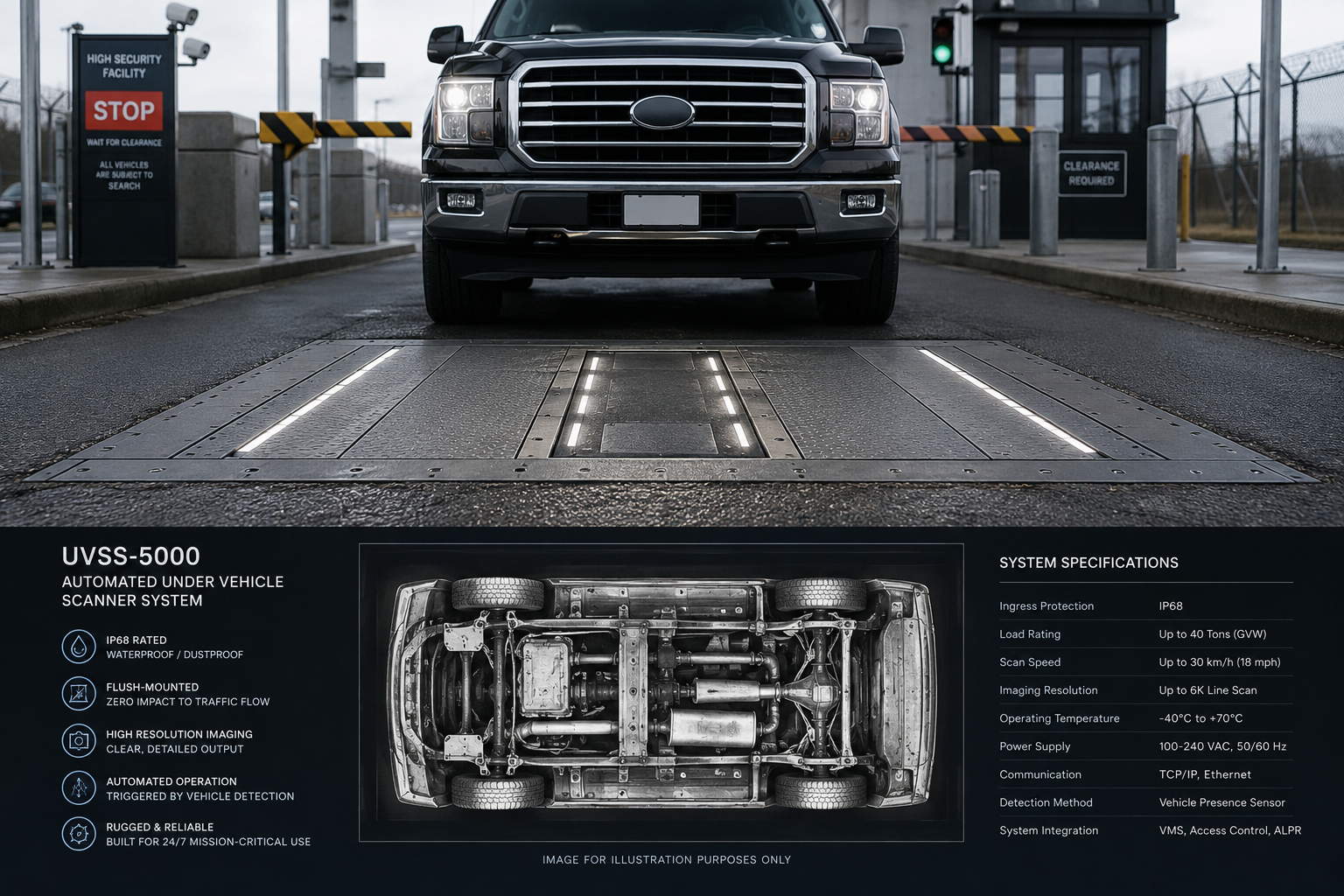
    1. High-Intensity Illumination: As the front wheels pass the scanning threshold, high-power, shadowless LED arrays flood the vehicle’s underside with light. This washes out the deep shadows cast by fuel tanks, axles, and exhaust systems.
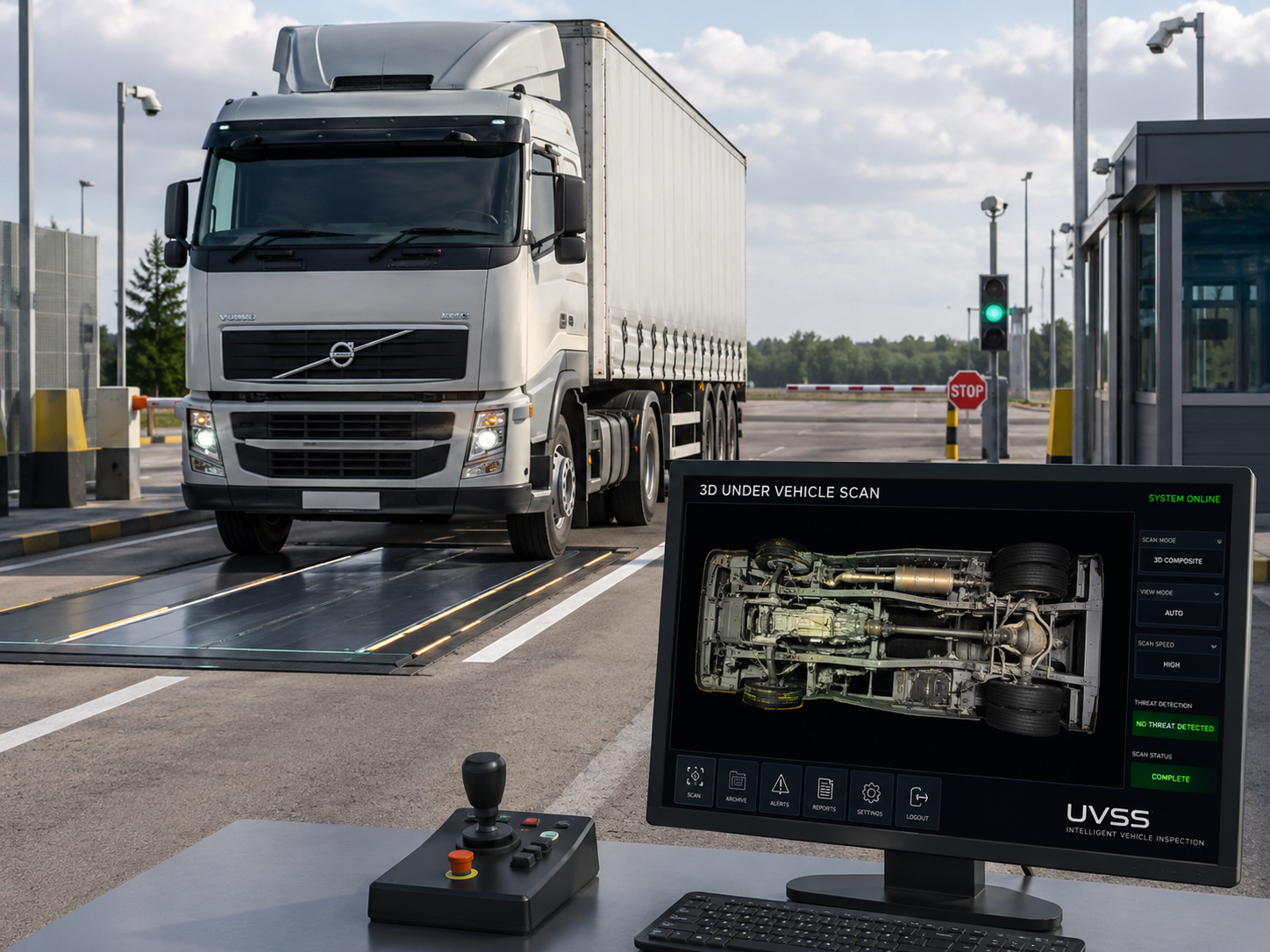
    2. Line-Scan Imaging: A high-resolution line-scan camera captures thousands of horizontal images per second. As the vehicle moves smoothly over the unit, the software instantly stitches these visual slices into a seamless, distortion-free composite photograph of the complete chassis.
    3. Automated Comparison: The heart of a premium under vehicle inspection solution is Artificial Intelligence (AI). The software compares the live scan against a reference image or a previous scan of that exact vehicle, instantly flagging anomalies like loose wires, magnetic packages, or modified structural panels.

    This streamlined workflow explains why a digital under vehicle inspection solution is the gold standard for high-security environments like airports, military sites, and data centers.

    Key Features to Prioritize in an Under Vehicle Inspection Solution

    Because UVSS represents the world’s most trusted security hardware manufacturers, we advise our clients to look beyond the basic camera specs. When sourcing an under vehicle inspection solution, prioritize these operational features:

    True Depth Perception via 3D Point-Clouds

    While a standard 2D line-scan system provides a flat picture, a premium 3D under vehicle inspection utilizes stereoscopic cameras to build an interactive, multi-dimensional model. This allows security operators to digitally tilt and rotate the view, looking “over and around” cross-members and mechanical components where contraband could easily be hidden.

    Real-Time High Throughput

    Security hardware must never paralyze a facility’s logistics. A high-performance under vehicle inspection solution is engineered to scan vehicles traveling at speeds up to 30 km/h (approx. 18 mph), rendering the finalized image on the guard’s screen in less than three seconds. This speed ensures that your daily supply chains and employee traffic flows remain entirely uninterrupted.

    Rugged Environmental Engineering

    Because these units are embedded directly into asphalt or concrete roadways, durability is paramount. Ensure your under vehicle inspection solution is housed in a heavy-duty, corrosion-resistant casing featuring an IP68 weatherproofing rating. This guarantees that the internal cameras and electronics remain protected against heavy dust, sub-zero winters, flash floods, and massive axle weight loads of up to 40 tonnes.

    Choosing Between Fixed and Portable Solution Topologies

    As an experienced reseller, UVSS customizes every deployment based on the physical constraints of your checkpoint. An under vehicle inspection solution typically comes in two distinct form factors:

    • Fixed (Flush-Mounted) Systems: These units are permanently cast into a shallow trench in the roadway, sitting completely level with the driving surface. This topology is perfect for permanent high-profile entrances, offering a clean, unobstructed appearance that is highly resilient against ongoing heavy-duty truck traffic.
    • Portable (Surface-Mounted) Systems: Designed for rapid deployment, a portable under vehicle inspection solution features a low-profile ramp that sits on top of the existing roadway. This setup can be fully deployed and operational in under ten minutes, making it the ideal choice for temporary events, VIP visits, or auxiliary checkpoints where permanent excavation is prohibited.

    The Power of a Unified Security Ecosystem

    An isolated piece of security technology is only partially effective. To maximize your return on investment, your chosen under vehicle inspection solution should integrate flawlessly into your existing security management software.

    By linking your under vehicle inspection solution with Automatic Number Plate Recognition (ANPR), driver-facing cameras, and access control gates, you create an unalterable digital footprint for every vehicle entry event. If the AI changes detection software flags a hidden threat beneath a vehicle, the system can automatically lock down the rising bollards, sound the alarm in your Security Operations Center (SOC), and pin the license plate and driver’s identity to the threat file for immediate forensic review.

    Why Choose UVSS as Your Strategic Partner?

    At UVSS, we do not just sell boxes of hardware. We are physical security consultants dedicated to protecting your organization’s infrastructure and personnel. Sourcing your under vehicle inspection solution through us guarantees that you receive impartial, vendor-agnostic advice tailored precisely to your budget and threat profile.

    We assist your technical teams through every phase of the project cycle:

    • Initial site assessment and traffic-flow analysis.
    • Selecting the perfect fixed or portable under vehicle inspection solution.
    • Network engineering and software integration with your existing CCTV and gate barriers.
    • Comprehensive staff training and ongoing global technical support.

    Conclusion: Eliminate the Blind Spots on Your Perimeter

    Leaving the undercarriage of a vehicle unmonitored is an unacceptable risk for any modern commercial or high-security facility. Relying on outdated mirrors leaves your guards vulnerable and your property exposed to sophisticated internal and external threats. Upgrading to an intelligent, automated under vehicle inspection solution is the definitive way to secure your baseline, automate compliance data logging, and future-proof your checkpoint operations.

    Take complete control of your checkpoint security today. Contact UVSS to speak with our engineering specialists, request a live technical demonstration, and find the perfect under vehicle inspection solution to safeguard your operations for 2026 and beyond.
  • Zero-Fail Security: The Case for a Dedicated Under Vehicle Scanner for Embassies

    Zero-Fail Security: The Case for a Dedicated Under Vehicle Scanner for Embassies

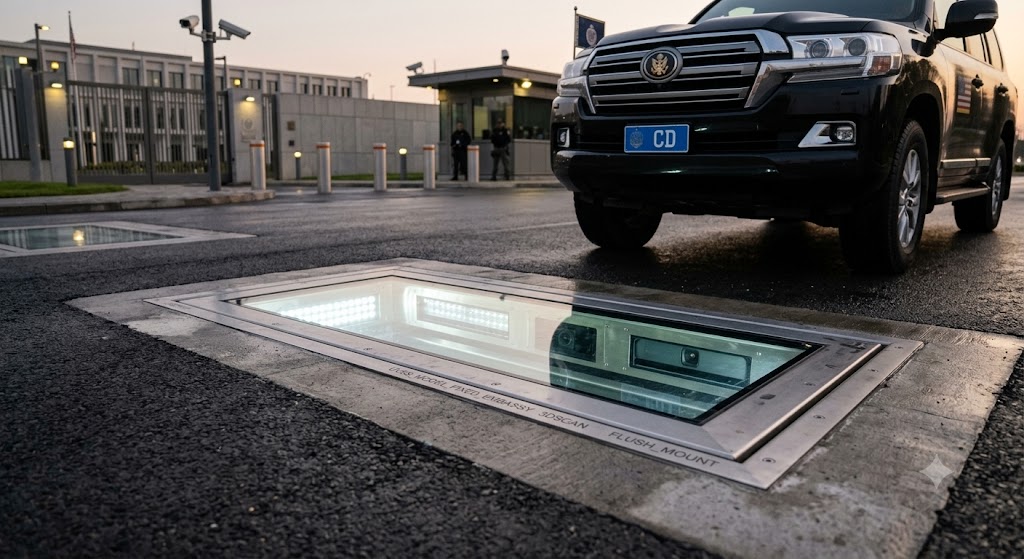
    In the sphere of global diplomacy, the security landscape is unyielding. Embassy grounds are not merely physical assets; they are extensions of sovereign territory, housing sensitive personnel, classified information, and a nation’s vital interests abroad. This unique status makes them primary targets for advanced physical threats, including espionage, smuggling, and vehicle-borne improvised explosive devices (VBIEDs). To maintain the strict neutrality and safety required for diplomacy, these high-stakes perimeters demand a security infrastructure that allows zero margin for error.Traditional checkpoint security has long focused on above-ground surveillance—cameras, identity-based access control, and manual body searches. However, this leaves a significant, highly vulnerable ‘blind spot’: the vehicle’s underside. Relying on outdated inspection mirrors is dangerous in 2026; it is slow, subjective, and exposes security personnel to direct harm. The mandatory solution for securing these critical perimeters is a purpose-built under vehicle scanner for embassies.

    At UVSS, as a global reseller of elite checkpoint technologies, we have deployed advanced screening systems for diplomatic missions worldwide. We understand that embassy security is not a “one-size-fits-all” scenario. In this guide, we will explore why a specialized under vehicle scanner for embassies is critical for 24/7 protection and how the latest technology mitigates evolving risks.

    The Evolution of Perimeter Threats Against Diplomatic Targets

    Embassies face a singular combination of threats that demand a specialized response. Vehicle-borne improvised explosive devices (VBIEDs) remain the most devastating physical threat, as seen in tragic historical examples. A sophisticated VBIED is rarely obvious; it is designed to be integrated into the vehicle’s chassis or hidden deep within complex geometry to avoid standard visual checks.

    Furthermore, the threat profile is not limited to explosives. Embassy perimeters also face risks from:

    • Contraband Smuggling: Unauthorized materials or hardware intended to compromise data centers or restricted areas.
    • Tampering and Modifications: Modifications to official vehicles to hide surveillance devices or unauthorized access points.
    • Intelligence Gathering: Devices attached to the undercarriage to track mission movements or intercept communications.

    A standard inspection mirror cannot counter these complex threats. A visual check takes minutes per vehicle, causes traffic congestion, and lacks the resolution to spot minute alterations. A dedicated under vehicle scanner for embassies eliminates these weaknesses by providing instant, high-resolution digital visibility.

    How an Automated Under Vehicle Scanner for Embassies Detects Threats

    Modern scanning technology has moved far beyond simple video capture. A high-performance under vehicle scanner for embassies now relies on artificial intelligence (AI), stereoscopic imaging, and advanced software to deliver actionable intelligence.

    1. Real-Time Stereoscopic Imaging

    A leading under vehicle scanner for embassies uses dual-camera systems to provide depth perception—known as stereoscopic imaging. This technology creates a three-dimensional model of the undercarriage, allowing the operator to look “around” obstructions like the exhaust pipe or fuel tank, rather than just viewing a flat 2D image.

    2. AI-Driven Change Detection

    The most critical feature of a sophisticated under vehicle scanner for embassies is Automated Threat Detection (ATD) with change detection software. When a diplomatic vehicle or cargo delivery arrives, the system doesn’t just scan it; it checks its current scan against a previously stored “clean” image of that same vehicle or make.

    The AI instantly highlights any discrepancy—such as a new wire, an extra box, or modified structural geometry—and triggers a real-time alarm. This automation removes human subjectivity, ensuring that the last vehicle scanned at 3:00 AM is checked with the exact same rigor as the first one scanned during the morning rush.

    3. Integrated Vehicle Profile

    The effective under vehicle scanner for embassies is never an isolated tool. It must integrate seamlessly with an existing facility ecosystem. By linking the chassis scan with Automatic Number Plate Recognition (ANPR) and a driver-facing camera, a full digital “fingerprint” of the entry event is created and logged, aiding forensic investigations.

    Fixed vs. Portable: Tailoring the Solution to Embassy Topology

    As a reseller representing several elite manufacturers, UVSS emphasizes that the choice between a fixed (recessed) and a portable (surface-mounted) under vehicle scanner for embassies depends on the specific site requirements.

    • Fixed Systems (Permanent Hardening): Recommended for main arterial access points at established chancery buildings. These flush-mounted units (often IP68-rated for durability) are seamless and designed for maximum throughput. They can handle heavy diplomatic limousines and multi-axle freight trucks in all weather conditions, providing an unnoticeable yet highly resilient layer of security.
    • Portable Systems (Rapid Deployment): Ideal for temporary consulate locations, auxiliary gates during major events, or high-threat rapid-response scenarios. A portable under vehicle scanner for embassies can be deployed in under 10 minutes, immediately hardening a checkpoint without the need for road excavation. They are essential for protecting the “soft underbelly” of an embassy during high-risk diplomatic transitions.

    Navigating Procurement and Resilience: The Reseller Advantage

    When procuring an under vehicle scanner for embassies, security departments are looking for more than hardware; they are buying operational uptime and long-term resilience. Partnering with a specialized reseller like UVSS provides significant advantages:

    1. Expert Consultation and Integration

    We help mission security officers navigate the complex technical specifications of an under vehicle scanner for embassies. We don’t just sell equipment; we consult on optimal placement, technical software integration with existing VMS (Video Management Systems), and staff training to ensure the system performs under extreme pressure.

    2. Vetted Manufacturer Reliability

    Diplomatic security cannot depend on unproven hardware. We vet all manufacturers in our portfolio to guarantee rugged, all-weather components, reliable software updates, and the highest standards of data encryption for the captured scans. Every under vehicle scanner for embassies we supply is selected for its operational excellence in high-threat environments.

    3. Ongoing Global Support

    A security breach can occur in any time zone. UVSS provides localized technical support and maintenance contracts to ensure your under vehicle scanner for embassies operates 24/7. When procuring equipment for diplomatic missions across different continents, having a single point of global accountability is vital.

    Conclusion: Future-Proof Your Perimeter

    The threats against diplomatic infrastructure are becoming more sophisticated, persistent, and technologically adept. In this landscape, physical security must keep pace. Moving away from manual inspection mirrors and basic 2D imaging to a comprehensive under vehicle scanner for embassies is not optional; it is the fundamental duty of care.

    At UVSS, we are committed to providing zero-fail perimeter defense solutions. We recognize that securing an embassy means protecting international dialogue and global stability. By integrating AI-driven, high-resolution under-vehicle scanning, you are closing the final vulnerability and hardening your perimeter against the unseen.

    Secure your diplomatic perimeter today. Contact UVSS to schedule a consultation with our experts and discover how a dedicated under vehicle scanner for embassies can elevate your facility’s safety to a zero-fail standard.

  • The Ultimate Guide to Commercial Key Control Solutions: Protecting Your Business Assets

    The Ultimate Guide to Commercial Key Control Solutions: Protecting Your Business Assets

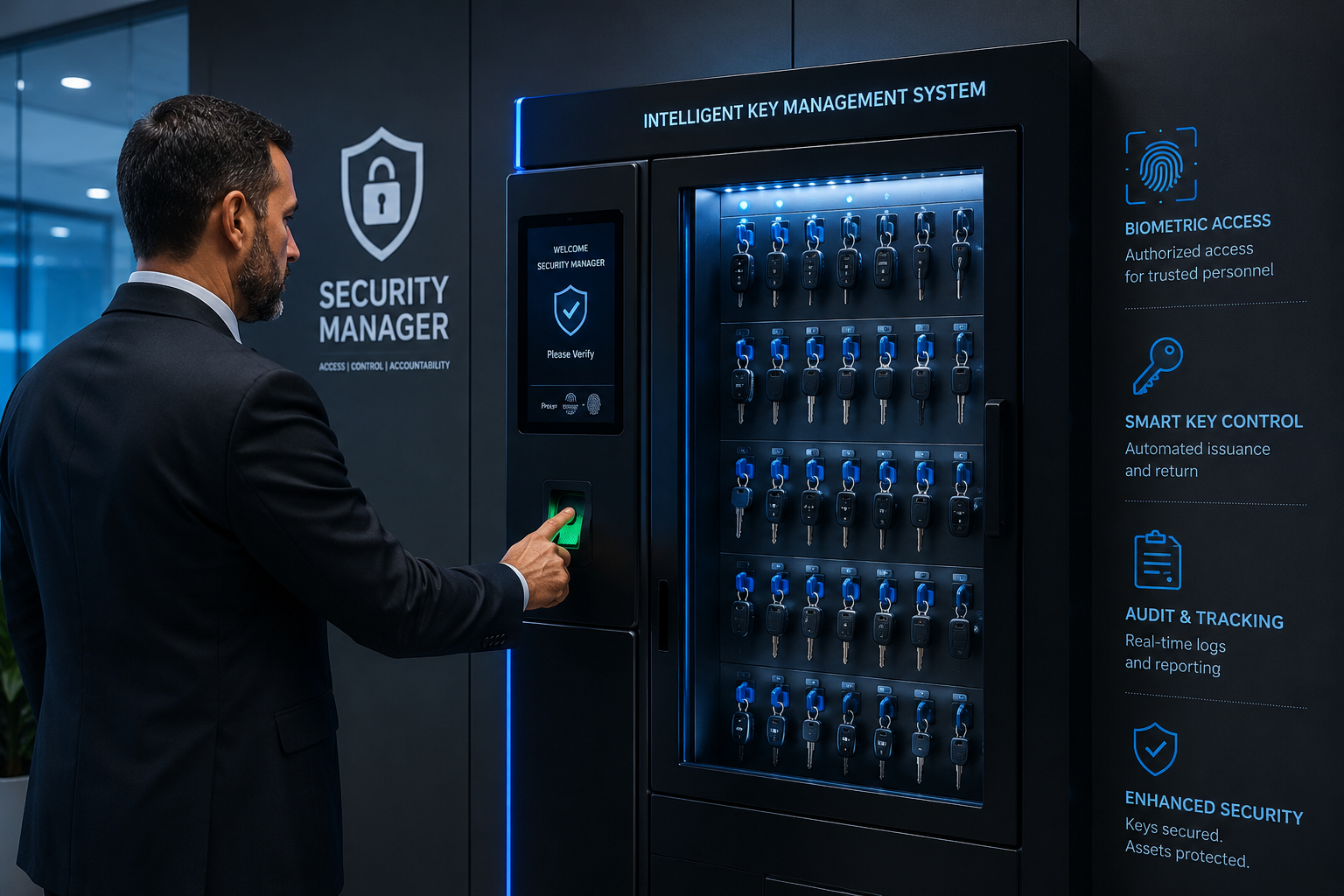
    For any modern business, security isn’t just about locking the front door at the end of the day. It is about knowing exactly who has access to your facility, which rooms they can enter, and when they are doing it. Yet, even in an era of advanced digital access control, physical keys remain a fundamental component of commercial security infrastructure. Managing those physical keys effectively is where many organizations stumble.If your business relies on manual logbooks, pegboards, or a manager’s memory to track corporate keys, you are exposed to significant security vulnerabilities, operational inefficiencies, and compliance risks. Implementing robust commercial key control solutions is the smartest way to mitigate these risks while streamlining your daily operations.

    At Keysystems, we specialize in helping businesses transition from chaotic key tracking to secure, fully auditable physical security frameworks. In this comprehensive guide, we will break down what modern key management looks like, why it is essential for your bottom line, and how to choose the right setup for your industry.

    What is a Commercial Key Control Solution?

    At its core, a commercial key control solution is a comprehensive system designed to track, manage, and restrict access to physical keys within an organization. Rather than treating keys as standalone items distributed on a baseline of trust, a dedicated key control system integrates hardware and software to treat physical keys as trackable digital assets.

    These systems generally consist of three main pillars:

    • Tamper-Proof Hardware: Heavy-duty steel cabinets or electronic key lockers that physically secure your keys.
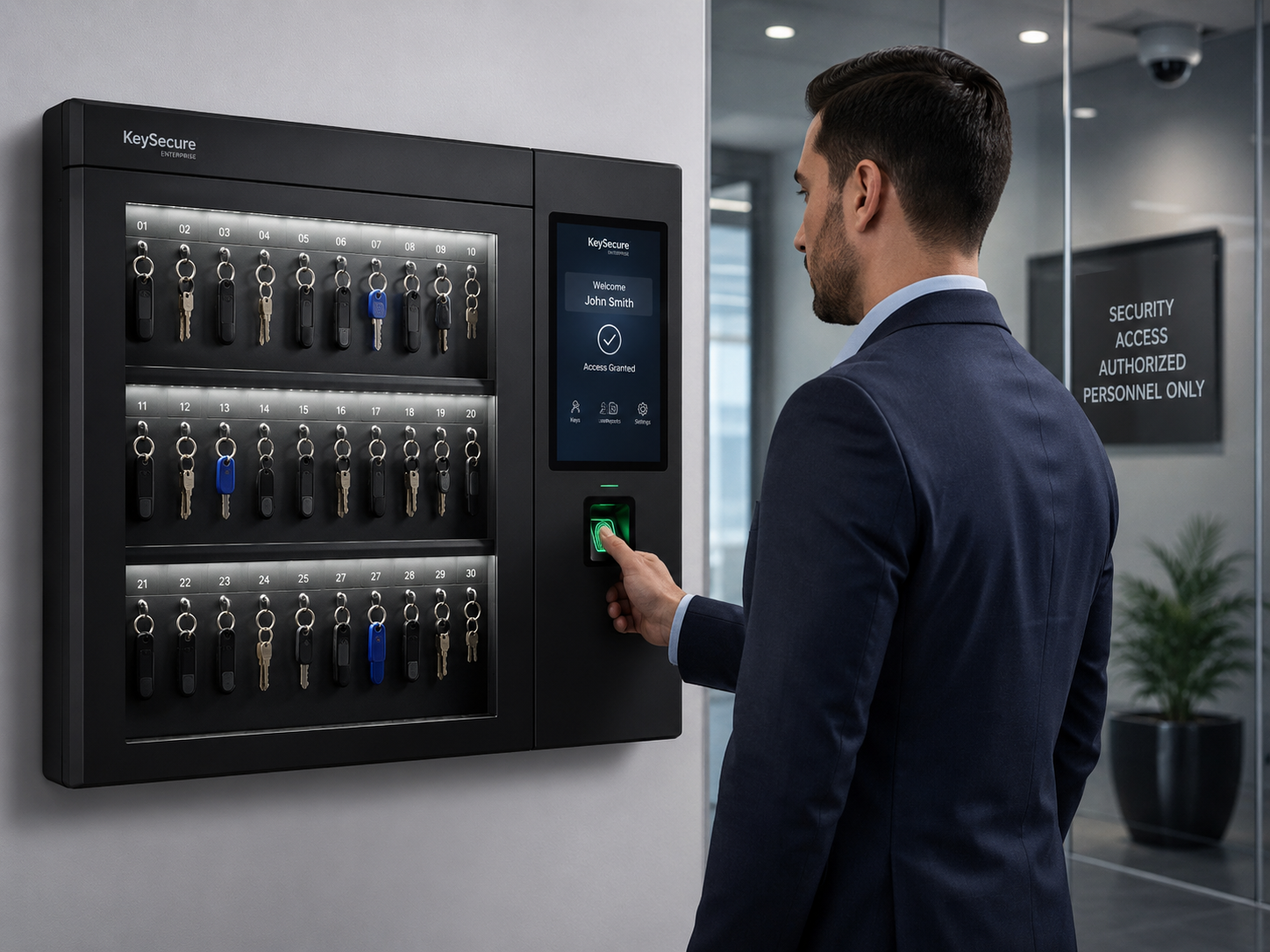
    • Access Authentication: Digital keypads, biometric scanners (fingerprint or facial recognition), or RFID card readers that ensure only authorized personnel can access the cabinet.
    • Management Software: A centralized software dashboard that tracks key status in real time, generates automated audit trails, and alerts management to overdue keys or unauthorized access attempts.

    By moving away from outdated manual tracking methods, investing in professional commercial key control solutions allows management to maintain absolute visibility over every entry point, vehicle, and restricted asset in their inventory.

    The Hidden Costs of Poor Key Management

    Many operations managers view key tracking as a minor administrative task until something goes wrong. The hidden costs of inadequate key security can severely impact your operational efficiency and bottom line:

    1. Re-keying Expenses

    If a master key to a commercial facility goes missing, simply cutting a replacement key does not fix the security breach. To restore security, you must hire a commercial locksmith to re-key every lock that the missing key could open. For a large office building, hospital, or educational campus, a single lost master key can result in thousands of dollars in emergency locksmith fees and hardware replacements.

    2. Operational Downtime

    When service technicians, fleet drivers, or facility staff cannot find the keys they need to start their shifts, productivity grinds to a halt. Searching for misplaced keys or hunting down the colleague who forgot to return a key at the end of their shift wastes valuable billing hours and frustrates your team.

    3. Compliance and Liability Risks

    In industries like healthcare, data center management, banking, and education, strict regulatory standards dictate who can access certain areas. A failure to provide documented audit trails showing exactly who had access to a server room or a narcotics cabinet can result in massive compliance fines, failed audits, and devastating legal liabilities if a security breach occurs.

    Key Benefits of Upgrading Your Key Control Infrastructure

    Transitioning your enterprise to advanced commercial key control solutions provides immediate dividends across security, administrative simplicity, and accountability.

    1. Automated, Real-Time Audit Trails

    The primary advantage of a digital commercial key control solution is the elimination of manual logbooks. Every time a key is requested, retrieved, or returned, the system automatically logs the user’s identity, the specific timestamp, and the key ID. If an asset is damaged or an unauthorized area is entered, administrators can instantly pull up the software dashboard to see exactly who had the corresponding key at that moment.

    2. Time-Based Access Restrictions

    Not every employee needs 24/7 access to your entire facility. High-tier commercial key control solutions allow security administrators to program specific schedules for individual users or user groups. For example, cleaning crews or night shift workers can be restricted so that they can only release building keys during their designated working hours. If they attempt to access a key outside of their shift window, the system denies entry and flags the attempt.

    3. Seamless Integration with Enterprise Security

    Modern key management shouldn’t operate in a vacuum. The elite commercial key control solutions offered by certified resellers like Keysystems can seamlessly interface with your existing security ecosystem. By linking your key cabinets to your wider access control software or CCTV networks, you can trigger security cameras to record a snapshot every time a high-security master key is released.

    Choosing the Right System: Industries That Benefit Most

    While every business with physical doors can profit from enhanced oversight, certain sectors view highly secure commercial key control solutions as a strict operational necessity.

    IndustryPrimary Use CaseCritical Feature Needed
    Property Management & Real EstateManaging unit keys for tenants, maintenance crews, and prospective buyers.Multi-cabinet expansion & remote access provisioning.
    Fleet & Logistics ManagementSecuring ignition keys for delivery trucks, forklifts, and corporate vehicles.Integration with fleet software to track mileage or vehicle maintenance logs.
    Healthcare & Senior LivingControlling access to medication carts, confidential patient files, and clean rooms.Biometric authentication (fingerprint scanning) to meet strict medical HIPAA compliance.
    Hospitality & CasinosSafeguarding master keys for hotel rooms, cash counts, and high-security gaming zones.Instant SMS/Email alerts for overdue keys or unreturned assets.
    Data Centers & Tech InfrastructureGuarding server racks housing proprietary data or sensitive client infrastructure.Dual-custody authentication (requiring two separate managers to unlock the key).

    How to Successfully Implement Commercial Key Control Solutions

    Deploying a new key security system requires a systematic approach to ensure long-term adoption and maximum ROI.

    1.Conduct a Complete Key Audit: Phase 1.

    Before installing hardware, inventory every physical key in your organization. Identify what each key opens, who currently holds copies, and eliminate redundant or obsolete keys from your ecosystem.

    2.Define User Access Levels: Phase 2.

    Categorize your staff into distinct security profiles based on their roles. Determine which keys are accessible to all employees, which require management approval, and which keys should remain under lock and key 24/7.

    3.Deploy Centralized Key Cabinets: Phase 3.

    Install your electronic key cabinets in highly visible, secure, and monitored areas of your building (e.g., security desks or main employee check-in rooms) to maximize physical protection.

    4.Configure Management Software: Phase 4.

    Input your user database, map access permissions to employee badges or PIN numbers, and set up automated email notifications for overdue keys.

    5.Train Your Workforce: Phase 5.

    Conduct thorough onboarding sessions to show employees how to properly check keys in and out. Emphasize accountability, ensuring everyone understands that their personal ID is permanently tied to the keys they draw.

    Partner with Keysystems for Elite Key Security

    Investing in premium commercial key control solutions is one of the most effective ways to lower operational friction, reduce liabilities, and safeguard your organization’s physical perimeter. However, a key control system is only as effective as the planning, hardware quality, and software configuration behind it.

    As a dedicated security reseller, Keysystems doesn’t just supply hardware boxes; we deliver tailored security strategies. We work directly with your facilities management team to evaluate your current threat landscape, source industry-leading commercial key control solutions, and configure a scalable system tailored to your unique compliance needs.

    Do not wait for a costly lost master key or a costly compliance breach to reveal the vulnerabilities in your current system. Upgrade to a smart, fully auditable key ecosystem today.

    Ready to secure your facility’s physical keys? Let’s take the next step together:

    Request a tailored quote for your business

  • Beyond 2D: Top Features to Look for in a 3D Under Vehicle Scanner

    Beyond 2D: Top Features to Look for in a 3D Under Vehicle Scanner

    In the ever-evolving domain of perimeter security, checkpoint vulnerabilities frequently exist beneath our feet. For decades, security teams relied on manual inspection mirrors or legacy 2D linear scanners to monitor the underside of vehicles. However, as modern concealment methods grow increasingly sophisticated, flat, two-dimensional images are no longer sufficient to secure high-risk infrastructure. Shadows, deep mechanical recesses, and perspective distortions often allow illicit objects to pass through checkpoints undetected.

    To effectively eliminate these blind spots, forward-thinking security integrators, facility managers, and procurement officers are upgrading to volumetric imaging. As a premier reseller of elite perimeter surveillance technology, UVSS evaluates and distributes the world’s most robust security systems. If you are looking to harden your perimeter, here are the top features to look for in a 3D under vehicle scanner to ensure your investment delivers uncompromised tactical protection.

    1. Stereoscopic Vision and True Depth Detection (The Z-Axis)

    When analyzing the top features to look for in a 3D under vehicle scanner, the core technology used to capture data must be your primary consideration. Traditional systems look only at the horizontal ($X$) and vertical ($Y$) axes. A true 3D architecture adds the critical $Z$-axis, providing genuine depth perception.

    The most effective systems on the market utilize calibrated, side-by-side dual area-scan cameras to mimic human binocular vision. This stereoscopic depth accuracy allows the system to compute a precise disparity map and convert it into a high-fidelity 3D point cloud.

    • Why it matters: Standard 2D images can easily confuse a harmless oil stain or mud splatter with a dangerous modification. A system equipped with stereoscopic depth measurement can analyze the actual thickness of a foreign item, instantly differentiating a flat surface mark from a solid attached object.

    2. AI-Powered Automated Threat Detection and Anomaly Recognition

    In high-throughput environments like international airports, border crossings, and corporate headquarters, relying solely on human operators to catch hidden threats is an operational bottleneck. Therefore, automated intelligence is one of the non-negotiable top features to look for in a 3D under vehicle scanner.

    Advanced scanning units feature real-time AI anomaly detection algorithms. When a vehicle passes over the scanner, the software automatically compares the live 3D model against a reference database of clean vehicle profiles. If the system identifies sudden structural deviations, loose wiring, or unexpected components, it generates an immediate audio and visual alert for your security operations center (SOC).

    3. Bi-Directional High-Speed Imaging (0 to 75 km/h)

    Legacy line-scan systems suffer from a severe operational flaw: they require vehicles to drive over the sensor array at a perfectly constant speed. If a vehicle accelerates, slows down, or stops mid-scan—which happens constantly during rush-hour queues—the resulting 2D image becomes stretched, compressed, or distorted beyond recognition.

    When searching for the top features to look for in a 3D under vehicle scanner, ensure the platform utilizes high-frequency area-scan sensors rather than line-scan cameras. Area-scan technology captures comprehensive segments of the undercarriage simultaneously, making the system entirely independent of vehicle speed or driver behavior. High-tier models can handle vehicle speeds ranging from complete standstill up to 75 km/h, ensuring traffic keeps moving without sacrificing scan accuracy.

    4. Comprehensive Interactive 3D Visualization and Morphed Viewing

    What happens after an anomaly is flagged? The software interface must empower your security personnel to make rapid, informed decisions. A core component within the top features to look for in a 3D under vehicle scanner is an interactive, multilingual Graphical User Interface (GUI) that supports detailed interactive viewing.

    The system should stitch the dual-angle images into a complete, rotatable 3D color model. Operators should have the capability to:

    • Pan, Tilt, and Rotate: View the undercarriage from various perspectives to see “around” mechanical obstructions like exhaust pipes and heat shields.
    • High-Magnification Digital Zoom: Zoom in up to 25x onto niche areas or hard-to-view components to inspect suspicious objects closely.
    • Dual View Comparison: View the current live scan side-by-side with historical data from the same vehicle to identify unauthorized modifications instantly.

    5. Multi-Sensor Integration and API Architecture

    An under-vehicle scanner shouldn’t operate as an isolated security silo. To achieve true perimeter hardening, seamless integration with external security modules must be ranked high on your checklist of top features to look for in a 3D under vehicle scanner.

    The backend software should offer an open API that links with:

    • Automatic Number Plate Recognition (ANPR / ALPR): To automatically cross-reference the undercarriage scan with the vehicle’s registration data.
    • Driver Image Capture Modules: To capture the driver’s face in real-time, tying a human identity to the physical vehicle profile.
    • Physical Access Barriers: The ability to provide a contact pulse to immediately trigger and lock down boom barriers, tire killers, or hydraulic bollards if a threat is identified.

    6. All-Weather Heavy-Duty Durability (IP68 Protection)

    Because scanning units are installed directly into roadways, they are subjected to brutal environmental stressors, including heavy rain, freezing temperatures, dust, and immense physical weight. Consequently, rugged engineering is among the most practical top features to look for in a 3D under vehicle scanner.

    Look for underground enclosures constructed from structural steel and checkered stainless steel that carry a minimum IP68 waterproof and dustproof certification. Additionally, high-end scanners feature an automated integrated air-cleaner compressor mechanism. This system automatically blows debris, dust, and rainwater off the camera lenses every time a vehicle passes, minimizing manual maintenance and ensuring crystal-clear imaging in all weather conditions.

    Why Procure Your 3D UVSS Through a Trusted Reseller?

    Identifying the top features to look for in a 3D under vehicle scanner is only the first step; successful implementation requires expert deployment. At UVSS, we serve as a dedicated security consultancy and reseller, matching critical facilities with top-tier hardware tailored to their specific network topology.

    Whether your operations require a permanent, flush-mounted underground system for an uncompromised entry lane or a portable, surface-mounted configuration for temporary checkpoint operations, we provide the technical expertise necessary to protect your facility from emerging physical threats.

    Conclusion: Future-Proof Your Perimeter Checkpoints

    Upgrading your checkpoint architecture to include the top features to look for in a 3D under vehicle scanner is a vital step toward comprehensive risk mitigation. By prioritizing stereoscopic depth sensing, AI-driven automation, and rugged all-weather builds, you protect your infrastructure from hidden threats while optimizing traffic flow and operator efficiency.

    Eliminate your blind spots before they are exploited. Contact the technical team at UVSS today to schedule a comprehensive site analysis and discover how a next-generation 3D under-vehicle surveillance ecosystem can safeguard your assets for 2026 and beyond.

  • Driving Operational Efficiency: The Strategic Value of an Electronic Key Cabinet for Fleet Management

    Driving Operational Efficiency: The Strategic Value of an Electronic Key Cabinet for Fleet Management

    Managing a commercial vehicle fleet is a complex balancing act. Whether you operate a logistics network, a public utility pool, or a rental car agency, your daily operations hinge on rapid access to vehicles. Yet, behind the scenes, fleet managers face a frustrating and expensive bottleneck: physical key handling. Lost fobs, manual logbooks, and driver vehicle favoritism can quietly drain profitability and lead to massive security liabilities.To regain absolute control over physical assets, modern operations are shifting toward automated workflows. An electronic key cabinet for fleet management acts as the digital backbone of a vehicle depot. It replaces the uncertainty of the legacy pegboard with automated logging, centralized compliance, and real-time asset tracking.

    At Keysystems, as a premier reseller of leading electronic key management platforms, we specialize in helping businesses transition away from key chaos. In this comprehensive guide, we will analyze how deploying an electronic key cabinet for fleet management protects your vehicles, improves team productivity, and fundamentally reduces your operational overhead.

    The Hidden Costs of Legacy Vehicle Key Control

    Many fleets still manage their keys via an unsecured drawer or a manual sign-out sheet. While seemingly low-cost on day one, this approach introduces steep operational risks:

    • Vehicle Favoritism & Uneven Wear: Left to their own devices, drivers naturally pick the newest or cleanest vehicles. This results in some fleet assets racking up excessive mileage while others sit idle, compounding uneven maintenance costs.
    • Stalled Operations: When a driver loses a fob or leaves it in their pocket after a shift, a vehicle sits decommissioned. Finding the responsible party turns into a multi-hour “search and rescue” mission.
    • High Replacement Expenses: Modern automotive fobs with built-in transponders are expensive to replace and program. Consistently replacing lost fobs destroys tight logistics budgets.

    Integrating an electronic key cabinet for fleet management completely rewrites this dynamic. Every key is individually locked inside an intelligent steel housing, and it can only be removed by a verified driver with explicit authorization.

    How an Electronic Key Cabinet for Fleet Management Works

    Transitioning to automated key security sounds complex, but the physical workflow is remarkably straightforward and user-friendly.

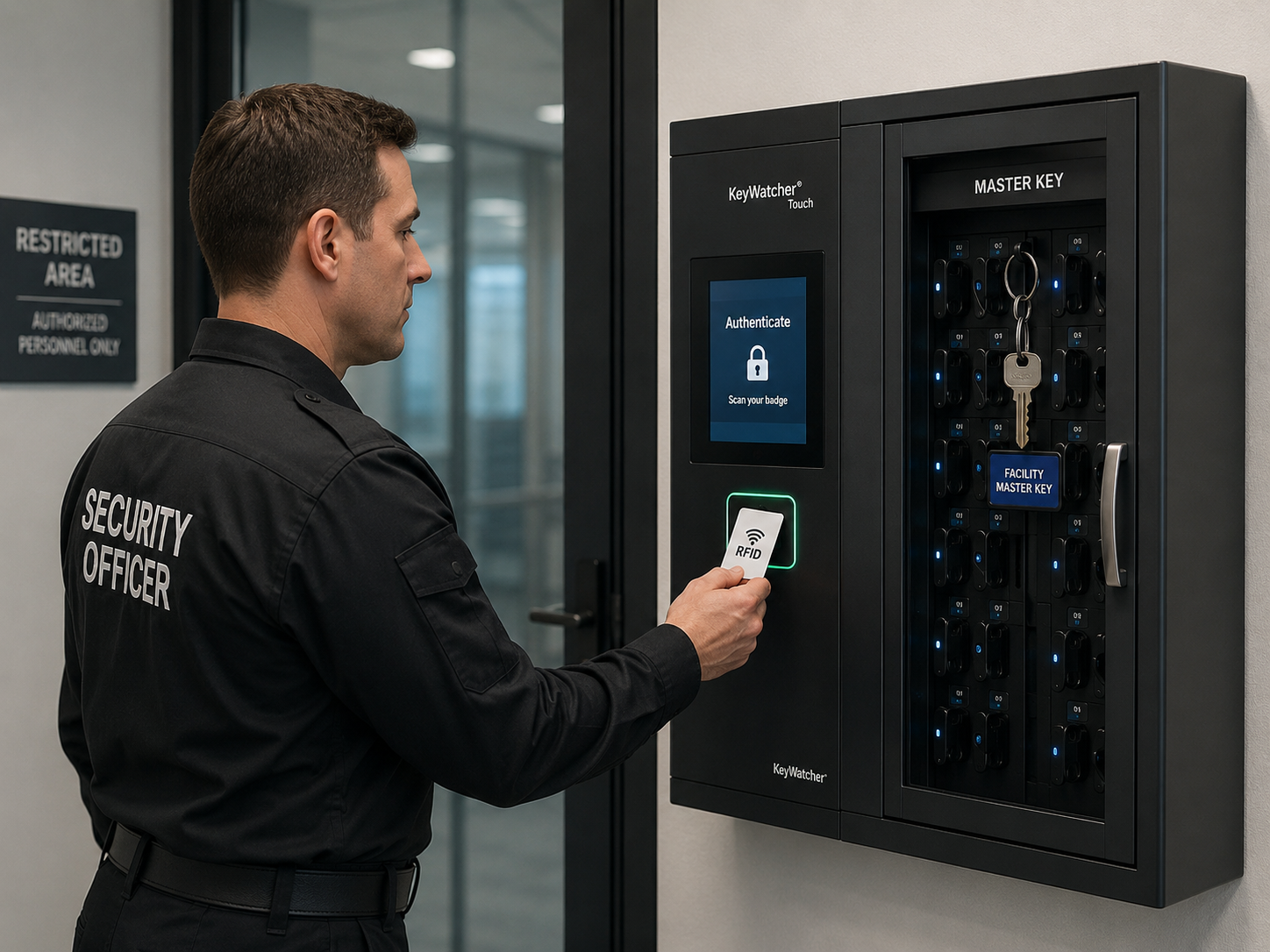
    1. Secure Identification: To access the cabinet, a driver must first verify their identity at the built-in touchscreen console. A high-end electronic key cabinet for fleet management will support multiple secure methods, including corporate RFID proximity cards, unique PIN codes, or biometric fingerprint scanners.
    2. Authorized Allocation: Once logged in, the system checks the central server database. If the driver has a scheduled shift or booking, the cabinet unlocks only the exact slot holding that specific vehicle’s key. Every other key slot stays securely immobilized.
    3. Data Logging on Return: When the driver concludes their route, they scan the key tag back into the electronic key cabinet for fleet management. The system instantly closes out the digital transaction, logging the precise return time and updating the central vehicle availability dashboard.

    Driving Profits via Intelligent Software Integration

    What separates a simple lockbox from a true electronic key cabinet for fleet management is the administration software working behind the scenes. By collecting data with every single transaction, fleet managers can implement clever operational strategies:

    First-In, First-Out (FIFO) Distribution

    To eliminate vehicle favoritism and distribute mileage evenly, your electronic key cabinet for fleet management can enforce FIFO workflows. When a driver logs in to request a vehicle class (e.g., a standard delivery van), the cabinet will automatically dispense the key to the van that has been sitting idle the longest. This guarantees even utilization across your entire commercial inventory, protecting vehicle lifespans.

    Real-Time Curfew and Overdue Alerts

    If a route runs over schedule or a driver forgets to return a key at the end of their shift, human oversight might miss it for hours. An electronic key cabinet for fleet management monitors every time constraint automatically. If a key is not back by a designated curfew, the administration software instantly broadcasts text or email alerts to supervisors, allowing for rapid operational adjustments.

    Prompts for Fleet Data Capture

    Top-tier key cabinets can prompt drivers to log metrics right at the cabinet touchscreen before releasing or accepting a key. Drivers can input mileage readings, parking spot numbers, fuel levels, or battery charges (for EV fleets). Crucially, they can report mechanical faults. If a driver marks a vehicle as having a “brake issue,” the electronic key cabinet for fleet management locks that slot down instantly, preventing subsequent drivers from taking out an unsafe vehicle until a technician clears it.

    Enhancing Security and Lowering Liability

    Automotive fleet yards are frequent targets for cargo theft and vehicle break-ins. Storing keys on an open board inside a break room exposes your fleet to immense risk. Housing your keys inside a modular electronic key cabinet for fleet management creates a formidable barrier.

    Furthermore, having an immutable, tamper-proof digital audit trail drastically reduces internal liability. If a vehicle comes back with fresh body damage, a simple look at the cloud-based reporting dashboard reveals exactly who checked that key out during that specific window. This absolute accountability naturally incentivizes drivers to treat vehicles with greater care, lowering overall repair expenses and insurance premiums over time.

    Why Partner with Keysystems as Your Reseller?

    Investing in an electronic key cabinet for fleet management requires choosing an engineering architecture that seamlessly aligns with your day-to-day operations. At Keysystems, we don’t just supply off-the-shelf security hardware—we architect tailored access management environments.

    As an authorized reseller of the industry’s most trusted, durable modular cabinets, we provide:

    • Scalable Configurations: Start with a simple 10-key cabinet or build an extensive multi-site ecosystem controlling thousands of vehicle fobs. You can easily add capacity as your business grows.
    • Hybrid Storage Panels: Need to protect company fuel cards, toll passes, or tablets alongside vehicle fobs? We configure custom hybrid cabinets with locking compartments to keep all your secondary assets secure in one location.
    • Comprehensive Implementation Support: Our team handles network configuration, on-site onboarding, and seamless integration into your existing fleet management software platforms.

    Conclusion: Lock in Total Fleet Accountability

    As fleet margins become increasingly narrow, operational waste must be aggressively eliminated. Leaving your vehicles vulnerable to key loss, unmetered usage, and uneven degradation is a costly vulnerability. Implementing an electronic key cabinet for fleet management is the fastest path to establishing an optimized, highly accountable fleet department.

    By turning vehicle access into a smart, data-driven workflow, you protect your capital investments and free your personnel from manual administrative bottlenecks.

    Take control of your keys and drive better fleet profitability. Contact the team at Keysystems today to request a live product demonstration or a tailored implementation quote for your logistics depot.

  • Enterprise Security at Scale: The Definitive Guide to a Digital Key Management System for Enterprises

    Enterprise Security at Scale: The Definitive Guide to a Digital Key Management System for Enterprises

    In an era dominated by cloud computing, biometric authentication, and sophisticated cybersecurity frameworks, it is easy to overlook a fundamental, physical vulnerability that faces almost every major organization: the management of physical keys. From data centers and corporate headquarters to manufacturing facilities and fleets of corporate vehicles, physical keys grant access to millions of pounds worth of infrastructure. Yet, managing these assets across multiple locations using traditional logs or basic lockboxes is an operational bottleneck and a massive compliance risk.To secure assets effectively at scale, organizations are increasingly turning to a centralized digital key management system for enterprises. For global firms, critical infrastructure providers, and large-scale facilities, moving away from legacy, manual key handling is no longer a matter of convenience—it is a core requirement of modern risk management. At Keysystems, we specialize in reselling and integrating world-class physical security solutions. We understand that enterprise security requires absolute transparency, strict accountability, and seamless integration. In this comprehensive guide, we will explore why a digital key management system for enterprises is an essential investment for future-proofing your physical operations.

    The Operational Chaos of Legacy Key Tracking

    Large organizations routinely manage thousands of physical keys. Facilities managers, IT heads, and operations directors are tasked with securing master keys, server rack keys, utility vehicle fobs, and restricted area access tokens. When these assets are managed through a manual logbook or an unlocked pegboard, the system is fundamentally broken.

    The “invisible costs” of traditional key management include:

    • Wasted Productivity: Employees spending hours every week searching for misplaced keys or waiting for a manager to unlock a manual storage box.
    • Security Blind Spots: Zero real-time visibility into who currently holds a master key, where it is being used, or when it will be returned.
    • Re-keying Expenses: If an enterprise master key goes missing, the financial cost of re-keying an entire facility or data center can easily run into thousands of pounds, not to mention the administrative disruption.

    By deploying an intelligent key management system for enterprises, these vulnerabilities are immediately eliminated. The physical keys are locked into smart, modular cabinets that act as autonomous security checkpoints, creating an unalterable digital audit trail for every single transaction.

    How a Digital Key Management System for Enterprises Works

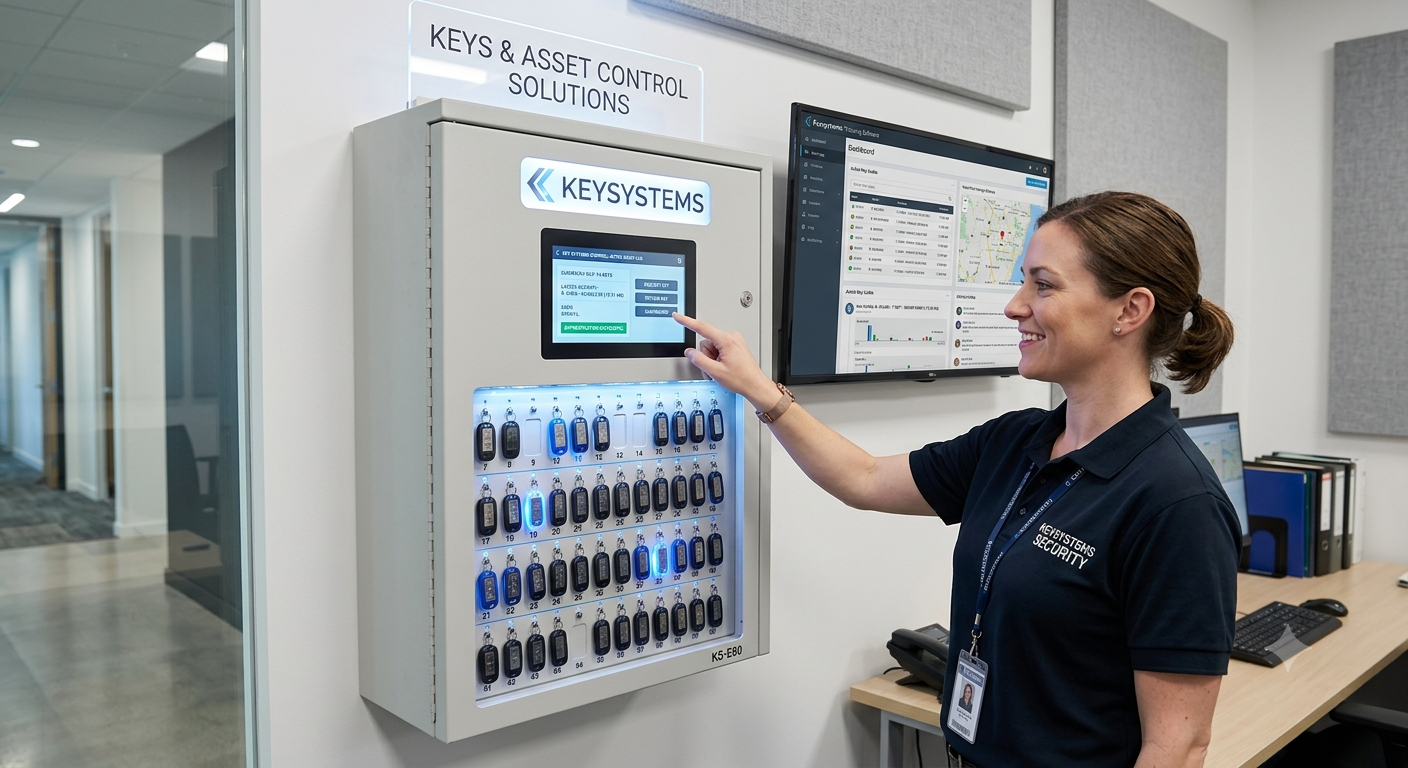
    The power of a modern key management system for enterprises lies in the combination of rugged hardware and enterprise-grade software. The physical system typically consists of an electronically locked steel cabinet. Inside, keys are individually secured using smart fobs equipped with unique identity chips, often utilizing RFID key tracking technology.

    To retrieve a key, an employee must authenticate their identity directly at the cabinet interface. A high-end digital key management system for enterprises will support multi-factor authentication (MFA), including:

    1. Biometric Scanners: Fingerprint or facial recognition to ensure non-repudiation.
    2. Corporate ID Badges: RFID or proximity card readers that integrate with existing employee badges.
    3. PIN Codes: Unique digital codes assigned to specific staff members or contractors.

    Once the system verifies the user’s credentials and confirms they have the authorization to access that specific asset, the cabinet unlocks, and the designated key slot illuminates. All other keys remain firmly locked in place. This granular control is exactly why a digital key management system for enterprises is considered the gold standard for high-security environments.

    Key Benefits of Transitioning to an Automated Security Infrastructure

    Implementing a centralized digital key management system for enterprises offers profound benefits that extend far beyond simple asset protection.

    1. Absolute Accountability and Real-Time Audit Trails

    The core software driving a digital key management system for enterprises automatically records every action. Managers can log into a centralized cloud dashboard from anywhere in the world to see precisely who took a key, when it was removed, and when it was returned. If a key is kept out past its designated return window, the system automatically triggers an email or SMS alert to the security operations center (SOC).

    2. Seamless Integration with Enterprise Software

    As an authorized reseller, UVSS prioritizes systems that boast open-architecture software API integrations. A truly effective digital key management system for enterprises does not operate in an isolated silo. It integrates seamlessly with your existing physical access control systems (PACS), HR databases, and active directory systems.

    For instance, if an employee is off-duty or leaves the company, their access permissions to the physical key cabinet are automatically revoked via the centralized IT network. This cross-platform automation dramatically reduces human error and administrative friction.

    3. Sector-Specific Compliance and Risk Mitigation

    Many enterprise organizations must adhere to strict regulatory compliance frameworks, such as ISO 27001 for data centers or stringent healthcare guidelines for pharmaceutical storage. A digital key management system for enterprises provides the legally defensible data logs required during a security audit. It proves to insurers and regulatory bodies that your organization takes physical data protection seriously.

    Customizing Your Digital Key Management System for Enterprises

    No two enterprise topologies are identical. A multinatonal banking firm requires a different configuration than a sprawling manufacturing hub or an international airport. When you partner with Keysystem, we analyze your specific workflows to design a scalable system.

    • Modular Expansion: A premium digital key management system for enterprises is completely scalable. You can start with a single 10-key locker for a sensitive server room and easily scale up to a network of interconnected cabinets holding thousands of keys across multiple corporate campuses.
    • Intelligent Lockers: Beyond standard keys, enterprise security often requires the tracking of valuable electronic assets. Many systems offer smart locker compartments alongside standard key slots. This allows you to securely store, track, and charge laptops, tablets, radios, and specialized tools, ensuring they are only accessed by authorized personnel.

    Evaluating Total Cost of Ownership (TCO) and ROI

    When procurement teams evaluate a digital key management system for enterprises, they must look past the initial upfront capital expenditure and focus on the Total Cost of Ownership. A “cheap” mechanical lockbox might seem cost-effective initially, but it provides zero security data and will inevitably lead to lost keys, security breaches, and manual administrative overhead.

    An automated digital key management system for enterprises delivers a rapid return on investment by protecting high-value assets, lowering insurance premiums, reducing security guard labor hours, and completely eliminating the cost of emergency locksmith services.

    Why Choose Keysystem as Your Strategic Reseller?

    At UVSS, we pride ourselves on delivering comprehensive security solutions that keep your enterprise one step ahead of emerging risks. We don’t just sell hardware; we engineer complete physical security ecosystems.

    When you purchase a digital key management system for enterprises through Keysystem, you gain a dedicated partner committed to your operational success. Our services include:

    • Bespoke System Design: Tailoring the hardware, authentication methods, and capacity to match your operational structure.
    • Network and Software Integration: Assisting your IT team to ensure smooth integration with your existing security protocols and active directories.
    • Global Technical Support: Providing ongoing maintenance, software updates, and training to guarantee maximum system uptime.

    Conclusion: Secure Your Enterprise Assets Today

    The physical security of your corporate infrastructure is only as reliable as your key management strategy. In a fast-moving, high-stakes corporate environment, leaving physical keys unmonitored is an unacceptable vulnerability. Investing in a professional digital key management system for enterprises is the most effective way to protect your physical assets, streamline daily operations, and ensure regulatory compliance.

    Take complete control of your facility’s security. Contact Keysystems today to schedule a technical consultation and discover how a customized digital key management system for enterprises can transform your physical risk management protocol for 2026 and beyond.

  • Zero Bottlenecks: Maximizing Throughput with a High Speed Under Vehicle Scanner for Checkpoints

    Zero Bottlenecks: Maximizing Throughput with a High Speed Under Vehicle Scanner for Checkpoints

    In an era where security threats are increasingly sophisticated, protecting critical infrastructure requires vigilant perimeter control. For high-security facilities like military installations, government embassies, border crossings, and airports, the entry gate is the most vulnerable checkpoint. The challenge has always been a balancing act: how do you thoroughly screen every vehicle’s undercarriage without grinding traffic to a halt? Traditional manual inspections using mirrors are slow, dangerous for guards, and cause massive traffic congestion.The modern solution is a high speed under vehicle scanner for checkpoints. This technology eliminates the compromise between comprehensive security and operational efficiency. At UVSS, as a premier reseller of advanced perimeter security infrastructure, we specialize in helping organizations transition from archaic inspection methods to automated, rapid-imaging systems. In this comprehensive guide, we will analyze why an enterprise-grade high speed under vehicle scanner for checkpoints is the single most important investment you can make for your facility’s frontline defense.

    The Operational Challenge of Modern Checkpoints

    Managing a busy checkpoint means dealing with high vehicle volumes under tight schedules. When security teams rely on manual mirrors or low-tier, lagging scanning equipment, traffic queues inevitably back up onto public roads. This creates an external security risk—turning waiting vehicles into “sitting ducks”—while severely impacting the facility’s daily logistics.

    A high speed under vehicle scanner for checkpoints addresses this operational bottleneck by capturing high-resolution imagery in real-time. Instead of requiring a vehicle to stop completely for several minutes, high-speed systems can capture complete, un-distorted undercarriage scans while vehicles move over the sensor array at continuous speeds. By integrating a high speed under vehicle scanner for checkpoints, security directors can maintain a smooth, rapid flow of traffic while simultaneously conducting a thorough digital forensic sweep of every single chassis.

    The Technology Behind Rapid Vehicle Surveillance

    To truly understand the value of a high speed under vehicle scanner for checkpoints, one must look at the advanced hardware and software that make it possible. These are not standard cameras; they are highly specialized imaging systems built to handle harsh roadway conditions and varying vehicle velocities.

    1. Advanced Line-Scan Technology

    Standard area-scan cameras fail when a vehicle is moving fast because they create motion blur. A professional high speed under vehicle scanner for checkpoints utilizes line-scan technology, capturing the undercarriage line-by-line at thousands of frames per second. As the vehicle drives over, these slices are instantly stitched together by an internal processing unit to generate a crisp, high-definition composite image.

    2. Synchronized High-Intensity LED Illumination

    The underbody of a truck or car is naturally shrouded in deep shadows. To capture clear details at fast drive-over speeds, a high speed under vehicle scanner for checkpoints must be equipped with ultra-bright, synchronized LED arrays. These lights illuminate the chassis instantly, eliminating shadows around the exhaust system, axles, and fuel tanks without blinding the approaching driver.

    3. Real-Time AI Threat Detection

    Capturing a rapid image is only half the battle; the security team must interpret it quickly. The top-tier high speed under vehicle scanner for checkpoints models supplied by UVSS leverage Artificial Intelligence (AI) and machine learning algorithms. The system automatically scans the vehicle, identifies its make and model template, and highlights anomalies—such as hidden compartments, attached magnetic packages, or foreign wiring—in a matter of seconds.

    Key Business Benefits of High-Speed Scanning Infrastructure

    As a dedicated security reseller, UVSS evaluates technology based on its real-world return on investment. Upgrading to a high speed under vehicle scanner for checkpoints delivers tangible commercial and operational advantages:

    • Drastic Reduction in Labor Costs: Manual screening requires multiple guards to rotate shifts due to physical fatigue. An automated high speed under vehicle scanner for checkpoints allows a single operator to safely monitor multiple incoming lanes from a centralized, climate-controlled guard shack or remote command center.
    • Minimized Human Error: Fatigue, poor lighting, and distraction can cause guards to miss subtle modifications beneath a vehicle. A automated scanner never gets tired, providing an identical level of rigorous inspection for the first vehicle of the day and the last.
    • Full Digital Audit Trails: Every time a vehicle passes over the high speed under vehicle scanner for checkpoints, the system logs the image alongside a precise timestamp. This data can be archived for compliance, insurance verification, or historical forensic investigations.

    Seamless Integration with Perimeter Ecosystems

    A standalone security tool is never as effective as an integrated system. To get the maximum value out of a high speed under vehicle scanner for checkpoints, our engineering team at UVSS recommends connecting it to your broader physical security information management (PSIM) platform.

    By combining a high speed under vehicle scanner for checkpoints with Automatic Number Plate Recognition (ANPR) and driver-identification cameras, you create a comprehensive vehicle profile. The moment a delivery truck drives over the scanner, the system registers its license plate, captures the driver’s face, and verifies its undercarriage against its historical scan profile. If the vehicle’s underside has been altered since its last visit, the automated system flags the change immediately, giving guards actionable intelligence before allowing gate access.

    Why Choose UVSS as Your Trusted Reseller Partner?

    Navigating the procurement of high-end surveillance hardware requires specialized expertise. At UVSS, we pride ourselves on being an elite partner for corporate, industrial, and government clients worldwide. We don’t just sell you a box of hardware; we deliver a complete, operational checkpoint solution.

    When you invest in a high speed under vehicle scanner for checkpoints through us, you receive:

    1. Customized Site Topology Planning: We evaluate your driveway architecture, daily vehicle counts, and speed requirements to recommend the exact sensor placement.
    2. Ruggedized, Weather-Proof Systems: The scanners we distribute feature heavy-duty, IP68-rated enclosures built to withstand sub-zero winters, intense desert heat, and heavy axle weights from commercial trucks.
    3. Comprehensive Staff Training: We ensure your onsite security team fully understands how to navigate the software dashboard, interpret AI anomaly flags, and maintain the hardware.

    Conclusion: Secure the Future of Your Facility

    In modern security management, a bottleneck at the front gate is a vulnerability you cannot afford. Relying on outdated manual inspection methods leaves your perimeter exposed to sophisticated, hidden threats while actively hurting your operational throughput.

    Investing in a high speed under vehicle scanner for checkpoints is the most definitive way to future-proof your facility. It provides your security team with the rapid, un-distorted visual data they need to make split-second decisions without impacting traffic flow.

    Eliminate your checkpoint blind spots today. Contact the experts at UVSS to schedule a live demonstration, view technical specifications, and receive a customized commercial proposal tailored to your facility’s unique operational needs.

  • Smart Security: How Does an Electronic Key Cabinet Work?

    Smart Security: How Does an Electronic Key Cabinet Work?

    In the modern operational ecosystem, physical keys remain a vital access tool for facilities, vehicle fleets, data centers, and restricted equipment. Yet, managing these physical assets via manual ledger books or unsecured pegboards is a major vulnerability. Lost keys lead to compromised security, expensive rekeying processes, and hours of wasted productivity. This operational friction is driving security heads and facility managers to ask a fundamental question: how does an electronic key cabinet work, and can it scale to meet commercial security demands?

    At Keysystems we specialize in reselling and integrating top-tier physical security solutions. While our name is synonymous with perimeter and vehicle surveillance, we look at security holistically. Protecting the entry point of your facility is useless if the master keys inside your building are left unmonitored. In this comprehensive guide, we will break down the technical architecture behind these systems and explain exactly how does an electronic key cabinet work to protect your business assets.

    The Fundamental Anatomy of an Automated Key System

    To understand how does an electronic key cabinet work, you must look beyond the physical steel enclosure. A modern system is an intersection of intelligent hardware, secure physical locking mechanisms, and advanced database software.

    Unlike a standard lockbox, an electronic cabinet treats every single key as an isolated, trackable digital asset. The process relies on heavy-duty, tamper-resistant steel lockers equipped with localized internal receptors. When a key is placed inside the system, it isn’t just stored; it is digitally locked into a specific slot and cataloged by an internal microprocessor.

    Step-by-Step: How Does an Electronic Key Cabinet Work in Daily Operations?

    To fully appreciate the efficiency of these systems, it helps to look at a typical user workflow. If you are evaluating these systems for a car dealership, a hospital, or a corporate campus, here is the step-by-step reality of how does an electronic key cabinet work:

    Step 1: User Authentication

    The cabinet remains securely locked at all times. To initiate access, a staff member must verify their identity at the integrated terminal. Depending on your facility’s budget and security protocols, this can be done via:

    • A unique PIN code entered on a touchscreen.
    • An RFID proximity card or smart badge.
    • Biometric identification (such as fingerprint or facial recognition).

    Step 2: Grabbing the Requested Asset

    Once the identity is validated, the user selects the required key or vehicle fob via the interface. The cabinet door unlocks, but the security does not stop there. The internal locking mechanism only releases the specific key slot requested. All other keys remain firmly locked in place. This localized locking is a crucial feature when studying how does an electronic key cabinet work in multi-user environments.

    Step 3: Real-Time Audit Tracking

    As the key is removed, the internal sensors register the transaction. The software immediately updates the master database with three data points: Who took the key, exactly when it was removed, and why.

    Step 4: The Return Process

    When the shift ends, the employee authenticates at the cabinet again. The system prompts them to return the asset. Advanced systems feature “random return,” meaning the user can insert the key into any open slot, and the internal receptor will automatically identify its new location.

    The Role of Smart Fobs and Receptors

    A massive component of how does an electronic key cabinet work comes down to the tracking token attached to the key ring. Traditional systems used basic mechanical pegs, but modern commercial systems utilize sophisticated electronic fobs or contact chips.

    These smart fobs contain a unique identification code. When inserted into a cabinet receptor, a direct data connection is formed. This allows the system to verify that the correct item has been returned. If an employee attempts to cheat the system by returning a dummy key on an empty ring, the receptor detects the missing chip or mismatched ID and triggers an immediate alert to administration.

    Centralized Management via Cloud Software

    If you ask an IT manager or security director, “how does an electronic key cabinet work to simplify my job?”, the answer lies entirely within the management software. The cabinet itself is simply the physical endpoint; the software is the brain.

    Modern cabinets connect directly to your corporate network via LAN or Wi-Fi. This connectivity allows for centralized control across multiple facilities. From a single dashboard, an administrator can:

    • Restrict Access by Schedule: Prevent cleaning staff from pulling master keys outside of their working hours.
    • Set Curfews: Receive automated email or SMS alerts if a high-value vehicle key is not returned by 6:00 PM.
    • Analyze Usage Metrics: Run reports to see which assets are used most frequently, which helps optimize fleet or tool management.

    Commercial Applications: Who Benefits Most?

    As an established reseller, Keysystems helps clients across various industries match the right key containment hardware to their operational workflows. Understanding how does an electronic key cabinet work helps highlight its value across diverse sectors:

    • Property & Facility Management: Managing master keys for commercial real estate portfolios, ensuring maintenance contractors only access authorized areas.
    • Automotive Dealerships & Fleet Operators: Protecting expensive vehicle fobs from internal shrinkage and streamlining client test drives.
    • Data Centers & High-Security Zones: Restricting access to server racks and mechanical rooms, maintaining strict compliance logs for data protection audits.

    Why Partner with Keysystems for Your Facility Security?

    Investing in automated key infrastructure is a significant step toward full operational security. At Keysystems, we bring our years of experience in high-end perimeter protection to the interior of your business. We don’t just sell hardware; we provide complete, integrated security ecosystems.

    Our technical team helps you understand exactly how does an electronic key cabinet work within your existing IT setup. We assist with network integration, software configuration, and choosing the right authentication methods to ensure your new system delivers maximum ROI from day one.

    Conclusion: Hardening Your Internal Assets

    Perimeter security is only half the battle. True facility protection requires checking the vulnerabilities inside your walls. Knowing how does an electronic key cabinet work proves that manual tracking is an unnecessary risk in 2026. By automating accountability, you eliminate lost assets, protect high-value inventory, and optimize daily operations.

    Ready to eliminate key chaos in your organization? Contact Keysystems today for a personalized technical consultation and find the perfect intelligent key tracking solution for your business.

  • The Digital Evolution of Asset Protection: Why Your Business Needs Automated Key Management Solutions

    The Digital Evolution of Asset Protection: Why Your Business Needs Automated Key Management Solutions

    In the modern operational landscape, physical keys remain a critical link in the security chain. Whether you are running a high-occupancy corporate office, managing a bustling hospital wing, or overseeing a massive automotive fleet, keys grant access to your most valuable assets. Yet, relying on manual logs and traditional key cabinets is a recipe for operational friction, lost productivity, and costly security breaches. To eliminate these vulnerabilities, forward-thinking organizations are transitioning to modern automated key management solutions.

    At Keysystem, we serve as a premier reseller of advanced, intelligent security hardware and software. We understand that security heads and facility managers aren’t just looking for a locker; they are looking for absolute control, accountability, and seamless workflow integration. In this comprehensive guide, we will break down how implementing automated key management solutions can protect your bottom line, harden your perimeter, and eliminate the chaos of manual key tracking.

    The Hidden Financial Drain of Traditional Key Tracking

    Before exploring the technical capabilities of smart hardware, it is essential to look at the economic reality of manual key tracking. When an employee or contractor misplaces a master key, the consequences extend far beyond the cost of a replacement piece of metal.

    Consider the operational bottlenecks:

    • Wasted Labor Hours: Staff members spending valuable time searching for a missing vehicle fob or facility key.
    • Expensive Re-keying Costs: Changing physical cylinders across an entire property when a master key is compromised.
    • Liability and Compliance Risks: Facing steep regulatory fines or insurance complications because you cannot prove who had access to a restricted area during an incident.

    By deploying automated key management solutions, you convert an unmonitored security risk into a highly visible, data-driven system. The “invisible costs” of lost keys vanish, providing a swift and measurable return on investment (ROI).

    How Automated Key Management Solutions Transform Security

    The primary objective of shifting to automated key management is to establish total accountability. Traditional lockboxes rely on the honor system, whereas an intelligent key tracking system enforces strict access protocols.

    1. Biometric and Multi-Factor Authentication

    Modern cabinets do not rely on standard physical padlocks. Instead, users must authenticate their identity using an electronic badge, a unique PIN, or biometric data such as a fingerprint. This ensures that only authorized personnel can access specific keys, effectively eliminating internal shrinkage and unauthorized entry.

    2. Real-Time Audit Trails

    Every single transaction—whether a key is removed, returned, or kept past its return window—is recorded by the central software. Automated key management solutions generate an unalterable digital paper trail. If an audit is required for compliance purposes, a facility manager can generate a comprehensive report with a single click, completely replacing error-prone paper logbooks.

    3. Granular Time-Restrictions

    With automated key management solutions, access permissions can be customized down to the individual user and hour. For instance, cleaning staff can be restricted from pulling master keys outside of their designated shift windows. Similarly, contractors can be granted temporary digital access that automatically expires at the end of their contract.

    Sector-Specific Benefits of Intelligent Key Cabinets

    As a specialized reseller, Keysystem has helped organizations across various industries implement automated key management solutions tailored to their distinct operational workflows.

    Hospitality & Property Management

    For hotel managers, protecting the “keys to the kingdom”—the master physical keys that unlock guest rooms—is a top priority. Automated key management solutions ensure that these high-value assets never leave the property, safeguarding guest privacy and maintaining brand reputation.

    Automotive & Fleet Logistics

    Managing dozens or hundreds of smart key fobs at a car dealership or rental agency is notoriously difficult. Implementing automated key management solutions allows sales and service teams to instantly locate any vehicle fob via a desktop interface or mobile app, drastically reducing customer wait times and speeding up the sales cycle.

    Healthcare & Commercial Facilities

    Hospitals and critical infrastructure demand strict access control for medicine cabinets, server rooms, and restricted laboratories. Automated key management solutions bridge the gap between digital network security and physical asset protection, ensuring full compliance with stringent healthcare and security regulations.

    Integration with the Smart Building Ecosystem

    In 2026, standalone security systems are rapidly becoming obsolete. The true value of modern automated key management solutions lies in their ability to communicate with the rest of your building management software (BMS).

    When you procure a system through Keysystem, we ensure that your key cabinet integrates seamlessly with your existing access control platforms, CCTV networks, and HR databases. For example, if a key is not returned on time, the system can automatically flag the employee’s profile or instruct nearby security cameras to monitor the exit gates. This interconnected approach turns an isolated asset box into an active, intelligent node within your corporate security network.

    Choosing the Right Scalability with Keysystem

    One of the most common misconceptions is that automated key management solutions are only meant for multi-national corporations. In reality, modern hardware is highly modular.

    • Small to Medium Businesses (SMEs): Can start with a compact, wall-mounted cabinet to secure a dozen critical keys, utilizing local software management.
    • Enterprise Operations: Can deploy an interconnected network of multi-door smart lockers across global sites, all managed via a single, cloud-based dashboard.

    Because Keysystem operates as an independent reseller, we are not tied to a single manufacturer. We analyze your specific site topology, user count, and budget to recommend the exact configuration of automated key management solutions that will maximize your security and efficiency.

    Conclusion: Future-Proof Your Assets Today

    The reliance on physical keys is not going away anytime soon, but the way we manage them must change. Continuing to use manual logging methods is an unnecessary risk to your facility’s safety and operational efficiency.

    Investing in automated key management solutions is the most effective way to eliminate human error, secure your vital assets, and empower your management team with actionable data. Moving your business toward a digital, automated framework ensures that you remain protected, compliant, and highly competitive.

    Ready to bring absolute accountability to your facility? Contact Keysystem today for a personalized consultation. Let our security experts design a bespoke strategy around the industry’s finest automated key management solutions to protect what matters most.

  • Hardening the Checkpoint: Selecting an Automated Under Vehicle Scanner Solution for High-Risk Perimeters

    Hardening the Checkpoint: Selecting an Automated Under Vehicle Scanner Solution for High-Risk Perimeters

    The modern threat landscape requires security measures that match the sophistication of those trying to bypass them. While CCTV networks, biometric access control points, and automated gates protect a facility’s visible boundaries, the undercarriage of a vehicle remains one of the most vulnerable and technically challenging blind spots to monitor. For tier-one corporate campuses, government buildings, data centers, and transport hubs, relying on manual mirror inspections is no longer viable. Ensuring absolute perimeter integrity requires a specialized, technological upgrade to an automated under vehicle scanner solution.

    At UVSS, as a global reseller and technical consultant for elite physical security systems, we specialize in helping procurement managers navigate a crowded market. Finding the right under vehicle scanning equipment suppliers involves evaluating more than just hardware; it means identifying a partner who delivers reliable change-detection intelligence, high environmental resilience, and flawless systems integration.

    The Operational Imperative of Automated Under Vehicle Inspection

    A standard security checkpoint faces a constant operational paradox: the need for uncompromising threat mitigation balanced against the demand for seamless traffic flow. Manual inspection methods—such as using convex mirrors on rolling rods—severely compromise both. They are slow, highly subjective, depend entirely on guard alertness, and expose security personnel to potential immediate danger at the facility line.

    Implementing an automated under vehicle scanner solution eliminates the human error inherent in these legacy techniques. Instead of a manual check, a vehicle drives over an embedded or surface-mounted scanner array at speeds typically up to 30 km/h or even 60 km/h. Within seconds, the system compiles a complete high-resolution visualization of the vehicle’s underside, allowing security teams to identify foreign objects, structural changes, or hidden contraband without forcing the driver to stop.

    Key Capabilities of an Automated Under Vehicle Scanner Solution

    When researching under vehicle scanning equipment suppliers, it is crucial to look beyond basic camera specifications. The value of a modern automated under vehicle scanner solution rests on three core technological pillars:

    1. Advanced Image Capture (Area Scan vs. Line Scan)

    A premium automated under vehicle scanner solution utilizes industrial-grade linear array or dual-camera area-scan technology to build distortion-free composite images. Unlike traditional cameras that can compress or stretch an image depending on variations in vehicle speed, advanced line-scanning tech stitches the underbody layout line-by-line or frame-by-frame, maintaining perfect proportions.

    2. Artificial Intelligence and Automatic Foreign Object Detection (FOD)

    The “automated” aspect of a top-tier automated under vehicle scanner solution is heavily driven by machine learning algorithms. The system does not merely display a picture for a guard to review; it performs real-time Change Detection. When a vehicle passes over the scanner, the software maps its geometry against a factory-clean chassis model or a historical log of that specific vehicle. If a suspicious modification, attached magnetic container, or improvised explosive device (IED) is found, the system instantly flags the anomaly on the operator dashboard.

    3. Automatic Number Plate Recognition (ANPR) Integration

    An isolated undercarriage scan has limited forensic value. A true enterprise-grade automated under vehicle scanner solution links every image to a specific vehicle identity via integrated ANPR and driver-facing cameras. This creates a multi-point digital profile containing the vehicle’s registration plate, driver’s face, and underbody scan mapped to an exact timestamp.

    Evaluating Under Vehicle Scanning Equipment Suppliers

    Selecting from global under vehicle scanning equipment suppliers requires careful evaluation of build quality and software flexibility. Because these scanning units are embedded directly into roadways or placed as surface ramps, they must withstand punishing physical conditions.

    Key Procurement Checklist for UVSS Systems:

    • Axle Load Capacity: Ensure the hardware handles heavy-duty traffic. High-end systems feature a fully welded, structural steel frame rated for up to 10 to 40 tons per axle, suitable for heavy commercial trucks and armored vehicles.
    • Environmental Ingress Protection: Look for an IP68 waterproof rating. The scanner must remain completely operational despite heavy rain, submersion, snow, or intense dust storms.
    • Operating Temperature Thresholds: Top industrial suppliers design units capable of functioning reliably anywhere from $-40^\circ\text{C}$ up to $+70^\circ\text{C}$.

    As an independent reseller, UVSS partners exclusively with premier under vehicle scanning equipment suppliers who offer open-architecture designs. This ensures that the scanning platform can integrate cleanly with your pre-existing physical infrastructure—such as automatic rising bollards, tyre killers, hydraulic road blockers, and overarching central VMS (Video Management Systems).

    The Financial and Tactical Return on Investment

    While a sophisticated automated under vehicle scanner solution requires a larger upfront capital expenditure than manual search tools, its long-term return on investment (ROI) is significant.

    From an operational standpoint, a high-speed automated under vehicle scanner solution reduces the manpower required to police a busy access point. Instead of staffing multiple guards to inspect a single vehicle, one operator can manage multiple lanes from a secure control room. This optimizes resource allocation and significantly lowers ongoing operational overhead. From a liability standpoint, the presence of a visible, automated vehicle inspection platform serves as an intense psychological deterrent, preventing security incidents before they ever reach your facility’s interior zones.

    Why Partner with UVSS?

    Navigating the specifications of high-frequency perimeter security hardware can be incredibly complex. UVSS serves as your trusted guide through this landscape. We bridge the gap between complex engineering labs and end-user deployment requirements, ensuring you get a tailored package optimized for your specific threat profile and site topology.

    We don’t believe in cookie-cutter deployments. When you consult with our team, we analyze your site’s average daily traffic volume, vehicle types, environmental constraints, and network architecture. Because we maintain long-standing partnerships with leading under vehicle scanning equipment suppliers, we can secure competitive pricing, extended service level agreements (SLAs), and comprehensive technical support packages that protect your investment over its entire operational lifecycle.

    Conclusion: Future-Proof Your Facility Line

    As vehicle-borne tracking devices, smuggled contraband, and specialized security threats become more advanced, manual checkpoints leave clear vectors of vulnerability exposed. Moving to an AI-powered automated under vehicle scanner solution is the single most effective way to eliminate the blind spot underneath your incoming fleet.

    By combining high-resolution imagery, automated change detection, and rugged physical build quality, you can ensure that your access gates remain smooth, secure, and fully auditable.

    Ready to upgrade your perimeter detection capabilities? Contact UVSS today for a deep technical consultation. Let our specialists assess your site and provide a custom breakdown of the best hardware options from the world’s leading under vehicle scanning equipment suppliers to keep your organization completely secure.