Author: admin

  • Enterprise Physical Security: The Definitive Guide to a Key Management System for Data Centers

    Enterprise Physical Security: The Definitive Guide to a Key Management System for Data Centers

    In an era dominated by cloud infrastructure, AI workloads, and zero-trust cybersecurity frameworks, organizations invest millions of pounds into firewalls, intrusion detection systems, and cryptographic encryption. However, modern data centers face a critical physical vulnerability: the management of physical keys. From white-space server cages and perimeter gates to electrical distribution rooms and fiber distribution panels, physical keys grant direct access to mission-critical hardware.

    Relying on manual logbooks, mechanical lockboxes, or static key pegs creates dangerous compliance blind spots. To establish total perimeter integrity, top-tier colocation providers and enterprise facilities are deploying a specialized key management system for data centers. Replacing outdated manual key tracking with an automated, auditable platform is a baseline operational necessity for modern mission-critical infrastructure.

    At Keysystem, we are a leading specialist reseller and integrator of intelligent physical security hardware and tracking software. We understand that data centers demand absolute accountability, strict role-based access, and seamless integration with existing building management frameworks. In this comprehensive commercial guide, we break down why an enterprise key management system for data centers is vital for hardening physical security, achieving regulatory compliance, and eliminating operational downtime.

    The Hidden Risks of Manual Key Handling in Server Facilities

    When facility managers and compliance officers audit security leaks, physical key handling frequently surfaces as a major liability. Data centers host multi-tenant server racks containing sensitive, proprietary consumer and corporate data. A failure in physical key control compromises the security chain of custody.

    Manual key tracking introduces several severe operational risks:

    • The “Lost Master” Threat: If a technician or third-party contractor misplaces a master key to server suites, the entire facility must be re-keyed. Emergency locksmith fees, new lock cylinders, and operational disruption can quickly cost thousands of pounds.
    • Lack of Real-Time Custody Records: Manual sign-out sheets on paper clipboards fail to record accurate timestamps or verify the identity of the person holding a key. When a server cabinet is left unlocked or an unauthorized maintenance action occurs, tracing accountability becomes impossible.
    • Audit Failure Penalties: Enterprise colocation facilities must adhere to strict international standards such as ISO/IEC 27001, SOC 2 Type II, and PCI DSS. A missing or illegible paper key log can result in failed compliance audits, leading to severe financial penalties and lost client trust.

    Implementing a dedicated key management system for data centers eliminates these vulnerabilities by replacing manual guesswork with an automated, tamper-proof security node.

    How an Automated Key Management System for Data Centers Works

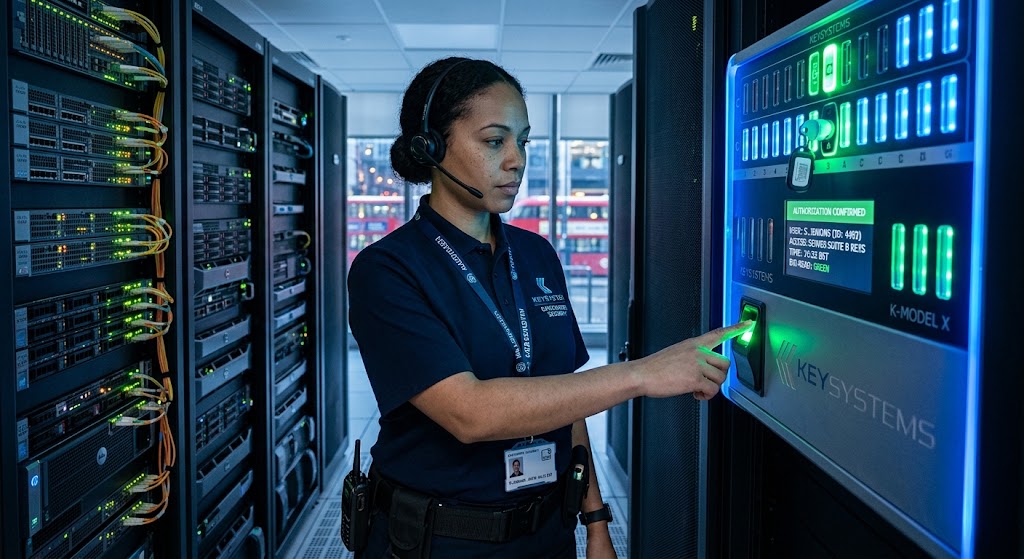
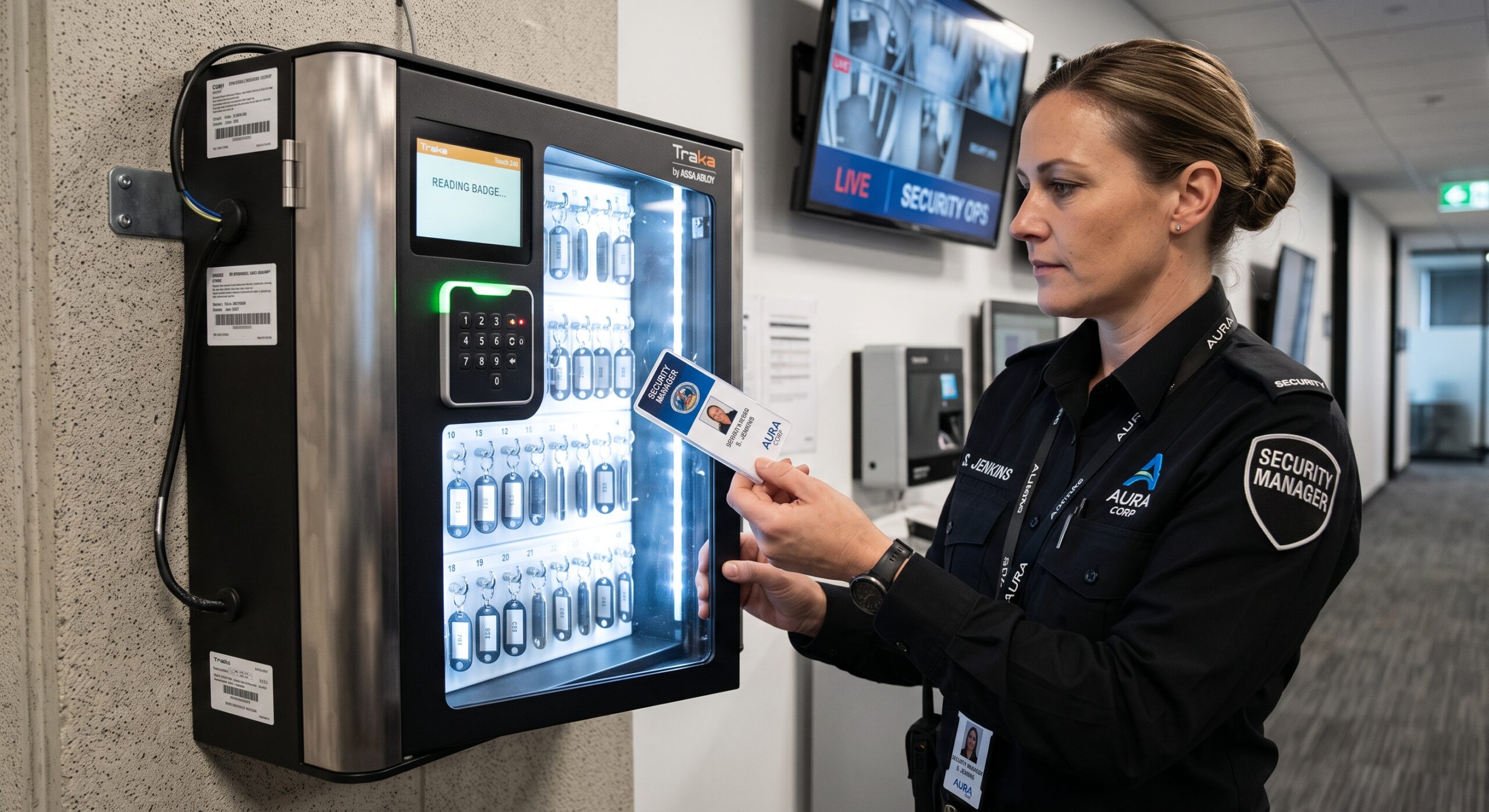
    An intelligent key management system for data centers integrates heavy-duty physical locking cabinets with cloud-connected asset tracking software. Each physical key or key set is secured to an RFID-enabled smart fob or locking security plug.

    ┌─────────────────────────────────────────────────────────────┐
    │          DATA CENTER SECURE KEY TRACKING WORKFLOW           │
    ├─────────────────────────────────────────────────────────────┤
    │  1. Multi-factor authentication at terminal (Badge + Biometric) │
    │  2. Central software validates access clearance & work orders│
    │  3. Electronic cabinet opens; authorized key slot lights up │
    │  4. User removes key; all other slots remain locked         │
    │  5. System sends live audit timestamp to central SOC        │
    └─────────────────────────────────────────────────────────────┘
    

    The day-to-day workflow follows an automated, zero-trust protocol:

    1. Multi-Factor Authentication (MFA): To request a key, an engineer or contractor authenticates directly at the cabinet using a combination of an RFID employee badge, a unique PIN, or a biometric fingerprint/facial recognition scan.
    2. Access Verification: The key management system for data centers checks the user’s credentials against current shift rosters and active change-management tickets.
    3. Controlled Release: Once validated, the electronically locked door releases, and an LED illuminates the exact key slot authorized for removal. The key management system for data centers unlocks only that designated asset while keeping all other server rack and high-voltage keys trapped in place.
    4. Automated Logging: The moment the key is removed, the transaction details (user identity, timestamp, and asset ID) are instantly logged to the central database and mirrored to the Security Operations Center (SOC).

    Essential Technical Features to Prioritize

    When evaluating platforms for mission-critical facilities, technical teams should prioritize several core capabilities:

    1. Integration with Physical Access Control Systems (PACS)

    An isolated security system creates administrative overhead. A high-performance key management system for data centers features open API architecture that communicates natively with existing access control systems, LDAP/Active Directory networks, and ticketing platforms (such as ServiceNow or Jira). When a contractor’s scheduled maintenance window closes, their permissions at the key cabinet are revoked automatically.

    2. Dual-Custody and Witness Authentication Protocols

    For high-security server cages containing classified or financial data, standard single-user access is often insufficient. Advanced key management system for data centers software supports “Two-Man Rule” authentication, requiring two authorized individuals to present valid credentials simultaneously before the system releases a high-security server room key.

    3. Real-Time Curfew Alerts and Overdue Tracking

    If an engineer pulls a key for a standard two-hour maintenance task and fails to return it within the allocated window, a modern key management system for data centers generates automated curfew alerts. The platform instantly triggers SMS and email notifications to the facility manager and flags the event on the SOC monitor, preventing keys from accidentally leaving the building.

    4. Integrated Smart Locker Compartments

    Beyond standard mechanical keys, data centers must track and secure shared diagnostic tools, laptops, cryptographic hardware security modules (HSMs), and removable media. Many deployments incorporate modular electronic locker compartments alongside traditional key rows, providing a unified platform to track, store, and recharge valuable assets.

    Navigating Compliance Standards: ISO 27001, SOC 2, and PCI DSS

    Physical security standards for mission-critical infrastructure require granular, verifiable records of physical access to data storage environments.

    Compliance StandardPhysical Access RequirementKey Management System Impact
    ISO/IEC 27001Control A.11: Physical and environmental security of equipmentProvides unalterable, automated audit trails of who accessed server suites.
    SOC 2 (Type II)Trust Services Criteria for physical access restrictionsEnforces role-based physical permissions and time-restricted key checkouts.
    PCI DSS (Req. 9)Restrict physical access to cardholder data environmentsGuarantees that only authorized personnel can retrieve keys to cardholder servers.

    Deploying an automated key management system for data centers allows compliance officers to export complete, timestamped forensic reports with a single click, simplifying audit cycles.

    Why Choose Keysystem as Your Reseller Partner?

    Procuring and commissioning physical security infrastructure for a data center requires deep engineering expertise. At Keysystem, we are more than a product catalog; we are dedicated physical security consultants. We analyze your white-space layout, visitor workflows, and network requirements to deliver a solution configured precisely to your facility’s threat model.

    When you purchase a key management system for data centers through Keysystem, you receive:

    • Vendor-Agnostic Consultation: We recommend hardware architectures based entirely on your operational scale, rack density, and budget parameters.
    • Network & API Commissioning: Our engineers assist your IT and security teams to ensure smooth integration with existing badge readers, CCTV systems, and directory services.
    • Full Lifecycle Support: We provide end-to-end service, including initial site assessments, custom system configuration, administrator training, and ongoing technical support to guarantee 24/7 uptime.

    Take Control of Your Mission-Critical Security

    In a high-density data center, a single unmonitored physical key represents a potential multi-million-pound breach. Leaving key management to manual logs or unsecured lockboxes exposes your facility to downtime, compliance failures, and physical tampering. Investing in a professional key management system for data centers is the definitive strategy for automating physical asset tracking, hardening perimeter defense, and protecting client trust.

    Eliminate physical security blind spots across your server infrastructure. Contact Keysystem today to speak with an engineering specialist, book a live technical demonstration, and find the ideal key management system for data centers to safeguard your facility.

  • Modernizing Asset Control: The Commercial Guide to a Commercial Electronic Key Cabinet

    Modernizing Asset Control: The Commercial Guide to a Commercial Electronic Key Cabinet

    Managing physical access across corporate campuses, logistics hubs, property management portfolios, and industrial facilities is a demanding operational challenge. While cybersecurity measures, turnstiles, and biometric perimeter checkpoints protect the outer perimeter, an essential, high-risk asset frequently remains vulnerable inside: the physical key. Master keys, server rack fobs, heavy machinery ignitions, and commercial fleet vehicle keys represent critical access points to millions of pounds in physical infrastructure. Leaving keys hanging on open pegboards, stored in manual lockboxes, or tracked on clipboards introduces significant operational bottlenecks and security risks. To streamline facility workflows and establish complete asset protection, forward-thinking organizations are replacing manual processes with an automated commercial electronic key cabinet. Moving toward an intelligent, hardware-backed storage ecosystem is no longer merely an administrative upgrade—it is a core risk management requirement.

    At Keysystem, we are a specialized commercial reseller of advanced key control solutions and physical security hardware. We partner with top-tier manufacturers to supply scalable systems that reduce administrative overhead and eliminate asset losses. In this guide, we break down how an automated electronic key cabinet functions, the business value it delivers, and how to choose the right configuration for your operations.

    The Hidden Costs of Legacy Key Management

    When operations directors evaluate security liabilities, the cost of manual key tracking is often overlooked. Relying on paper logbooks or static mechanical boxes creates persistent friction points across an organization:

    • Productivity Losses: Employees and managers spend hours searching for misplaced keys, waiting for security guards to hand over fobs, or chasing staff who forgot to return a master key.
    • The Re-Keying Expense: If an employee loses an enterprise master key, the cost of replacing lock cylinders across multiple doors and server rooms can run into thousands of pounds, accompanied by severe security risks.
    • Lack of Traceable Accountability: When a restricted area is accessed without authorization or a pool vehicle returns damaged, identifying the responsible party is nearly impossible if manual sign-out logs are incomplete or illegible.

    Installing a commercial electronic key cabinet eliminates these issues. Physical keys are locked inside a secure, tamper-proof steel enclosure that only releases designated assets to authenticated users, recording an unalterable digital footprint for every interaction.

    How a Commercial Electronic Key Cabinet Works

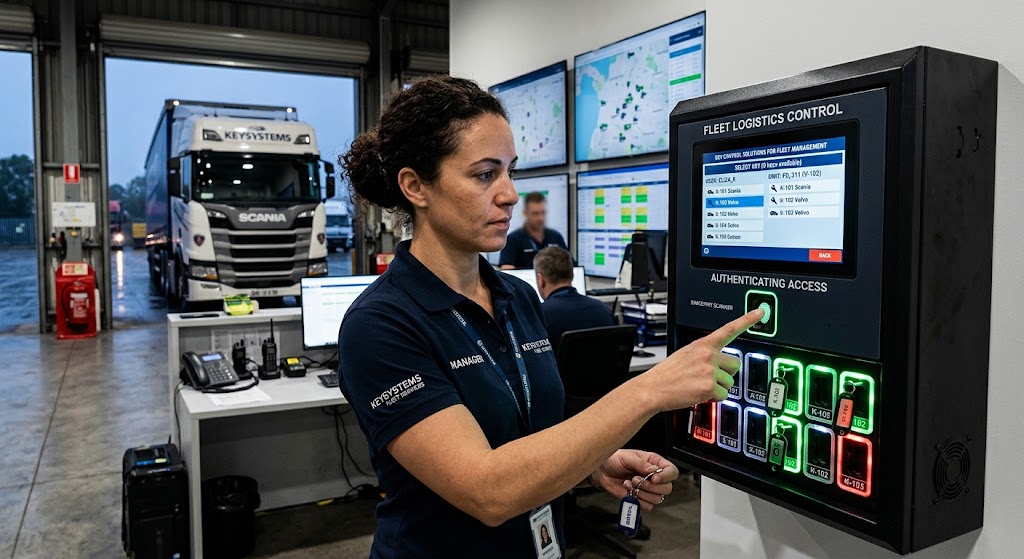
    A modern commercial electronic key cabinet combines heavy-duty physical security with smart access control software. The system consists of an electronically controlled cabinet fitted with individual key-locking ports, each paired with an RFID-enabled security plug.

    ┌─────────────────────────────────────────────────────────────┐
    │          COMMERCIAL KEY CABINET WORKFLOW SEQUENCE           │
    ├─────────────────────────────────────────────────────────────┤
    │ 1. User authenticates (RFID badge, Biometrics, or PIN)      │
    │ 2. System validates access rules, shifts, and permissions    │
    │ 3. Cabinet door unlocks; specific key slot illuminates      │
    │ 4. User retrieves key; unrequested keys remain locked        │
    │ 5. Transaction logged in real-time to cloud audit trail     │
    └─────────────────────────────────────────────────────────────┘
    

    The daily checkout and return process follows an automated workflow:

    1. User Authentication: The employee presents their existing RFID corporate badge, inputs a unique PIN code, or scans their fingerprint at the cabinet interface.
    2. Permission Verification: The software instantly checks whether the user is authorized to access the requested key based on active shifts, roles, and security clearances.
    3. Targeted Key Release: The commercial electronic key cabinet opens, and an LED illuminates the exact slot containing the authorized key. Every other key remains firmly locked in place.
    4. Instant Data Capture: When the user returns the key, they re-authenticate and insert the RFID fob into an open port. The commercial electronic key cabinet confirms the return and immediately updates the system dashboard.

    Key Commercial Features to Prioritize

    As a reseller evaluating high-performance hardware, Keysystem recommends assessing the following essential capabilities when sourcing a commercial electronic key cabinet:

    1. RFID Key Tracking Technology

    Standard physical pegboards do not track key movement. An advanced commercial electronic key cabinet uses individual RFID transponders sealed onto tamper-proof key rings. When inserted into the cabinet, the system reads the exact ID chip, preventing keys from being returned to the wrong slot or replaced with counterfeit blanks.

    2. Cloud-Based Multi-Site Management

    For organizations operating across multiple branches or regional hubs, managing key cabinets through isolated, on-premises software creates operational silos. Opt for a commercial electronic key cabinet connected to a central cloud dashboard. This enables security managers to adjust user permissions, schedule access windows, and pull activity reports across all locations in real time.

    3. Automatic Curfew & Overdue Alerts

    If a technician, cleaner, or contractor checks out a sensitive key and fails to return it by a set curfew, the commercial electronic key cabinet triggers instant automated SMS or email alerts to operations leads, ensuring missing assets are addressed immediately.

    Selecting the Right Form Factor for Your Facility

    Every operational footprint has distinct space and security needs. The architecture of a commercial electronic key cabinet can be tailored to match your specific layout:

    Feature MetricCompact Wall-Mounted CabinetsHigh-Capacity Modular Cabinets
    Capacity10 to 30 Key Slots50 to 500+ Key Slots
    FootprintSlim, wall-mounted steel frameModular floor-standing or multi-bay units
    Primary Use CasesDealerships, SME offices, server roomsLogistics depots, large campuses, hospitals
    ScalabilityStandalone deploymentExpandable with modular add-on bays

    Whether your organization needs a compact, high-security lockbox for sensitive IT server keys or an enterprise setup for fleet dispatching, sourcing your commercial electronic key cabinet through a specialized reseller guarantees hardware tailored to your workflow.

    Integration with Modern Security Platforms

    An isolated security system creates data blind spots. To maximize your investment, your commercial electronic key cabinet should integrate smoothly with existing building management systems:

    • Physical Access Control Systems (PACS): Synchronize user databases so that an employee’s key cabinet permissions update automatically when their primary building access badge is issued or revoked.
    • Video Management Systems (VMS): Link key retrieval events to nearby security cameras, automatically bookmarking high-definition video of the exact moment a master key is taken.
    • HR Active Directories: Automate onboarding and offboarding workflows, ensuring departing employees lose cabinet access instantly without requiring manual updates from desk staff.

    Why Choose Keysystem as Your Reseller Partner?

    Choosing physical security equipment is an important operational investment. At Keysystem, we focus on providing consultative guidance to deliver the ideal hardware for your exact operational profile.

    When you purchase your commercial electronic key cabinet through Keysystem, you receive:

    • Consultative System Design: We analyze your key volume, daily transaction frequency, and authentication protocols to recommend the right cabinet capacity and software tier.
    • Hardware and Network Configuration: Our team helps configure your network parameters, RFID tags, and user permissions for smooth deployment.
    • Ongoing Technical Support: We provide comprehensive lifecycle support, replacement tamper-proof rings, software upgrades, and hardware maintenance to maximize system uptime.

    Secure Your High-Value Assets Today

    Relying on manual key logs and unsecured lockboxes exposes your business to unneeded operational risks, misplaced assets, and costly downtime. Upgrading your facility with an automated commercial electronic key cabinet provides the real-time audit trails, user accountability, and efficiency needed to safeguard your infrastructure.

    Take complete control of your keys. Contact Keysystem today to request a quote, schedule a live system demonstration, and discover how a commercial electronic key cabinet can optimize your asset management strategy.

  • Why Area Scan is Today’s and Future Technology and Linear Scan is Outdated

    Why Area Scan is Today’s and Future Technology and Linear Scan is Outdated

    Perimeter security at high-risk facilities—ranging from international airports and sovereign border crossings to critical energy infrastructure and military bases—demands unyielding precision. Security directors are tasked with inspecting every vehicle’s undercarriage to detect concealed weapons, explosives, tracking devices, and contraband before entry is granted.

    For years, the industry relied on legacy line-scan systems that built images row-by-row as a vehicle moved across a single-sensor camera bed. However, as traffic volumes increase and vehicle movement patterns become unpredictable, line-scan hardware has increasingly revealed severe operational limitations.

    In modern security operations, understanding why Area scan is today’s and future technology and linear scan is outdated has become critical for procurement heads and security engineers. Transitioning to area-scan architecture eliminates image distortion, accommodates variable vehicle speeds, and provides AI-ready composite frames.

    At UVSS, as a leading specialist reseller and integrator of Under Vehicle Surveillance Systems (UVSS), we help organizations replace legacy hardware with high-performance imaging solutions. In this guide, we analyze the technological shift from linear scanning to full area-scan imaging and explain why upgrading your checkpoint infrastructure is essential for total perimeter defense.

    The Fundamental Shift: How Imaging Technology Has Evolved

    To understand why Area scan is today’s and future technology and linear scan is outdated, we must look at how each system captures an undercarriage:

    • Linear Scan Technology (Legacy): Linear scan cameras rely on a unidimensional sensor array containing a single row of pixels. As the vehicle drives over the unit, the camera captures thousands of narrow, 1-pixel slice images and uses software algorithms to stitch them into a continuous 2D picture.
    • Area Scan Technology (Modern & Future-Proof): Area scan systems utilize high-resolution 2D matrix sensors. Instead of piecing together single-pixel slices, the area-scan array captures complete, full-frame snapshots of the undercarriage in a single exposure cycle or merges high-speed 2D frames seamlessly without relying on uniform vehicle motion.
    ┌─────────────────────────────────────────────────────────────┐
    │             SCANNING ARCHITECTURE COMPARISON               │
    ├─────────────────────────────────────────────────────────────┤
    │ LINEAR SCAN (Outdated)                                      │
    │ [Row 1] ──► [Row 2] ──► [Row 3] ──► Stitching Algorithm     │
    │ * Susceptible to speed variations, stop-and-go distortion   │
    │                                                             │
    │ AREA SCAN (Today & Future)                                  │
    │ [Full 2D Frame Snapshot A] + [Full 2D Frame Snapshot B]     │
    │ * Velocity-agnostic, zero stitching artifacts, AI-ready     │
    └─────────────────────────────────────────────────────────────┘
    

    Operational Weaknesses: Why Linear Scan is Outdated

    While linear scanning served its purpose in controlled, single-speed lanes, dynamic real-world checkpoint environments frequently cause it to fail. There are several primary reasons linear scan architecture is considered obsolete for modern security demands:

    1. Extreme Sensitivity to Speed Variations

    Linear scan systems require vehicles to pass over the sensor at a strictly constant speed. If a driver accelerates, decelerates, stops midway, or jerks the steering wheel on top of the scanner, the stitching algorithm stretches or squashes the image. These motion-induced artifacts create distorted pictures that hide potential threats or cause false alarms.

    2. Complex Calibration and Wheel-Encoder Requirements

    To stitch single-pixel lines accurately, linear scanners often require physical wheel encoders, optical speed sensors, or strict pacing lights. If an encoder misreads a tire slip on wet pavement, the composite scan breaks down.

    3. Poor Performance with Low or Variable Ground Clearances

    Vehicles entering a security checkpoint vary widely—ranging from low-slung sports cars and electric sedans to lifted commercial trucks and multi-axle freight trailers. Linear scan cameras struggles to maintain uniform focus and aspect ratios across these diverse chassis profiles.

    Key Advantages: Why Area Scan is Today’s and Future Technology

    Security operations demand high imaging fidelity, rapid throughput, and automated threat detection. Examining the technical advantages reveals why Area scan is today’s and future technology and linear scan is outdated across enterprise and government checkpoints:

    1. Velocity-Agnostic Imaging

    Area scan systems capture complete 2D frames. Because the sensor captures high-speed full-frame images, the vehicle’s speed does not alter the geometry of the resulting scan. Whether a delivery truck rolls over the unit at 5 km/h, accelerates suddenly, or stops completely directly above the camera, the system yields crisp, forensically detailed imagery without motion blur or spatial distortion.

    2. AI and Machine Learning Integration

    Modern physical security relies heavily on automated anomaly detection. Artificial Intelligence algorithms struggle with stitched linear images because motion distortions trigger false positives. In contrast, area scan technology delivers pristine, proportion-accurate full-frame images. This clean visual input allows edge AI engines to compare incoming chassis scans against baseline models accurately, automatically highlighting added packages, wires, or modified structural cavities in real time.

    3. Simplified Hardware and Lower Maintenance Costs

    Because area scan platforms do not require external speed encoders or complex synchronization hardware, installation and maintenance are straightforward. Fewer mechanical components mean lower failure rates, making area scan setups more reliable and cost-effective over their lifecycle.

    Technical Feature Comparison

    Architectural MetricLegacy Linear Scan (Outdated)Modern Area Scan (Today & Future)
    Capture MethodSingle row of pixels stitched line-by-lineFull 2D frame snapshot arrays
    Speed ToleranceRequires strict constant vehicle speedVelocity-agnostic (handles stop-and-go)
    Image FidelityProne to distortion, stretching, and artifactsForensic-grade, zero-distortion snapshot
    AI Threat DetectionHigh false-alarm rate due to stitching errorsNative compatibility with AI anomaly detection
    Hardware ComplexityHigh (requires encoders and speed sensors)Low (self-contained matrix optical bed)

    Real-World Operational Scenarios

    When evaluating real-world performance, the difference between these two technologies becomes clear:

    • High-Volume Commercial Logistics Hubs: Freight trucks frequently stop and creep forward in entry queues. A linear scanner produces fragmented, unreadable outputs when vehicles move intermittently. An area scan unit captures individual full-frame sections cleanly regardless of stops, ensuring continuous throughput without forcing vehicles to re-drive over the lane.
    • Adverse Weather Checkpoints: Rain, mud, and snow cause tire slippage, rendering wheel encoders on linear systems unreliable. Area scan hardware relies on high-speed optical triggers and shadowless LED pulses, ensuring consistent image quality regardless of surface traction.

    Why Sourcing Your Area Scan Systems via UVSS is the Right Choice

    Upgrading your perimeter checkpoint technology requires expert evaluation of site topology, traffic flow, and integration with overall access control systems. As a specialist reseller of under-vehicle inspection systems, UVSS helps security teams implement future-proof scanning infrastructure.

    When you partner with UVSS, you gain access to:

    • Vendor-Agnostic System Selection: We assess your facility’s exact threat profile, traffic density, and budget to recommend the ideal area scan hardware.
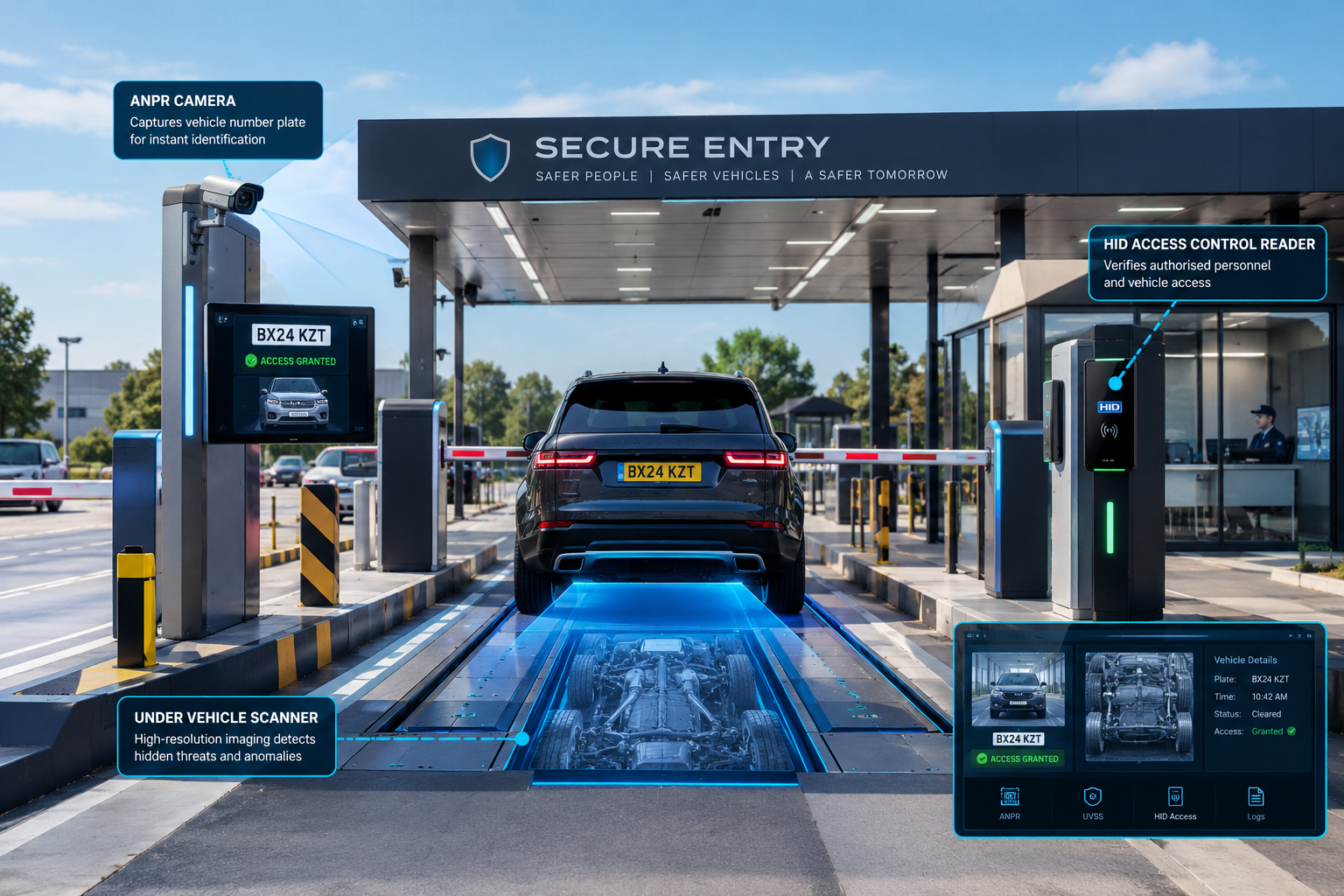
    • Turn-Key Integration: Our engineering partners ensure your scanner connects directly with Automatic Number Plate Recognition (ANPR) cameras, rising bollards, barrier gates, and Video Management Systems (VMS).
    • Complete Lifecycle Support: We provide end-to-end guidance from civil pit installation to operator training and ongoing technical support.

    Upgrade Your Checkpoint to Future-Proof Security

    Relying on outdated linear scanning technology leaves your facility exposed to motion distortion, image gaps, and false alarms. Understanding why Area scan is today’s and future technology and linear scan is outdated empowers your team to deploy a faster, smarter, and more reliable perimeter defense system.

    Eliminate undercarriage blind spots at your facility. Contact the technical experts at UVSS today to request a quotation, schedule a system demo, or discuss upgrading your existing checkpoint infrastructure.

  • Modernizing Checkpoint Security with a Real Time Threat Detection Under Vehicle Scanner

    Modernizing Checkpoint Security with a Real Time Threat Detection Under Vehicle Scanner

    In an increasingly complex global threat landscape, protecting critical infrastructure, government buildings, corporate campuses, and military installations requires a proactive, multi-layered approach to physical security. While security teams often invest heavily in perimeter fencing, biometric access control, and CCTV surveillance networks, the undercarriage of arriving cars and freight trucks remains a primary vulnerability. The concealed area beneath a chassis provides an ideal location for hiding contraband, weapons, tracking bugs, or improvised explosive devices (VBIEDs).

    Relying on traditional inspection techniques, such as security guards holding mirrors on sticks, introduces unacceptable operational risks. Manual inspections are slow, subjective, prone to human error, and create traffic bottlenecks at facility entrance gates. To address these vulnerabilities, security directors are modernizing their facilities with an automated real time threat detection under vehicle scanner.

    At UVSS, as a premier reseller and specialist integrator of physical security solutions, we supply, configure, and maintain high-performance vehicle screening systems. In this guide, we evaluate how a real time threat detection under vehicle scanner operates, explore its core commercial benefits, and explain why upgrading your facility’s entry points is a critical step for comprehensive perimeter defense.

    The Operational Limitations of Manual Vehicle Inspections

    Before examining the capabilities of digital scanning technology, it is important to evaluate why legacy inspection methods fail to meet modern security standards.

    For decades, security personnel used rolling convex mirrors to view undercarriages. This manual approach presents significant operational liabilities:

    • Human Fatigue & Inconsistency: Guard concentration naturally drops during long shifts, making it easy to miss small, cleverly concealed objects attached to dirty vehicle chassis.
    • Throughput Friction & Traffic Queues: A thorough manual mirror check takes up to two minutes per vehicle, leading to long queues that spill over into public roadways and disrupt supply chain logistics.
    • Lack of Audit Trails: Manual mirror checks leave no historical data. If a security incident occurs, there is no visual record or timestamped file proving what a vehicle’s underside looked like at the point of entry.

    By integrating a real time threat detection under vehicle scanner, facilities replace slow, manual checks with an automated, high-definition digital inspection process.

    How a Real Time Threat Detection Under Vehicle Scanner Works

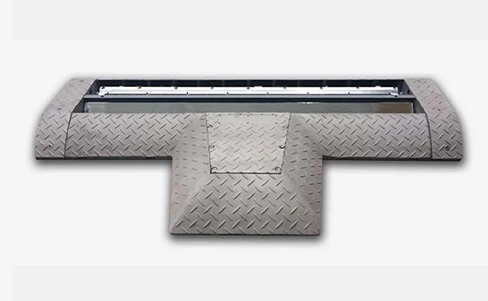
    An automated real time threat detection under vehicle scanner combines high-speed line-scan camera optics, shadowless LED illumination, and AI-driven imaging software into an integrated hardware platform.

    ┌─────────────────────────────────────────────────────────────┐
    │           CHECKPOINT SCANNING & VERIFICATION WORKFLOW       │
    ├─────────────────────────────────────────────────────────────┤
    │ 1. Vehicle triggers inductive loops or radar presence sensor │
    │ 2. High-intensity LED arrays flood the undercarriage area   │
    │ 3. Line-scan cameras capture HD slices at up to 30 km/h     │
    │ 4. AI software engine stitches slices into a composite image │
    │ 5. System flags anomalies and cross-references license plate│
    └─────────────────────────────────────────────────────────────┘
    

    The automated inspection cycle takes place within seconds:

    1. Vehicle Detection: Inductive loops or radar sensors embedded in the roadway detect an approaching vehicle and automatically activate the scanning hardware.
    2. High-Intensity Illumination: Synchronized, shadowless LED lighting arrays flood the undercarriage, eliminating deep shadows around frame rails, exhaust systems, and fuel tanks.
    3. High-Speed Line-Scanning: As the vehicle drives over the scanner unit at speeds up to 30 km/h, high-resolution line-scan cameras capture continuous visual slices of the chassis.
    4. Composite Image Assembly & AI Threat Analysis: The system’s processing engine stitches these visual slices into a single, high-definition digital image. An AI analytics engine then compares the live scan against a reference database or past scans of the same vehicle, instantly highlighting anomalies with a visual alert on the guard console.

    Key Commercial Features of Advanced Vehicle Scanners

    When evaluating physical security equipment for commercial facilities, security directors should look for key features that maximize detection accuracy and operational uptime. A modern real time threat detection under vehicle scanner includes several core capabilities:

    1. AI-Driven Anomaly Detection

    A top-tier real time threat detection under vehicle scanner relies on artificial intelligence to assist security staff. The AI automatically detects structural modifications, foreign objects, or unexpected additions—such as magnetic boxes or attached wiring—reducing reliance on operator guesswork and minimizing false alarms.

    2. Automatic License Plate Recognition (ALPR) Integration

    Comprehensive perimeter security requires linking vehicle identity to chassis data. By connecting a real time threat detection under vehicle scanner with ALPR cameras and driver-facing scene cameras, the system automatically tags each undercarriage image with the vehicle’s license plate number, driver profile, and exact arrival timestamp.

    3. Heavy-Duty Environmental Enclosures

    Undercarriage scanner hardware installed directly in driving lanes must withstand heavy environmental exposure. The commercial scanning units resold by UVSS feature IP68-rated weatherproof housings, integrated glass-heating elements to prevent condensation, and heavy-duty axle load capacities exceeding 30 to 40 tons to handle fully loaded commercial trucks.

    Comparing Deployment Models: Fixed vs. Portable Scanners

    Depending on your site layout, facility footprint, and mobility requirements, a real time threat detection under vehicle scanner can be configured in two primary formats:

    Feature MetricFixed (Flush-Mounted) ScannerPortable (Surface-Mounted) Scanner
    Primary ApplicationPermanent corporate gates, airports, data centersTemporary events, VIP summits, mobile checkpoints
    Civil InstallationFlush-mounted in a shallow trenchSurface-mounted ramp setup in under 15 minutes
    Traffic Speed SupportDrives over smoothly at up to 30–40 km/hLow-profile speed ramp (requires controlled drive-over)
    Durability LevelBuilt for continuous, high-volume heavy freight trafficCompact, battery- or generator-compatible mobile unit

    Whether your organization requires a permanent, flush-mounted installation or a rapidly deployable mobile unit, UVSS provides certified hardware tailored to your specific facility requirements.

    Why Partner with UVSS as Your Specialized Reseller?

    Selecting physical perimeter security equipment requires technical expertise, network planning, and reliable long-term support. At UVSS, we serve as your consultative reseller partner, helping you select the right screening platforms for your operational needs.

    When you source your real time threat detection under vehicle scanner through UVSS, you gain access to a dedicated support team that provides:

    • Site Engineering & Layout Analysis: We evaluate vehicle flow rate, road geometry, network capacity, and environmental conditions to select the optimal hardware configuration.
    • System Integration: Our technical specialists ensure your real time threat detection under vehicle scanner integrates seamlessly with existing access control barriers, automatic rising bollards, traffic signals, and Video Management Systems (VMS).
    • Lifecycle Maintenance & Training: We provide comprehensive staff training, software updates, and ongoing technical maintenance to ensure long-term system uptime.

    Take Control of Your Checkpoint Security

    Leaving the undercarriage of arriving vehicles unmonitored introduces significant vulnerabilities into your physical security posture. Modernizing your checkpoint infrastructure with a high-performance real time threat detection under vehicle scanner provides the automated analysis, real-time threat detection, and historical auditing required to protect your facilities.

    Ready to eliminate blind spots at your facility entry points? Contact the engineering team at UVSS today to request a quote, book a live system demonstration, or consult with our perimeter security specialists.

  • Accelerating Showroom Efficiency: The Ultimate Guide to Electronic Key Cabinets for Car Dealerships

    Accelerating Showroom Efficiency: The Ultimate Guide to Electronic Key Cabinets for Car Dealerships

    Managing a modern automotive dealership is a highly coordinated logistical balancing act. Between managing a vast inventory of new vehicles, organizing customer test drives, and handling daily service lane repairs, dealership operations move at a blistering pace. Yet, one of the most persistent bottlenecks and significant security vulnerabilities on the lot comes down to a deceptively simple item: the vehicle key fob. When vehicle keys are left on open pegboards, stored in unlocked desk drawers, or tracked using handwritten paper logs, it introduces immediate blind spots. To safeguard high-value inventory, eliminate administrative friction, and boost sales team productivity, implementing commercial-grade electronic key cabinets for car dealerships is a crucial operational upgrade.

    At Keysystem, we are a leading specialist reseller of enterprise physical security and automated asset-tracking solutions. We understand that dealership profitability relies on rapid key access, unquestionable staff accountability, and flawless inventory control. In this comprehensive procurement guide, we will explore how advanced key management systems operate, their core commercial advantages, and how to select the optimal setup for your showroom floors and service bays.

    The Hidden Costs of Poor Key Control in Automotive Retail

    When dealer principals and general managers audit operational leaks, they frequently discover that traditional key handling is an invisible drain on the bottom line. Relying on an unstructured, manual key tracking setup creates immediate friction across multiple departments.

    Consider the daily commercial liabilities associated with legacy key storage:

    • Wasted Sales Momentum: A prospective buyer sits at a salesperson’s desk, ready to test drive a premium SUV. If the sales advisor spends fifteen minutes hunting down the key fob because another team member forgot to return it, the customer’s excitement cools, directly risking the sale.
    • The Lost Key Fob Tax: Modern smart keys and proximity fobs are sophisticated pieces of technology. Replacing a single lost or misplaced smart key—including transponder programming and cutting fees—can easily cost hundreds of pounds. If a dealership loses multiple keys a month, the replacement overhead directly erodes net margins.
    • Mysterious Lot Damage: When a vehicle is found with a scratch or a dent after a weekend shift, identifying the precise individual who last drove the car is incredibly difficult if your manual sign-out sheet is incomplete or ignored.

    By replacing chaotic manual processes with smart electronic key cabinets for car dealerships, these operational bottlenecks disappear. Every vehicle key is locked securely inside a tamper-proof steel enclosure, accessible exclusively by authorized personnel with a definitive digital footprint generated for every single transaction.

    How Electronic Key Cabinets for Car Dealerships Function

    An intelligent key tracking system is far more than an electronic lockbox; it is a centralized, cloud-connected inventory hub. The physical infrastructure consists of a heavy-duty steel cabinet featuring individual, electronically locked key slots. Inside, each vehicle key or fob set is permanently attached to a durable security plug embedded with a unique RFID microchip or identity tag.

    ┌─────────────────────────────────────────────────────────────┐
    │             DEALERSHIP KEY EXTRACTION WORKFLOW              │
    ├─────────────────────────────────────────────────────────────┤
    │ 1. Advisor authenticates via PIN, Biometrics, or RFID Badge│
    │ 2. Operator inputs Stock Number or VIN on the touchscreen   │
    │ 3. System validates user permissions and active schedules   │
    │ 4. Correct key slot illuminates and mechanically releases  │
    │ 5. System logs the transaction data to the cloud dashboard │
    └─────────────────────────────────────────────────────────────┘
    

    The day-to-day workflow for a sales or service advisor follows a seamless, secure sequence:

    1. User Authentication: The employee identifies themselves at the cabinet interface using a secure PIN code, a proximity staff badge, or an integrated biometric scanner.
    2. Vehicle Search: Using the intuitive touchscreen interface, the user inputs the vehicle’s unique stock number, model name, or VIN.
    3. Targeted Mechanical Release: The electronic key cabinets for car dealerships verify the user’s permission profile. The cabinet door opens, and an LED indicator lights up the exact slot holding the requested key. All other keys remain locked firmly in place, preventing accidental mix-ups or unauthorized pick-ups.

    Key Commercial Features to Prioritize

    As a premier specialized reseller representing elite asset-tracking manufacturers, Keysystem advises dealership groups to prioritize several critical hardware and software parameters during the procurement process:

    1. Real-Time Automated Notifications & Overdue Alerts

    Dealership operations don’t stop when a shift ends. Sophisticated electronic key cabinets for car dealerships allow managers to program custom time restrictions. If a sales executive or service technician signs out a key fob and fails to return it by the close of business, the system automatically triggers an alert. An instant SMS or email notification is sent directly to the sales manager and the employee, resolving missing assets before they turn into permanent losses.

    2. Open API Architecture for DMS Integration

    An isolated security tool leaves data siloed. High-performance electronic key cabinets for car dealerships feature open API capabilities to integrate natively with your existing Dealer Management System (DMS) and customer relationship management (CRM) software. This integration allows you to cross-reference key access logs directly with active customer test drive appointments or open service repair orders, streamlining your administrative workflows.

    3. Granular User Permission Hierarchies

    Not all staff members require the same level of asset access. The software behind modern electronic key cabinets for car dealerships allows administrators to create tailored access profiles based on job roles. For example, your valet staff can be restricted to moving inventory within specific lot zones, sales advisors can access consumer vehicles during showroom hours, and master keys for parts departments or offices can be locked down exclusively for executive staff.

    Sourcing the Right Configuration for Your Dealership Layout

    Because Keysystem handles physical security deployments across diverse automotive retail footprints, we recognize that site topologies vary wildly. An automotive key management setup can be scaled to match your exact spatial and structural needs:

    • Showroom Floor & Sales Desks: Sleek, wall-mounted electronic key cabinets for car dealerships holding 40 to 100 keys are ideal for immediate sales team access, ensuring keys remain close to the customer interaction zone.
    • Service Lanes & Repair Bays: High-capacity, heavy-duty floor-standing units holding hundreds of keys are built to withstand the rigorous, high-volume environment of a busy service department, helping service advisors track vehicles from check-in to final wash.
    • Multi-Site Group Networks: For multi-franchise automotive groups, multiple cabinets can be deployed across different regional dealerships while remaining tied to a unified, cloud-accessible dashboard for comprehensive, group-wide asset tracking and analytics.

    Why Choose Keysystem as Your Strategic Partner?

    Selecting a high-security automated cabinet infrastructure is a technical decision that directly impacts your daily operational risk profile. At Keysystem, we pride ourselves on being consultative, vendor-agnostic physical security specialists rather than simple product catalog vendors. We analyze your lot layout, staff volume, and network parameters to ensure you invest in a platform that maximizes daily utility and long-term hardware resilience.

    When you purchase your electronic key cabinets for car dealerships through our network, you gain a dedicated technical partner for the entire lifecycle of your asset-tracking hardware. We assist your operational teams through every single step, including comprehensive site architecture planning, customized software provisioning, secure network engineering, comprehensive team training, and reliable technical maintenance to guarantee maximum system uptime.

    Conclusion: Drive Total Accountability on Your Lot

    Leaving your vehicle inventory keys unprotected on traditional hooks or in unlocked boxes introduces unnecessary operational liabilities and expensive financial leaks to your business model. Upgrading your showroom and service footprints to sophisticated, automated electronic key cabinets for car dealerships is the definitive method to establish absolute staff accountability, protect your high-value inventory, and accelerate your sales workflows.

    Take absolute control of your inventory today. Contact the engineering team at Keysystem to speak with our product specialists, request a customized system quotation, or schedule a live technology demonstration for your dealership group.

  • The Complete Commercial Guide to a Key Tracking System for Organizations

    The Complete Commercial Guide to a Key Tracking System for Organizations

    Managing physical access in a modern enterprise is a complex operational challenge. While digital badge readers and cloud access control systems secure outer perimeters, hundreds of physical keys remain essential for daily operations. From facility master keys and server rack passes to fleet vehicle fobs and restricted equipment storage, mechanical keys are vital assets. However, relying on manual pegboards, paper logbooks, or unmonitored drawers creates a major operational vulnerability. Implementing an automated key tracking system for organizations is no longer just an administrative convenience—it is a critical requirement for enterprise physical security.

    When physical keys go missing, the consequences extend far beyond simple inconvenience. Lock replacement costs, security audits, operational delays, and compromised compliance can severely impact a company’s bottom line. Upgrading to a digital key tracking system for organizations provides full visibility, accountability, and seamless control over every physical credential across your facility.

    At Keysystem, we are a leading specialist reseller and integrator of smart asset tracking and physical security technology. We partner with world-class manufacturers to provide turn-key key management solutions tailored to commercial enterprises, healthcare facilities, automotive fleets, and government institutions. In this guide, we will examine how an enterprise-grade key tracking system for organizations works, its core commercial benefits, and how to select the right platform for your business.

    Why Enterprise Facilities Suffer Without Automated Key Control

    For many operations managers, physical key management remains an unmonitored blind spot. Traditional key control methods rely heavily on human diligence, making them inherently prone to oversight and error.

    Consider the common friction points caused by legacy key storage:

    • Costly Re-Keying Expenses: If a master key is misplaced or lost by an external contractor, the entire facility must be re-keyed to maintain perimeter integrity—costing thousands of dollars in hardware and emergency locksmith fees.
    • Lost Productivity and Operational Downtime: Staff and facility managers waste valuable hours searching for misplaced keys, tracking down who last used a fleet vehicle, or waiting for manual handoffs.
    • Compliance and Security Audit Failures: In regulated industries like healthcare, finance, and data centers, failing to maintain an unalterable chain-of-custody log for restricted areas can result in heavy regulatory penalties.

    Deploying an automated key tracking system for organizations eliminates these vulnerabilities by replacing manual logbooks with secure, software-driven key cabinets that log every transaction in real time.

    How a Key Tracking System for Organizations Operates

    An advanced key tracking system for organizations combines heavy-duty steel lockboxes with smart RFID technology and cloud-based management software.

    ┌─────────────────────────────────────────────────────────────┐
    │              AUTOMATED KEY TRACKING WORKFLOW                │
    ├─────────────────────────────────────────────────────────────┤
    │  1. User authenticates via PIN, RFID badge, or biometric    │
    │  2. Central software validates user permissions & schedule  │
    │  3. Cabinet unlocks; LED indicator highlights designated key │
    │  4. User removes authorized key ring; all others stay locked │
    │  5. System generates real-time cloud record & timestamp     │
    └─────────────────────────────────────────────────────────────┘
    

    The process is fast, intuitive, and entirely secure:

    1. Identity Verification: The user logs into the system terminal using an assigned PIN, employee RFID access card, or biometric scan.
    2. Permission Check: The onboard software instantly verifies if the user has permission to pull the requested key at that specific date and time.
    3. Targeted Key Release: The electronic cabinet door opens, and an LED illuminates the exact slot containing the requested key ring. Intelligent locking mechanisms keep all other keys firmly trapped inside.
    4. Real-Time Data Capture: Every key ring is attached to a durable RFID smart plug. The moment the key is removed or returned, the key tracking system for organizations updates the central dashboard with exact timestamps and user details.

    Core Commercial Features of Modern Key Management Platforms

    When evaluating options, procurement officers and facility leads should look for a key tracking system for organizations that offers advanced software and hardware capabilities:

    1. Automated Overdue Alerts and Notifications

    An enterprise-grade key tracking system for organizations acts as an active security monitor. If a technician or contractor pulls a critical master key and fails to return it within their designated shift window, the system triggers automated email or SMS alerts directly to facility management and the user.

    2. Open API and HR Software Integration

    A standalone key box creates data silos. The best key tracking system for organizations features open API connectivity, allowing seamless integration with your existing access control management systems, active directories, and HR software. When an employee onboarded or offboarded in your system, their key access permissions update automatically.

    3. Custom Time and Role-Based Access Schedules

    Not every staff member requires 24/7 access to every key. An intelligent key tracking system for organizations allows administrators to configure precise, role-based access rules. For instance, cleaning crews or night contractors can be restricted to pulling specific keys only during their scheduled working hours.

    Comparing Key Management Setup Models

    Different organizational structures require different key cabinet configurations:

    Feature / CriteriaCompact Wall-Mounted SystemsScalable Enterprise Networks
    Ideal Operational SizeRegional offices, small fleets, property management sitesSprawling corporate campuses, airports, hospitals, data centers
    Capacity10 to 30 individual key slots100+ keys with modular expansion panels
    Management InterfaceLocal touchscreen terminal with cloud syncCentralized multi-site web dashboard
    Integration LevelStandalone or basic API connectivityDeep integration with VMS, HR, and access control platforms

    No matter your facility size, Keysystem supplies modular, future-proof key tracking hardware designed to expand alongside your business.

    Why Partner with Keysystem as Your Reseller?

    Selecting the right physical security hardware requires a partner who understands network alignment, system integration, and long-term lifecycle maintenance. As a dedicated reseller of top-tier key control platforms, Keysystem serves as your technical advisor.

    “True physical security requires complete transparency from the outer perimeter down to the physical keys in your facility. Automating key management replaces uncertainty with absolute operational control.”

    When you source your key tracking system for organizations through Keysystem, you benefit from:

    • Consultative System Design: We analyze your site workflows, staff traffic, and network architecture to recommend the exact hardware setup for your budget.
    • Turn-Key Integration Support: Our engineering team ensures your new key cabinet communicates natively with your existing physical access control system (PACS) and user databases.
    • Comprehensive Training & Support: From initial site surveys to staff onboarding and technical maintenance, Keysystem provides complete ongoing support to ensure maximum uptime.

    Take Control of Your Facility’s Physical Assets

    Unmonitored keys represent an unnecessary operational risk and financial burden for any modern business. Upgrading your asset security with an automated key tracking system for organizations eliminates administrative overhead, enforces accountability, and protects high-value physical assets.

    Streamline your key control operations today. Contact the specialist team at Keysystem to request a customized product quote, consult with our solutions specialists, or schedule a live system demonstration.

  • 3D Under Vehicle Scanner vs Traditional UVSS: Securing Critical Infrastructure

    3D Under Vehicle Scanner vs Traditional UVSS: Securing Critical Infrastructure

    In the evolving landscape of physical perimeter defense, a facility’s entrance is its most vital line of protection. High-security sites like government centers, defense facilities, energy plants, and airports spend heavily on access control gates, bollards, and surveillance cameras. Yet, the undercarriage of arriving vehicles remains a persistent vulnerability for concealed weapons, vehicle-borne improvised explosive devices (VBIEDs), and illegal contraband. For years, security managers relied on manual mirrors or basic 2D line-scan cameras. Today, security leaders face a technical shift when deciding between a 3d under vehicle scanner vs traditional uvss setup. Selecting the right scanning technology directly impacts checkpoint speed, threat detection accuracy, and guard safety.

    At UVSS, as an industry-leading reseller and integrator of checkpoint screening technology, we assist security directors in selecting the optimal scanning hardware for their specific threat environment. In this guide, we evaluate the choice between a 3d under vehicle scanner vs traditional uvss, explore the role of an under vehicle scanner for critical infrastructure, and provide a clear comparison matrix to guide your procurement decisions.

    The Evolution of Undercarriage Screening

    Undercarriage screening has advanced significantly over the past two decades:

    • Legacy Manual Inspection: Mirrors on wheels required guards to inspect chassis manually, introducing significant human error, traffic congestion, and safety risks.
    • Traditional 2D UVSS: Introduced high-resolution composite images using line-scan or area-scan cameras. While a major upgrade over mirrors, flat 2D images struggle with deep shadows, complex mechanical components, and hidden structural cavities.
    • 3D Under Vehicle Scanning Systems: Utilizing stereoscopic vision, structured light, or LiDAR point-cloud generation, 3D systems capture depth (z-axis) data to construct interactive volumetric models of the chassis.

    When evaluating a 3d under vehicle scanner vs traditional uvss setup for high-traffic environments, procurement teams must balance hardware cost against the technical demands of their security baseline.

    ┌───────────────────────────────────────────────────────────┐
    │            UNDERBODY SCANNING EVOLUTION                   │
    ├───────────────────────────────────────────────────────────┤
    │  1. Manual Mirrors  ──► Flat view, high human error       │
    │  2. Traditional UVSS ──► High-res 2D image, flat view     │
    │  3. 3D UVSS          ──► Volumetric depth, LiDAR/3D model │
    └───────────────────────────────────────────────────────────┘
    

    Technical Comparison: 3D Under Vehicle Scanner vs Traditional UVSS

    Understanding the architectural differences between these platforms helps clarify why high-risk facilities are upgrading their checkpoint capabilities.

    1. Depth Perception (Z-Axis Analysis)

    A traditional 2D line-scan system captures flat X and Y pixel data, stitching horizontal visual slices into a high-definition photograph. While visual clarity is high, a flat image cannot differentiate between a dark shadow and a dark, magnetically attached package.

    In contrast, the technical core of a 3d under vehicle scanner vs traditional uvss comparison centers on depth perception. A 3D scanner uses stereoscopic vision or LiDAR to build a dense point cloud, measuring the exact distance from the camera to every mechanical point under the vehicle. This enables operators to rotate the chassis model on-screen and inspect around fuel tanks, axles, and frame rails.

    2. AI Anomaly Detection & Reduced False Alarms

    Artificial Intelligence (AI) and Foreign Object Detection (FOD) algorithms perform significantly better on 3D data. When assessing a 3d under vehicle scanner vs traditional uvss, traditional 2D AI analytics frequently trigger false alarms caused by mud, water droplets, or minor dirt variations on the chassis.

    Because a 3D system measures volumetric changes rather than just surface color, its software ignores surface grime and alerts guards only when an actual physical object alters the vehicle’s structural baseline.

    Deploying an Under Vehicle Scanner for Critical Infrastructure

    High-risk facilities—including nuclear power plants, oil and gas refineries, military bases, and international transport hubs—operate under zero-fail security standards. Relying on an under vehicle scanner for critical infrastructure ensures that threat screening keeps pace with high vehicle throughput without compromising thoroughness.

    High-security environments require:

    • High Throughput Speeds: Scanners must process heavy commercial trucks and passenger cars at speeds up to 30–40 km/h without image blurring.
    • All-Weather Reliability: Equipment embedded in asphalt must carry an IP68 ingress protection rating to withstand heavy rain, sub-zero winter frost, mud, and heavy axle loads exceeding 40 tonnes.
    • Integrated Multi-Layer Security: The system should link automatically with Automatic Number Plate Recognition (ANPR), driver-facing facial recognition cameras, and automated rising bollards.

    Using a high-performance under vehicle scanner for critical infrastructure transforms a busy gate from a security bottleneck into a streamlined, automated checkpoint.

    Comparison Matrix: 3D Under Vehicle Scanner vs Traditional UVSS

    When assessing a 3d under vehicle scanner vs traditional uvss side-by-side, facilities teams can compare key operational metrics:

    Metric / ParameterTraditional 2D UVSS3D Under Vehicle Scanner
    Imaging Dimensionality2D Flat Composite (X/Y)3D Volumetric Point-Cloud (X/Y/Z)
    Detection of Hidden VoidsLimited by camera angle & shadowsComplete 360° rotational view
    False Alarm RateModerate (sensitive to dirt/lighting)Extremely Low (measures physical volume)
    Scanning Speed CapabilitiesUp to 30 km/hUp to 30–40 km/h
    ANPR & Database IntegrationFull SupportFull Support
    Ideal Operational EnvironmentCommercial office parks, logistics hubsMilitary sites, nuclear plants, borders

    Operational Use Cases: Selecting the Right Technology

    Selecting between a 3d under vehicle scanner vs traditional uvss depends on your facility’s operational profile and risk posture:

    Commercial Real Estate & Fleet Hubs

    For corporate office parks or suburban distribution warehouses, a high-resolution traditional 2D line-scan system often provides an optimal balance of performance and budget. It delivers fast throughput, clear digital records, and seamless integration with access barriers.

    Defense, Energy, and Government Facilities

    When evaluating a 3d under vehicle scanner vs traditional uvss for nuclear facilities, government embassies, or international border crossings, the 3D system is the preferred choice. The ability to identify volumetric modifications and concealed IEDs in complex undercarriages makes 3D scanning an essential investment for high-risk sites.

    Why Partner with UVSS as Your Technology Reseller?

    As a specialist reseller, UVSS provides objective guidance across leading scanner manufacturers rather than pushing a single hardware brand.

    When you partner with UVSS, our engineering team supports your project lifecycle through:

    • Comprehensive Site Assessments: Evaluating road civil design, power access, and lane traffic patterns.
    • System Architecture & Integration: Linking undercarriage scanners natively into your existing Video Management Software (VMS), ANPR feeds, and physical barrier controllers.
    • Lifecycle Maintenance & Training: Providing ongoing technical service, software upgrades, and guard team operational training to maintain optimal performance.

    Conclusion: Upgrading Your Perimeter Security

    As physical threats grow more sophisticated, leaving the underside of arriving vehicles unmonitored introduces unnecessary operational risk. Analyzing a 3d under vehicle scanner vs traditional uvss reveals that while traditional 2D systems remain effective for low-to-medium risk sites, 3D volumetric technology represents the future of threat detection for sensitive facilities.

    Investing in a dedicated under vehicle scanner for critical infrastructure protects personnel, automates compliance logging, and eliminates perimeter blind spots.

    Ready to secure your checkpoints? Contact the technical team at UVSS today to request a custom quote, compare scanning technologies, or schedule a live system demonstration.

  • Cómo empezar a jugar en un casino online: guía práctica para principiantes


    El mundo de los casinos online ha crecido exponencialmente en los últimos años, ofreciendo a los jugadores la oportunidad de disfrutar de una amplia variedad de juegos desde la comodidad de sus hogares. Esta guía está diseñada para principiantes que desean adentrarse en este emocionante universo, proporcionando información valiosa sobre qué esperar y cómo comenzar su aventura, incluyendo el uso de la jugabet apk para acceder a las mejores plataformas de juego. Desde la creación de una cuenta hasta la elección de juegos, cubriremos todo lo que necesitas saber para disfrutar de una experiencia de juego segura y emocionante.

    Qué esperar al entrar en un casino online

    Al unirte a un casino online, te enfrentarás a una serie de opciones y características que pueden parecer abrumadoras al principio. Es importante entender que estos casinos están diseñados para ofrecer una experiencia de entretenimiento única, con una variedad de juegos como tragamonedas, ruleta, blackjack y poker, entre otros. Además, muchos casinos ofrecen promociones atractivas para nuevos jugadores, así como programas de lealtad que recompensan la fidelidad a largo plazo. Prepárate para explorar un entorno digital donde la suerte y la estrategia juegan un papel crucial en tu éxito.

    Los casinos online operan bajo estrictas regulaciones y licencias, lo que garantiza que los juegos son justos y que tus datos personales están protegidos. Al comenzar, asegúrate de investigar y elegir un casino que tenga una buena reputación y que ofrezca un servicio al cliente de calidad.

    Cómo empezar a jugar en un casino online

    Sigue estos pasos para iniciar tu experiencia en un casino online:

    1. Crea una cuenta: Regístrate en el casino de tu elección proporcionando información básica como tu nombre, correo electrónico y fecha de nacimiento.
    2. Verifica tu identidad: Muchos casinos requieren la verificación de tu identidad para asegurar que cada jugador sea mayor de edad y prevenir fraudes.
    3. Haz un depósito: Selecciona uno de los métodos de pago disponibles para agregar fondos a tu cuenta y comienza a jugar.
    4. Selecciona tu juego: Explora la vasta biblioteca de juegos del casino y elige el que más te interese o divierta.
    5. Comienza a jugar: Familiarízate con las reglas del juego seleccionado y disfruta de la experiencia.
    • Aparte de la diversión, podrás ganar premios en efectivo.
    • Las promociones suelen ofrecer bonos de bienvenida atractivos.
    • Acceso a una amplia variedad de juegos sin salir de casa.

    Detalles prácticos para jugar en casinos online

    Además de los pasos mencionados anteriormente, hay varios aspectos prácticos que debes considerar al jugar en un casino online. Primero, es crucial elegir un casino que ofrezca una plataforma amigable y fácil de navegar, ya que esto puede influir en tu experiencia de juego. Asegúrate también de que el casino tenga una variedad de métodos de pago que se adapten a tus preferencias, ya sea mediante tarjetas de crédito, transferencias bancarias o billeteras electrónicas.

    Los casinos online modernos también suelen contar con aplicaciones móviles, lo que permite jugar sobre la marcha. Esto significa que puedes disfrutar de tus juegos favoritos desde cualquier lugar y en cualquier momento, lo que añade una capa de conveniencia a la experiencia general. Siempre verifica si el casino tiene una versión móvil optimizada o una aplicación dedicada para una mejor experiencia de usuario.

    • Variedad en opciones de pago como tarjetas y billeteras electrónicas.
    • Disponibilidad de juegos en dispositivos móviles.
    • Programas de fidelidad que recompensan tu lealtad.

    Conocer estos detalles prácticos te ayudará a maximizar tu disfrute y minimizar inconvenientes a medida que te adentras en el mundo de los casinos online.

    Beneficios clave de jugar en casinos online

    Los casinos online ofrecen una serie de ventajas que los diferencian de los casinos físicos. En primer lugar, la comodidad es un gran atractivo: puedes jugar desde casa sin necesidad de desplazarte. Además, los casinos en línea suelen tener una oferta de juegos mucho más amplia, incluyendo variaciones de juegos de mesa tradicionales que podrías no encontrar en un casino físico.

    • Comodidad de jugar desde casa.
    • Acceso a una amplia variedad de juegos.
    • Bonos y promociones atractivas que aumentan tu bankroll.
    • Juegos en vivo que replican la experiencia de un casino real.

    Además, los casinos online suelen tener límites de apuesta más bajos, lo que permite que tanto jugadores casuales como aquellos con mayor experiencia puedan disfrutar de juegos sin un gran compromiso financiero. La posibilidad de jugar en cualquier momento también significa que puedes disfrutar de tus juegos favoritos cuando te apetezca.

    Confianza y seguridad en los casinos online

    La confianza y la seguridad son fundamentales al elegir un casino online. Asegúrate de que el casino cuente con licencias de juego válidas, lo que garantiza que opera bajo regulaciones estrictas y que tu información personal está protegida. La mayoría de los casinos utilizan tecnología de encriptación avanzada para proteger los datos de los usuarios y garantizar transacciones seguras.

    Además, es recomendable leer las opiniones y reseñas de otros jugadores antes de registrarse. Esto no solo te dará una idea de la reputación del casino, sino que también te ayudará a conocer la calidad de su servicio al cliente. Un buen casino siempre tendrá disponibles múltiples canales de atención al cliente, como chat en vivo, correo electrónico y líneas telefónicas.

    Por qué elegir un casino online

    Elegir jugar en un casino online es una decisión que puede brindarte no solo entretenimiento, sino también la oportunidad de ganar premios mientras disfrutas de la experiencia. Si sigues esta guía y tomas en cuenta los consejos ofrecidos, estarás bien preparado para comenzar tu aventura en el mundo de los casinos online. Recuerda siempre jugar de manera responsable y disfrutar del proceso.

    Con una amplia variedad de juegos, la comodidad de jugar desde casa y la posibilidad de recibir promociones atractivas, los casinos online se han convertido en una opción popular entre los jugadores. ¡Prepárate para girar la rueda, lanzar los dados y disfrutar de la experiencia de jugar en un casino online!

  • Promociones actuales en casinos online: cómo reclamar tus beneficios en 2026


    En la actualidad, los casinos online están experimentando un auge sin precedentes, ofreciendo promociones y bonificaciones que atraen a jugadores de todo el mundo. En 2026, las ofertas en estos sitios se han vuelto más competitivas y complejas, lo que hace que la información de plataformas como Futurola Chile sea muy valiosa para conocer las mejores estrategias para reclamar estos beneficios y maximizar la experiencia de juego. Este artículo te guiará a través de los aspectos más importantes sobre cómo aprovechar al máximo las promociones actuales en los casinos online.

    Los fundamentos que moldean decisiones inteligentes en casinos

    A medida que aumenta la popularidad de los casinos online, es crucial entender los factores que influyen en las decisiones de los jugadores. Desde las promociones hasta la calidad del servicio al cliente, hay múltiples aspectos que deben considerarse al elegir un casino online. En 2026, los mejores casinos no solo ofrecen bonificaciones atractivas, sino que también garantizan una experiencia de usuario fluida, una amplia variedad de juegos y un entorno seguro. Cada una de estas características contribuye a una experiencia de juego satisfactoria y responsable.

    Además, el conocimiento sobre los diferentes tipos de promociones, como los bonos de bienvenida, giros gratis y programas de fidelidad, es esencial para los jugadores. Esto no solo permite a los usuarios maximizar sus fondos al jugar, sino que también les ayuda a entender mejor el funcionamiento del casino y sus ofertas.

    Cómo aprovechar al máximo las promociones en casinos online

    Para reclamar tus beneficios en un casino online, es fundamental seguir ciertos pasos que aseguran que no te pierdas de nada.

    1. Investiga las promociones: Antes de registrarte, investiga las promociones actuales que ofrecen diferentes casinos. Comparar estas ofertas puede ayudarte a encontrar la más beneficiosa.
    2. Crea una cuenta: Una vez elegido el casino, regístrate creando una cuenta. Asegúrate de usar datos precisos para evitar problemas futuros.
    3. Verifica tu identidad: Muchos casinos requieren verificación de identidad antes de que puedas reclamar tus beneficios. Ten a mano tus documentos, como DNI o pasaporte.
    4. Realiza un depósito: Para acceder a muchos bonos, es necesario hacer un depósito inicial. Elige un método de pago que sea conveniente y seguro para ti.
    5. Solicita tu promoción: Una vez que tu cuenta esté activa y hayas realizado un depósito, busca la opción para reclamar tu bono. Esto puede incluir ingresar un código promocional.
    • Comparar promociones de diferentes casinos puede maximizar tus beneficios.
    • Usar datos precisos en tu registro facilita el proceso de verificación.
    • Elegir un método de pago conveniente acelera el acceso a tus fondos.

    Detalles prácticos de las promociones en casinos online

    Las promociones en los casinos online pueden variar considerablemente dependiendo de la plataforma. En 2026, muchos casinos ofrecen bonos de bienvenida que multiplican tu primer depósito o te dan giros gratis en ciertos juegos. También es común encontrar promociones para juegos específicos, donde los jugadores pueden obtener recompensas adicionales por probar nuevos títulos. Es fundamental leer los términos y condiciones asociados a cada promoción, ya que esto determinará cómo y cuándo puedes utilizar tus bonos.

    • Bonos de bienvenida que multiplica tu depósito inicial hasta un porcentaje específico.
    • Giros gratis que puedes usar en una selección de tragamonedas populares.
    • Promociones semanales o mensuales que recompensan a los jugadores frecuentes.

    Al entender cómo funcionan estas promociones, podrás utilizar tus beneficios de forma más efectiva, mejorando tu experiencia y potencialmente aumentando tus ganancias.

    Beneficios clave de jugar en casinos online

    Aparte de las promociones, jugar en casinos online en 2026 ofrece una serie de beneficios que mejoran la experiencia del jugador. Estos incluyen la comodidad de jugar desde casa, la disponibilidad de una amplia variedad de juegos y la posibilidad de acceder a ofertas exclusivas que no están disponibles en los casinos físicos. Además, muchos casinos online cuentan con excelentes programas de recompensas y fidelización que benefician a los jugadores a largo plazo.

    • Comodidad para jugar en cualquier momento y lugar.
    • Amplia oferta de juegos, incluyendo tragamonedas, juegos de mesa y apuestas en vivo.
    • Acceso a promociones exclusivas solo disponibles para jugadores online.
    • Bonificaciones para jugadores frecuentes que aumentan gradualmente tus beneficios.

    Estos beneficios, combinados con promociones atractivas, hacen que los casinos online sean una opción cada vez más popular entre los jugadores.

    Confianza y seguridad en los casinos online

    La confianza y la seguridad son factores fundamentales al jugar en casinos online. En 2026, los casinos de buena reputación utilizan tecnología de encriptación avanzada para proteger la información personal y financiera de sus jugadores. Además, muchos de estos casinos están regulados por organismos oficiales que garantizan el cumplimiento de las normativas del juego responsable. Es crucial elegir plataformas que muestren sus licencias y certificaciones claramente en su sitio web.

    La seguridad no solo se refiere a la protección de datos, sino también a la honestidad en los juegos. Los mejores casinos cuentan con auditorías regulares que aseguran que sus juegos sean justos y transparentes, lo que aumenta la confianza del jugador.

    ¿Por qué elegir casinos online en 2026?

    Los casinos online ofrecen una experiencia de juego inigualable en 2026, con promociones atractivas y una variedad de juegos que superan a las opciones disponibles en los casinos físicos. La posibilidad de acceder a beneficios y recompensas exclusivas, junto con la comodidad de poder jugar desde cualquier lugar, son solo algunas de las razones por las que los jugadores eligen plataformas online. Al considerar todas las promociones y características de estos casinos, es posible maximizar tu experiencia y disfrutar de un entretenimiento seguro y emocionante.

    Así que, si estás buscando una manera de disfrutar del juego y aprovechar al máximo tus beneficios, los casinos online son una excelente opción para ti en 2026.

  • Experience Ice Fishing live casino: bonus rounds and instant wins await you


    Live casino games have transformed the online gambling landscape, bringing the thrill of a real casino to your screen. One such exciting offering is Ice Fishing Evolution from Evolution Gaming. Set in a captivating Arctic landscape, this game combines interactive gameplay with the excitement of a live casino. With its unique 53-segment wheel, players can look forward to bonus rounds, instant wins, and cash prizes, making it a must-try for anyone looking to elevate their gaming experience.

    How account setup, payments, and play fit together in a live casino

    Getting started with live casino games like Ice Fishing is straightforward, ensuring that players can dive into the action without unnecessary hurdles. Once players have accessed the platform, setting up an account is the first essential step. This process typically involves providing some personal information, such as your name, email, and date of birth. Following account creation, players can easily make deposits to fund their gaming experiences.

    Payment options are diverse, ranging from credit cards to popular e-wallets, allowing players to choose methods that best suit their preferences. Once deposits are made, players can seamlessly transition to selecting their games, where the fun truly begins. With features such as high volatility and the potential for significant wins, the Ice Fishing live casino experience offers both excitement and rewards.

    Getting started with Ice Fishing live casino

    Embarking on the Ice Fishing adventure involves a few simple steps that players can follow for a smooth and enjoyable experience. Here’s how to get started:

    1. Create an Account: Register on the live casino platform by filling in the necessary details.
    2. Verify Your Details: Confirm your identity to ensure compliance with security protocols.
    3. Make a Deposit: Fund your account using your preferred payment option; the minimum deposit can be as low as €0.10.
    4. Select Ice Fishing: Navigate to the live dealer section and choose the Ice Fishing game to begin your adventure.
    5. Start Playing: Spin the 53-segment wheel for your chance to win instant cash prizes and bonuses!
    • Seamless account creation process
    • Diverse payment options for convenience
    • Low minimum deposits to allow players of all budgets to participate

    Practical details for Ice Fishing live casino

    The Ice Fishing live casino game combines traditional gameplay with a fresh, engaging twist. Its standout feature, the 53-segment wheel, provides a unique way of winning. Each spin not only entertains but also offers players a chance to win up to 5000 times their stake, with potential earnings reaching up to €500,000. With a medium to high volatility, players can expect thrilling gameplay where each decision matters.

    As players enjoy the action, they will also appreciate the high return-to-player percentage of up to 97.10% on certain bets, ensuring that the odds are in their favor. This makes the game not only fun but also an appealing option for those looking to maximize their gaming experience. Moreover, the game is designed to keep the adrenaline high with bonus rounds that can significantly enhance winnings, fostering an immersive gaming atmosphere.

    • Maximum win potential of €500,000
    • Bonus rounds for enhanced winning opportunities
    • High RTP of up to 97.10% on specific bets

    These features make Ice Fishing a thrilling option for both new and seasoned players, ensuring that there is never a dull moment while playing.

    Key benefits of playing Ice Fishing

    Engaging with the Ice Fishing live casino game offers a myriad of benefits that appeal to a wide range of players. Firstly, the game’s immersive environment, set against a stunning Arctic backdrop, truly enhances the gaming experience, making players feel as though they are fishing in a frozen wonderland. Additionally, the social aspect of live casino gaming allows players to interact with dealers and other players, enriching the overall atmosphere.

    • Immersive Arctic-themed environment enhances gameplay
    • Interactive experience with live dealers
    • Exciting bonus rounds for increased winning potential
    • Generous RTP rates provide a fair gaming experience

    These benefits solidify Ice Fishing as a leading choice in the live casino sector, catering to players seeking both entertainment and rewarding gameplay.

    Trust and security in the Ice Fishing experience

    When it comes to online gaming, trust and security are paramount. Players can rest assured that reputable live casino platforms offering Ice Fishing are fully licensed and regulated, providing a safe environment for gameplay. The use of advanced encryption technologies helps protect players’ personal and financial information, ensuring that their data remains confidential and secure.

    Furthermore, reliable live casinos implement responsible gambling practices, offering support and tools to help players maintain control over their gaming habits. This commitment to player safety enhances the overall trustworthiness of the platform, allowing players to focus on their gaming experience without unnecessary concerns.

    Why choose Ice Fishing at Evolution Gaming

    Choosing Ice Fishing as your live casino game of choice means opting for a thrilling, rewarding experience that is both fun and secure. With its unique 53-segment wheel and high winning potential, players can enjoy an exhilarating challenge that keeps them on the edge of their seats. The interactive elements and engaging atmosphere combine to create a remarkable gaming experience that stands out in the crowded live casino landscape.

    Additionally, Evolution Gaming’s reputation for quality ensures that players receive a premium experience marked by seamless gameplay and stunning graphics. For anyone looking to elevate their gaming experience, Ice Fishing represents the perfect blend of excitement, rewards, and trust, making it a top choice for 2026 and beyond.