Category: uvss

  • The Complete Commercial Guide to Under Vehicle Inspection Technology

    The Complete Commercial Guide to Under Vehicle Inspection Technology

    In today’s physical security landscape, perimeter defense is only as strong as its weakest checkpoint. High-risk facility managers, corporate security heads, and logistics directors face an ever-evolving array of security risks. While access control gates, CCTV networks, and biometric terminals protect entry points, the underside of a vehicle remains one of the most vulnerable and frequently exploited blind spots. Integrating modern under vehicle inspection technology is no longer just an optional safeguard—it is a foundational pillar of comprehensive perimeter security.

    Relying on manual inspection methods, such as handheld convex mirrors, exposes security teams to significant human error, severe weather disruptions, and dangerous traffic bottlenecks. To address these operational vulnerabilities, automated under vehicle inspection technology provides real-time, high-definition digital imaging of every passing chassis without slowing down traffic flow.

    At UVSS, we are a leading specialist reseller and integrator of state-of-the-art physical security solutions. We partner with top-tier hardware and software manufacturers to deliver turn-key solutions tailored to high-security facilities. In this detailed guide, we evaluate how modern under vehicle inspection technology operates, its core commercial benefits, and how to select the optimal setup for your facility.

    Understanding Modern Under Vehicle Inspection Technology

    Historically, undercarriage checks required guards to bend down with handheld mirrors or place physical ramp blocks under passing cars. These legacy practices are slow, inconsistent, and put security personnel in direct physical harm’s way.

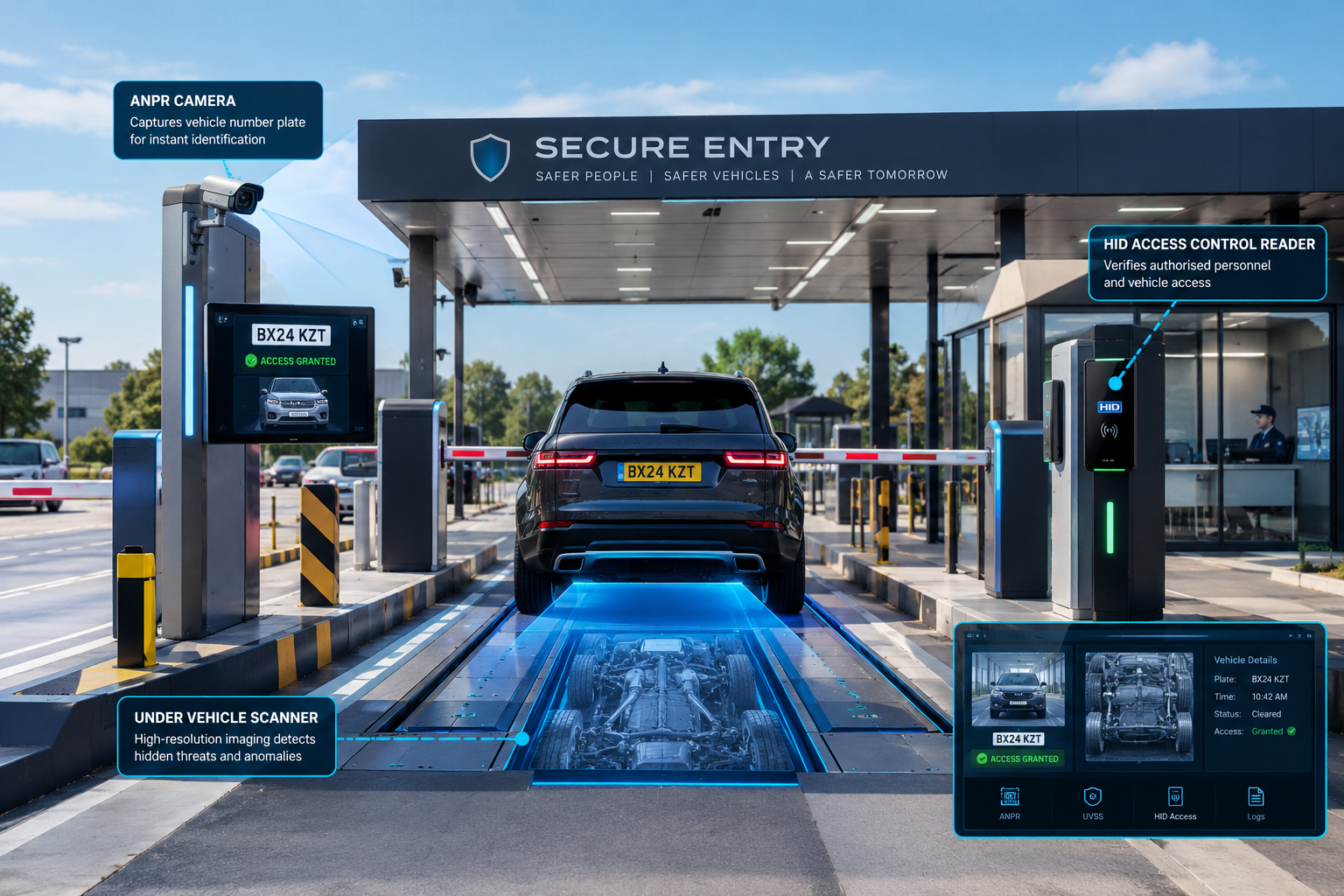
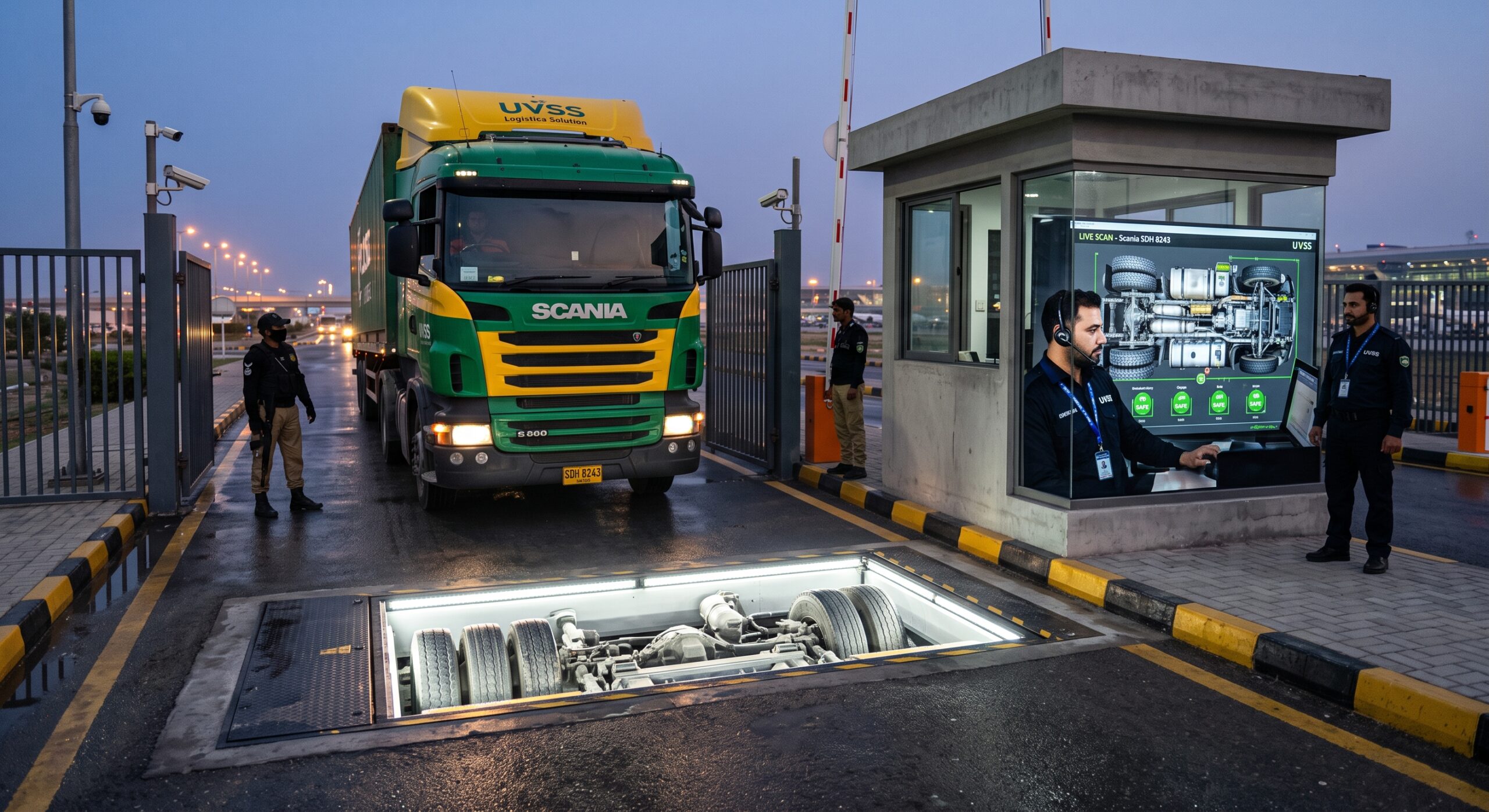
    Modern under vehicle inspection technology replaces these manual friction points with embedded or surface-mounted optical scanning arrays. When a vehicle approaches an access checkpoint, synchronized sensors detect its speed and position, triggering high-intensity LED light bars and line-scan imaging units.

    ┌─────────────────────────────────────────────────────────────┐
    │             CHECKPOINT SCANNING WORKFLOW                    │
    ├─────────────────────────────────────────────────────────────┤
    │  1. Vehicle enters drive-over sensor field                  │
    │  2. High-intensity LED array illuminates undercarriage      │
    │  3. Line-scan cameras capture full-frame HD composite image │
    │  4. ANPR camera captures license plate & driver profile     │
    │  5. AI engine compares chassis against reference database   │
    │  6. Operator screen flags anomalies or clears entry         │
    └─────────────────────────────────────────────────────────────┘
    

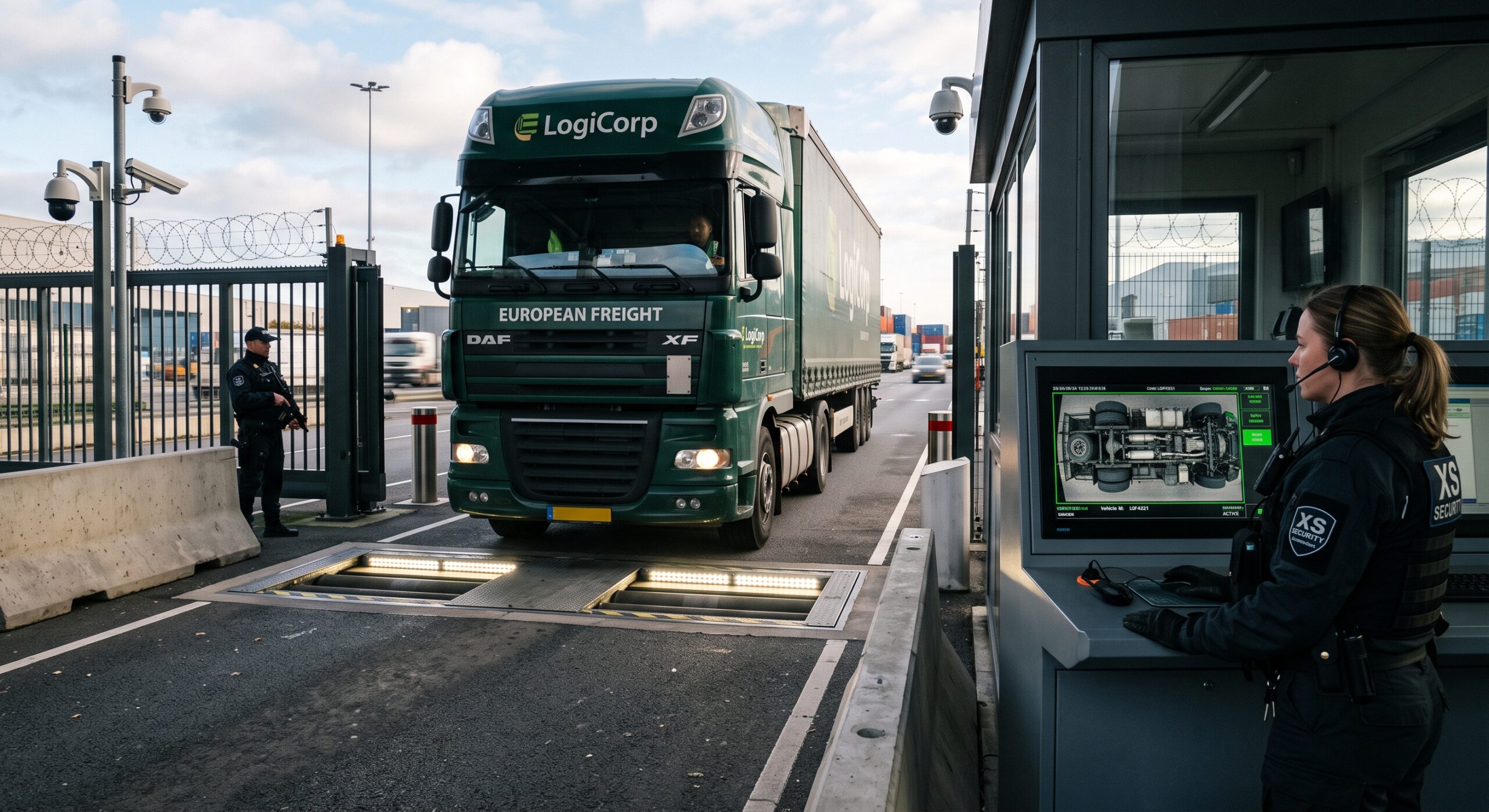
    Within seconds of driving over the scanner unit, the system stitches together a continuous, un-distorted, high-resolution visual map of the entire undercarriage. Security operators can review the full image on a centralized console from the safety of a climate-controlled guard house or remote command post.

    Key Features of Advanced Undercarriage Scanners

    When reviewing commercial-grade solutions, security directors must look beyond basic camera resolution. High-performance under vehicle inspection technology incorporates advanced software and hardware layers designed to eliminate threat blind spots:

    1. Artificial Intelligence & Automated Anomaly Detection

    The most significant breakthrough in under vehicle inspection technology is the integration of AI and machine learning algorithms. Instead of relying purely on an operator’s visual fatigue level, the AI software automatically compares the incoming vehicle’s undercarriage against a baseline image of the same make and model (or a past scan of that specific vehicle). Any unexpected addition—such as attached magnetic packages, loose wiring, modified exhaust cavities, or contraband—is instantly highlighted with a red overlay on the screen.

    2. Automatic Number Plate Recognition (ANPR) Integration

    Comprehensive perimeter security requires multi-factor identification. Modern under vehicle inspection technology works in conjunction with ANPR and driver-facing scene cameras. The moment a delivery van or private vehicle rolls over the scanner, the platform registers its license plate, links it to the chassis scan, and archives the profile into a searchable cloud database.

    3. Ruggedized Environmental Enclosures

    Undercarriage scanner hardware must withstand harsh environmental conditions. Commercial platforms resold by UVSS feature IP68-rated, heavy-duty housing capable of enduring extreme temperatures, heavy downpours, oil runoff, and high axle-load capacities exceeding 30 to 40 tons—ensuring uninterrupted service even under heavy commercial vehicle traffic.

    Fixed vs. Portable Deployment Architectures

    Different security environments require distinct deployment strategies. Depending on your site topology and operational needs, under vehicle inspection technology can be deployed in two primary configurations:

    Feature / MetricFixed (Embedded) SystemsPortable (Surface-Mounted) Systems
    Primary Use CasePermanent corporate headquarters, airports, data centersTemporary event checkpoints, VIP visits, border patrols
    InstallationFlush-mounted flush with road surface (requires pit construction)Surface-mounted ramps set up in under 30 minutes
    Traffic HandlingSeamless drive-over at speeds up to 30–40 km/hLow-profile speed-bump setup requiring controlled drive-over
    Durability & LongevityEngineered for decades of continuous high-volume useCompact, battery- or generator-powered mobile deployment

    Whether your organization requires heavy-duty civil engineering integration or rapid-deployment mobile units, UVSS supplies certified hardware built to your exact site requirements.

    Commercial Advantages for Enterprise Facilities

    Investing in under vehicle inspection technology delivers immediate operational returns that go far beyond basic perimeter defense.

    • Accelerated Throughput & Reduced Congestion: Manual mirror checks take minutes per vehicle, creating long delivery queues that spill over into public roadways. Automated scanning captures full underbody images in milliseconds, allowing vehicles to pass smoothly without stopping completely.
    • Reduced Labor Costs & Operational Fatigue: Human guards monitoring vehicle undersides on hot asphalt quickly suffer physical fatigue, leading to missed threats. Automated systems standardize the inspection process, allowing a single guard to manage multiple entry lanes efficiently.
    • Definitive Forensic Audit Trails: Every scan generates a timestamped digital record linked to the vehicle’s license plate. In the event of a security breach or compliance audit, security management can instantly pull historical visual records to verify compliance and track perimeter activity.

    Why Partner with UVSS for Your Security Infrastructure?

    Procuring high-security equipment requires a partner who understands equipment integration, software APIs, and long-term service agreements. As a dedicated reseller of leading security hardware, UVSS serves as your trusted technology advisor.

    “A perimeter checkpoint is only as effective as the speed and precision of its threat detection systems. Replacing manual guesswork with automated visual intelligence is the fastest path to total facility accountability.”

    When you source your under vehicle inspection technology through UVSS, you benefit from:

    • Vendor-Agnostic Consultation: We evaluate your site traffic, vehicle mix, and network architecture to recommend the exact platform that matches your operational needs and budget constraints.
    • Seamless Hardware & API Integration: Our technical teams ensure your undercarriage scanner syncs flawlessly with existing access control barriers, bollards, traffic lights, and VMS platforms.
    • End-to-End Lifecycle Support: From initial site surveys and civil installation guidance to staff training and routine service maintenance, UVSS ensures maximum system uptime.

    Take Control of Your Checkpoint Security

    Undercarriage threats represent a significant operational risk that no modern enterprise can afford to ignore. Upgrading your checkpoint infrastructure with industry-leading under vehicle inspection technology bridges the gap between high-speed vehicle access and uncompromised physical security.

    Protect your physical perimeters today. Contact the engineering team at UVSS to request a customized product quotation, consult with our solutions specialists, or schedule a live technology demonstration for your organization.

  • DepScan Scanner Price: What Determines the Cost of an Advanced Under Vehicle Scanner?

    DepScan Scanner Price: What Determines the Cost of an Advanced Under Vehicle Scanner?

    Security threats are becoming more sophisticated, making vehicle inspection a critical requirement for airports, military installations, government facilities, industrial sites, and commercial complexes. As organizations seek reliable solutions, one of the most common questions they ask is about the DepScan scanner price and whether the investment justifies the long-term benefits.

    Unlike traditional inspection methods that rely on mirrors or manual checks, DepScan uses advanced 3D imaging and intelligent analysis to inspect the underbody of moving vehicles in seconds. While the exact DepScan scanner price varies depending on project requirements, understanding what influences the cost can help buyers make informed purchasing decisions.

    What Is a DepScan 3D Under Vehicle Scanner?

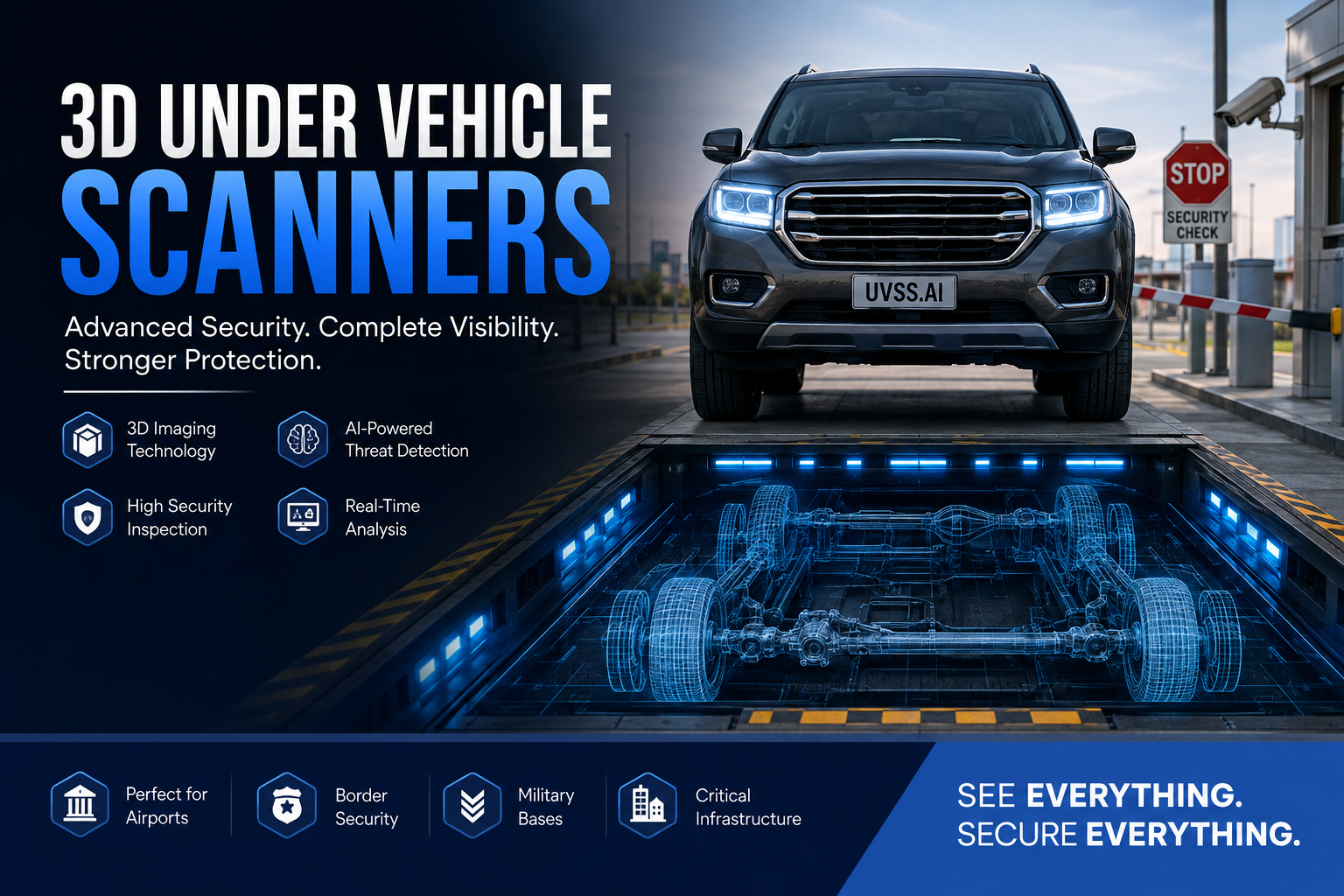
    A DepScan 3D Under Vehicle Scanner is an advanced under vehicle scanning system designed to capture high-resolution images of a vehicle’s undercarriage without requiring the vehicle to stop for lengthy inspections. The system utilizes AI-powered imaging, automated threat detection, and real-time analysis to identify suspicious objects or unauthorized modifications.

    Compared to conventional under chassis inspection systems, DepScan significantly improves inspection speed, accuracy, and operational efficiency.

    What Affects the DepScan Scanner Price?

    The DepScan scanner price is influenced by several factors rather than being a fixed amount. Every installation is customized based on the site’s operational and security requirements.

    1. Scanner Configuration

    Different organizations require different scanning capabilities. A standard vehicle underbody scanner for a commercial parking facility will differ from a high-security installation at an airport or military checkpoint.

    Advanced configurations with 3D imaging, AI-assisted detection, and enhanced image resolution typically have a higher price.

    2. Installation Requirements

    Installation plays an important role in determining the overall DepScan scanner price. Factors include:

    • Site preparation
    • Civil work
    • Power infrastructure
    • Network connectivity
    • Integration with existing security systems

    Facilities requiring customized deployment may have additional implementation costs.

    3. Software Features

    Modern under vehicle surveillance systems offer much more than image capture.

    Premium software may include:

    • Automatic license plate recognition (ANPR)
    • Vehicle database management
    • AI-based anomaly detection
    • Real-time reporting
    • Cloud monitoring
    • Remote access

    The more intelligent the software, the greater the long-term value of the solution.

    4. Security Level

    Government agencies, military bases, border checkpoints, and critical infrastructure often require higher inspection standards than commercial buildings.

    A security vehicle inspection system designed for high-risk environments generally includes advanced analytics, redundant hardware, and enterprise-grade cybersecurity features, all of which influence pricing.

    Why Organizations Choose DepScan Despite the Cost

    Although buyers often compare the DepScan scanner price with conventional inspection methods, the true value lies in operational efficiency and enhanced security.

    A modern automatic under vehicle inspection system offers several advantages:

    • Rapid vehicle inspection
    • Improved threat detection
    • Reduced dependence on manual inspections
    • Consistent inspection quality
    • Digital inspection records
    • Lower operational costs over time

    For organizations processing hundreds or thousands of vehicles daily, these benefits can deliver significant long-term savings.

    Is DepScan Worth the Investment?

    When evaluating the DepScan scanner price, it is essential to consider the total return on investment rather than only the initial purchase cost.

    Manual inspections are slower, labor-intensive, and more susceptible to human error. In contrast, a modern UVSS security system automates inspections while improving accuracy and reducing inspection time.

    Organizations operating in sensitive environments such as airports, embassies, data centers, logistics hubs, and government buildings often recover their investment through improved operational efficiency and reduced security risks.

    How to Choose the Right Under Vehicle Scanner

    Before purchasing any under vehicle inspection system, buyers should evaluate several factors:

    • Inspection speed
    • Image quality
    • AI-powered threat detection
    • Ease of integration
    • Maintenance requirements
    • Software capabilities
    • Vendor support
    • Future scalability

    Instead of focusing solely on the DepScan scanner price, organizations should compare the overall value offered by different solutions.

    Should You Request a Custom Quote?

    Since every project has unique operational requirements, there is no universal pricing model for an advanced 3D under vehicle scanner.

    Manufacturers typically provide customized quotations after evaluating:

    • Site layout
    • Number of daily vehicles
    • Security objectives
    • Integration requirements
    • Required software features
    • Environmental conditions

    Requesting a tailored quotation ensures that organizations receive a solution aligned with their security goals without paying for unnecessary features.

    Final Thoughts

    The DepScan scanner price depends on multiple factors, including scanner specifications, software capabilities, installation complexity, and operational requirements. While the upfront investment may vary, the long-term advantages of automated vehicle inspection, enhanced threat detection, and improved operational efficiency make DepScan an excellent choice for organizations seeking reliable perimeter security.

    As security challenges continue to evolve, investing in an intelligent under vehicle scanning system is no longer a luxury—it is a strategic decision that helps protect people, assets, and critical infrastructure.


    Ready to Upgrade Your Vehicle Security?

    Looking for a reliable and intelligent under vehicle inspection solution? UVSS.ai provides advanced AI-powered under vehicle scanning systems designed for government facilities, airports, industrial sites, commercial complexes, and critical infrastructure.

    👉 Visit https://uvss.ai today to request a personalized consultation and discover the right under vehicle scanning solution for your security needs.

  • Advanced Perimeter Hardening: The Complete Guide to an Under Vehicle Detection System

    Advanced Perimeter Hardening: The Complete Guide to an Under Vehicle Detection System

    Securing the perimeter of a high-risk facility—whether it is a military outpost, an international airport, a government embassy, or a critical data center hub—requires an unyielding, multi-layered approach to physical security. While organizations invest heavily in biometric access control gates, facial recognition, and reinforced fencing, a critical, high-risk vulnerability often goes unaddressed just inches from the ground. The undercarriage of a car, van, or heavy commercial truck offers an ideal, obscured location for concealing contraband, weapons, tracking devices, or vehicle-borne improvised explosive devices (VBIEDs).To eliminate this dangerous blind spot, security directors are rapidly replacing manual checkpoints with a digital, automated under vehicle detection system. In the modern physical security landscape, relying on a guard with a mirror on a stick is a major operational risk. It introduces human error, slows down vehicle throughput, and leaves your facility exposed to sophisticated hidden threats.

    At UVSS, we are a leading global reseller of enterprise-grade screening technologies and checkpoint infrastructure. We know that protecting a high-profile facility requires absolute precision, rapid image processing, and unquestionable reliability. In this technical procurement guide, we will break down how a high-performance under vehicle detection system operates, the primary features that define an elite setup, and why investing in automated scanning technology is a vital move for your security strategy.

    The Operational Failures of Manual Under-Carriage Inspection

    Before analyzing the return on investment of a digital under vehicle detection system, it is important to examine the profound limitations of legacy inspection techniques. For years, security checkpoints relied on under-vehicle mirrors—essentially a mirror mounted to a rolling pole.

    The hidden vulnerabilities of manual inspection include:

    • Severe Human Fatigue: Expecting a guard to peer under hundreds of vehicles per shift while maintaining perfect concentration is unrealistic. Subtle, dangerous structural changes are easily missed.
    • Operational Bottlenecks: A meticulous physical inspection takes up to two minutes per vehicle. In high-traffic locations, this manual delay creates massive traffic queues that compromise logistics.
    • No Historical Tracking: Manual mirror checks offer zero data logging. If a vehicle breaches a zone, there is no digital record or visual archive of what its undercarriage looked like upon entry.

    Deploying an automated under vehicle detection system instantly converts a slow, subjective process into an objective, data-rich screening operation. The system creates an unalterable digital footprint of every single vehicle undercarriage passing over the sensor bed.

    How an Under Vehicle Detection System Functions

    An enterprise-class under vehicle detection system is a highly integrated piece of technology that combines rugged optics, synchronized illumination, and smart image-stitching software.

    ┌───────────────────────────────────────────────────────────┐
    │           UNDER VEHICLE DETECTION SYSTEM WORKFLOW         │
    ├───────────────────────────────────────────────────────────┤
    │  1. Vehicle triggers directional loop/radar sensors       │
    │  2. Shadowless LED array floods the undercarriage         │
    │  3. High-speed camera captures continuous digital slices  │
    │  4. Software stitches slices into a seamless HD image     │
    │  5. Onboard AI flags anomalies against database baseline  │
    └───────────────────────────────────────────────────────────┘
    

    The scanning cycle occurs automatically within seconds:

    1. Sensor Activation: As a vehicle approaches the gate, embedded inductive loops or radar sensors detect its presence and traveling speed, instantly activating the system from a low-power standby mode.
    2. Synchronized Illumination: High-intensity, shadowless LED arrays activate to wash out the deep shadows cast by the vehicle’s exhaust, axles, and fuel tanks.
    3. High-Speed Line-Scanning: A specialized digital line-scan camera captures thousands of high-resolution horizontal slices as the vehicle drives forward.
    4. Composite Stitched Visualization: The processing engine combines these individual visual slices into a flawless, high-definition composite image of the entire undercarriage, outputting it onto the operator’s console screen in real time.

    Key Commercial Features to Prioritize

    As a premier specialized reseller, UVSS vets manufacturers to ensure our clients receive maximum reliability. When shopping for an under vehicle detection system, ensure your technical team prioritizes these core features:

    1. AI-Powered Anomaly and Change Detection

    A modern under vehicle detection system must not rely purely on human eyesight. The most advanced systems leverage integrated Artificial Intelligence (AI) and machine learning algorithms. The system automatically cross-references the live scan against a reference model or a past entry image of the exact same vehicle make. If the software spots an added magnetic box, an anomalous wire, or an unmapped structural cavity, it triggers an instant alarm for the security team.

    2. High Axle Weight and All-Weather Durability

    Because the core scanner housing is embedded directly into the driving lane, it faces intense mechanical and environmental stress. A dependable under vehicle detection system must feature a ruggedized, heavy-duty housing capable of enduring massive axle loads (frequently up to 40 tonnes) to handle fully loaded commercial semi-trucks. Look for an IP68 weatherproofing enclosure rating alongside integrated heating and cooling fans to prevent fogging, frost, and condensation from clouding the camera glass.

    3. High-Speed Image Processing

    Security must support, not paralyze, your facility’s daily logistics. An elite under vehicle detection system is engineered to capture crisp, unblurred images at driving speeds of up to 30 km/h. Once the vehicle clears the scanning unit, the processing server must deliver the fully assembled image to the guard station in less than 3 seconds, preventing lane backups.

    Choosing the Right System Configuration for Your Site

    Every checkpoint layout presents different physical constraints. To accommodate these differences, an under vehicle detection system is manufactured in two primary formats:

    • Fixed (Flush-Mounted) Solutions: These units are permanently installed into a shallow trench cut directly into the roadway, sitting completely level with the driving surface. This configuration is highly recommended for permanent, high-security checkpoints like custom border crossings or permanent corporate campuses, as it withstands non-stop, heavy heavy-freight traffic over long-term lifecycles.
    • Portable (Surface-Mounted) Solutions: These systems feature a low-profile, modular ramp layout that sits on top of the asphalt. A portable under vehicle detection system can be fully assembled and running in under ten minutes without requiring construction work. This is the perfect operational choice for temporary diplomatic events, spot-check operations, or remote temporary facilities.

    Seamless Integration into a Comprehensive Security Infrastructure

    An isolated tool leaves gaps in your defense network. To achieve maximum value and control, your under vehicle detection system should tie natively into your existing physical security ecosystem.

    By linking your under-carriage scanner with an Automatic Number Plate Recognition (ANPR) camera, driver-facing cameras, and access control barriers, you build a comprehensive profile for every single vehicle entry event. If the AI flags a threat underneath a vehicle, the system software can instantly signal your rising bollards or drop arms to lock down, preventing vehicle access while sending a synchronized alert to your central Security Operations Center (SOC).

    Why Partner with UVSS as Your Specialized Reseller?

    Procuring an entry screening solution requires deep technical expertise. At UVSS, we pride ourselves on being physical perimeter security consultants rather than simple product catalog vendors. Sourcing your under vehicle detection system through our network ensures you receive objective, high-performance systems designed specifically to match your exact facility footprint and operational budget.

    We support your engineering and security directors through every single step of the layout process, providing custom site evaluations, network architecture mapping, integration with existing video management systems (VMS), comprehensive guard training, and long-term tech support to maintain a zero-fail security perimeter.

    Conclusion: Secure Your Baseline and Eliminate Risk

    Leaving the undercarriage of an arriving vehicle unmonitored is an unacceptable vulnerability in today’s threat environment. Outdated physical mirror checks slow down operations and leave you exposed to well-hidden risks. Upgrading your checkpoint infrastructure to an automated, intelligent under vehicle detection system is the definitive way to protect your personnel, automate your compliance data logs, and establish complete command over your perimeter entry points.

    Are you ready to eliminate the blind spots at your checkpoint? Contact UVSS today to speak with an engineering specialist, book a live system demonstration, and discover how a professional under vehicle detection system can secure your facility’s future.

  • Hardening the Perimeter: Choosing the Right Under Vehicle Inspection Solution for High-Security Facilities

    Hardening the Perimeter: Choosing the Right Under Vehicle Inspection Solution for High-Security Facilities

    In the modern threat landscape, a facility’s perimeter security is only as strong as its weakest link. While multi-layered defenses like biometric access control, facial recognition, and automated bollards protect the visible entry points, an overlooked vulnerability remains close to the ground. The undercarriage of a vehicle provides ample space for hiding contraband, weapons, tracking devices, or vehicle-borne improvised explosive devices (VBIEDs). To mitigate these high-stakes risks, integrating a digital under vehicle inspection solution into your checkpoint operations is an absolute operational necessity.

    For decades, security personnel relied on manual mirrors on wheels to peek underneath oncoming traffic. However, in 2026, this legacy method is universally recognized as a major liability: it is slow, subjective, highly prone to human error, and places security guards directly in harm’s way. Moving toward a digital, automated under vehicle inspection solution allows organizations to secure their perimeters with absolute confidence.

    At UVSS, as an industry-leading reseller of elite checkpoint and screening technologies, we work alongside critical infrastructure managers, corporate campus directors, and government procurement offices. We understand that maximizing throughput while maintaining zero-fail security standards is a delicate balance. In this comprehensive guide, we will break down how a modern under vehicle inspection solution works, its primary business benefits, and how to choose the right system for your facility.

    Why Your Facility Needs an Automated Under Vehicle Inspection Solution

    When evaluating security hardware budgets, it is vital to assess the hidden liabilities of manual inspection methods. A physical check using a mirror takes anywhere from one to three minutes per vehicle, creating immediate traffic bottlenecks during peak commuting hours. Furthermore, a human guard cannot mentally store and compare thousands of vehicle chassis variants, meaning minor structural modifications are easily missed.

    By implementing an automated under vehicle inspection solution, you shift from reactive guesswork to proactive defense. The system functions as an invisible digital checkpoint that scans, processes, and logs the undercarriage of a vehicle within seconds. By deploying a professional under vehicle inspection solution, your security personnel can stay safe inside a guard booth, reviewing high-definition imagery on a monitor rather than bending over in dangerous traffic lanes.

    How a Modern Under Vehicle Inspection Solution Operates

    The technical capabilities of a contemporary under vehicle inspection solution rely on a sophisticated mixture of high-speed photography, specialized lighting arrays, and advanced processing software.

    When a vehicle approaches the checkpoint, the sequence proceeds automatically:

    1. High-Intensity Illumination: As the front wheels pass the scanning threshold, high-power, shadowless LED arrays flood the vehicle’s underside with light. This washes out the deep shadows cast by fuel tanks, axles, and exhaust systems.
    2. Line-Scan Imaging: A high-resolution line-scan camera captures thousands of horizontal images per second. As the vehicle moves smoothly over the unit, the software instantly stitches these visual slices into a seamless, distortion-free composite photograph of the complete chassis.
    3. Automated Comparison: The heart of a premium under vehicle inspection solution is Artificial Intelligence (AI). The software compares the live scan against a reference image or a previous scan of that exact vehicle, instantly flagging anomalies like loose wires, magnetic packages, or modified structural panels.

    This streamlined workflow explains why a digital under vehicle inspection solution is the gold standard for high-security environments like airports, military sites, and data centers.

    Key Features to Prioritize in an Under Vehicle Inspection Solution

    Because UVSS represents the world’s most trusted security hardware manufacturers, we advise our clients to look beyond the basic camera specs. When sourcing an under vehicle inspection solution, prioritize these operational features:

    True Depth Perception via 3D Point-Clouds

    While a standard 2D line-scan system provides a flat picture, a premium 3D under vehicle inspection utilizes stereoscopic cameras to build an interactive, multi-dimensional model. This allows security operators to digitally tilt and rotate the view, looking “over and around” cross-members and mechanical components where contraband could easily be hidden.

    Real-Time High Throughput

    Security hardware must never paralyze a facility’s logistics. A high-performance under vehicle inspection solution is engineered to scan vehicles traveling at speeds up to 30 km/h (approx. 18 mph), rendering the finalized image on the guard’s screen in less than three seconds. This speed ensures that your daily supply chains and employee traffic flows remain entirely uninterrupted.

    Rugged Environmental Engineering

    Because these units are embedded directly into asphalt or concrete roadways, durability is paramount. Ensure your under vehicle inspection solution is housed in a heavy-duty, corrosion-resistant casing featuring an IP68 weatherproofing rating. This guarantees that the internal cameras and electronics remain protected against heavy dust, sub-zero winters, flash floods, and massive axle weight loads of up to 40 tonnes.

    Choosing Between Fixed and Portable Solution Topologies

    As an experienced reseller, UVSS customizes every deployment based on the physical constraints of your checkpoint. An under vehicle inspection solution typically comes in two distinct form factors:

    • Fixed (Flush-Mounted) Systems: These units are permanently cast into a shallow trench in the roadway, sitting completely level with the driving surface. This topology is perfect for permanent high-profile entrances, offering a clean, unobstructed appearance that is highly resilient against ongoing heavy-duty truck traffic.
    • Portable (Surface-Mounted) Systems: Designed for rapid deployment, a portable under vehicle inspection solution features a low-profile ramp that sits on top of the existing roadway. This setup can be fully deployed and operational in under ten minutes, making it the ideal choice for temporary events, VIP visits, or auxiliary checkpoints where permanent excavation is prohibited.

    The Power of a Unified Security Ecosystem

    An isolated piece of security technology is only partially effective. To maximize your return on investment, your chosen under vehicle inspection solution should integrate flawlessly into your existing security management software.

    By linking your under vehicle inspection solution with Automatic Number Plate Recognition (ANPR), driver-facing cameras, and access control gates, you create an unalterable digital footprint for every vehicle entry event. If the AI changes detection software flags a hidden threat beneath a vehicle, the system can automatically lock down the rising bollards, sound the alarm in your Security Operations Center (SOC), and pin the license plate and driver’s identity to the threat file for immediate forensic review.

    Why Choose UVSS as Your Strategic Partner?

    At UVSS, we do not just sell boxes of hardware. We are physical security consultants dedicated to protecting your organization’s infrastructure and personnel. Sourcing your under vehicle inspection solution through us guarantees that you receive impartial, vendor-agnostic advice tailored precisely to your budget and threat profile.

    We assist your technical teams through every phase of the project cycle:

    • Initial site assessment and traffic-flow analysis.
    • Selecting the perfect fixed or portable under vehicle inspection solution.
    • Network engineering and software integration with your existing CCTV and gate barriers.
    • Comprehensive staff training and ongoing global technical support.

    Conclusion: Eliminate the Blind Spots on Your Perimeter

    Leaving the undercarriage of a vehicle unmonitored is an unacceptable risk for any modern commercial or high-security facility. Relying on outdated mirrors leaves your guards vulnerable and your property exposed to sophisticated internal and external threats. Upgrading to an intelligent, automated under vehicle inspection solution is the definitive way to secure your baseline, automate compliance data logging, and future-proof your checkpoint operations.

    Take complete control of your checkpoint security today. Contact UVSS to speak with our engineering specialists, request a live technical demonstration, and find the perfect under vehicle inspection solution to safeguard your operations for 2026 and beyond.

  • Zero-Fail Security: The Case for a Dedicated Under Vehicle Scanner for Embassies

    Zero-Fail Security: The Case for a Dedicated Under Vehicle Scanner for Embassies

    In the sphere of global diplomacy, the security landscape is unyielding. Embassy grounds are not merely physical assets; they are extensions of sovereign territory, housing sensitive personnel, classified information, and a nation’s vital interests abroad. This unique status makes them primary targets for advanced physical threats, including espionage, smuggling, and vehicle-borne improvised explosive devices (VBIEDs). To maintain the strict neutrality and safety required for diplomacy, these high-stakes perimeters demand a security infrastructure that allows zero margin for error.Traditional checkpoint security has long focused on above-ground surveillance—cameras, identity-based access control, and manual body searches. However, this leaves a significant, highly vulnerable ‘blind spot’: the vehicle’s underside. Relying on outdated inspection mirrors is dangerous in 2026; it is slow, subjective, and exposes security personnel to direct harm. The mandatory solution for securing these critical perimeters is a purpose-built under vehicle scanner for embassies.

    At UVSS, as a global reseller of elite checkpoint technologies, we have deployed advanced screening systems for diplomatic missions worldwide. We understand that embassy security is not a “one-size-fits-all” scenario. In this guide, we will explore why a specialized under vehicle scanner for embassies is critical for 24/7 protection and how the latest technology mitigates evolving risks.

    The Evolution of Perimeter Threats Against Diplomatic Targets

    Embassies face a singular combination of threats that demand a specialized response. Vehicle-borne improvised explosive devices (VBIEDs) remain the most devastating physical threat, as seen in tragic historical examples. A sophisticated VBIED is rarely obvious; it is designed to be integrated into the vehicle’s chassis or hidden deep within complex geometry to avoid standard visual checks.

    Furthermore, the threat profile is not limited to explosives. Embassy perimeters also face risks from:

    • Contraband Smuggling: Unauthorized materials or hardware intended to compromise data centers or restricted areas.
    • Tampering and Modifications: Modifications to official vehicles to hide surveillance devices or unauthorized access points.
    • Intelligence Gathering: Devices attached to the undercarriage to track mission movements or intercept communications.

    A standard inspection mirror cannot counter these complex threats. A visual check takes minutes per vehicle, causes traffic congestion, and lacks the resolution to spot minute alterations. A dedicated under vehicle scanner for embassies eliminates these weaknesses by providing instant, high-resolution digital visibility.

    How an Automated Under Vehicle Scanner for Embassies Detects Threats

    Modern scanning technology has moved far beyond simple video capture. A high-performance under vehicle scanner for embassies now relies on artificial intelligence (AI), stereoscopic imaging, and advanced software to deliver actionable intelligence.

    1. Real-Time Stereoscopic Imaging

    A leading under vehicle scanner for embassies uses dual-camera systems to provide depth perception—known as stereoscopic imaging. This technology creates a three-dimensional model of the undercarriage, allowing the operator to look “around” obstructions like the exhaust pipe or fuel tank, rather than just viewing a flat 2D image.

    2. AI-Driven Change Detection

    The most critical feature of a sophisticated under vehicle scanner for embassies is Automated Threat Detection (ATD) with change detection software. When a diplomatic vehicle or cargo delivery arrives, the system doesn’t just scan it; it checks its current scan against a previously stored “clean” image of that same vehicle or make.

    The AI instantly highlights any discrepancy—such as a new wire, an extra box, or modified structural geometry—and triggers a real-time alarm. This automation removes human subjectivity, ensuring that the last vehicle scanned at 3:00 AM is checked with the exact same rigor as the first one scanned during the morning rush.

    3. Integrated Vehicle Profile

    The effective under vehicle scanner for embassies is never an isolated tool. It must integrate seamlessly with an existing facility ecosystem. By linking the chassis scan with Automatic Number Plate Recognition (ANPR) and a driver-facing camera, a full digital “fingerprint” of the entry event is created and logged, aiding forensic investigations.

    Fixed vs. Portable: Tailoring the Solution to Embassy Topology

    As a reseller representing several elite manufacturers, UVSS emphasizes that the choice between a fixed (recessed) and a portable (surface-mounted) under vehicle scanner for embassies depends on the specific site requirements.

    • Fixed Systems (Permanent Hardening): Recommended for main arterial access points at established chancery buildings. These flush-mounted units (often IP68-rated for durability) are seamless and designed for maximum throughput. They can handle heavy diplomatic limousines and multi-axle freight trucks in all weather conditions, providing an unnoticeable yet highly resilient layer of security.
    • Portable Systems (Rapid Deployment): Ideal for temporary consulate locations, auxiliary gates during major events, or high-threat rapid-response scenarios. A portable under vehicle scanner for embassies can be deployed in under 10 minutes, immediately hardening a checkpoint without the need for road excavation. They are essential for protecting the “soft underbelly” of an embassy during high-risk diplomatic transitions.

    Navigating Procurement and Resilience: The Reseller Advantage

    When procuring an under vehicle scanner for embassies, security departments are looking for more than hardware; they are buying operational uptime and long-term resilience. Partnering with a specialized reseller like UVSS provides significant advantages:

    1. Expert Consultation and Integration

    We help mission security officers navigate the complex technical specifications of an under vehicle scanner for embassies. We don’t just sell equipment; we consult on optimal placement, technical software integration with existing VMS (Video Management Systems), and staff training to ensure the system performs under extreme pressure.

    2. Vetted Manufacturer Reliability

    Diplomatic security cannot depend on unproven hardware. We vet all manufacturers in our portfolio to guarantee rugged, all-weather components, reliable software updates, and the highest standards of data encryption for the captured scans. Every under vehicle scanner for embassies we supply is selected for its operational excellence in high-threat environments.

    3. Ongoing Global Support

    A security breach can occur in any time zone. UVSS provides localized technical support and maintenance contracts to ensure your under vehicle scanner for embassies operates 24/7. When procuring equipment for diplomatic missions across different continents, having a single point of global accountability is vital.

    Conclusion: Future-Proof Your Perimeter

    The threats against diplomatic infrastructure are becoming more sophisticated, persistent, and technologically adept. In this landscape, physical security must keep pace. Moving away from manual inspection mirrors and basic 2D imaging to a comprehensive under vehicle scanner for embassies is not optional; it is the fundamental duty of care.

    At UVSS, we are committed to providing zero-fail perimeter defense solutions. We recognize that securing an embassy means protecting international dialogue and global stability. By integrating AI-driven, high-resolution under-vehicle scanning, you are closing the final vulnerability and hardening your perimeter against the unseen.

    Secure your diplomatic perimeter today. Contact UVSS to schedule a consultation with our experts and discover how a dedicated under vehicle scanner for embassies can elevate your facility’s safety to a zero-fail standard.

  • Beyond 2D: Top Features to Look for in a 3D Under Vehicle Scanner

    Beyond 2D: Top Features to Look for in a 3D Under Vehicle Scanner

    In the ever-evolving domain of perimeter security, checkpoint vulnerabilities frequently exist beneath our feet. For decades, security teams relied on manual inspection mirrors or legacy 2D linear scanners to monitor the underside of vehicles. However, as modern concealment methods grow increasingly sophisticated, flat, two-dimensional images are no longer sufficient to secure high-risk infrastructure. Shadows, deep mechanical recesses, and perspective distortions often allow illicit objects to pass through checkpoints undetected.

    To effectively eliminate these blind spots, forward-thinking security integrators, facility managers, and procurement officers are upgrading to volumetric imaging. As a premier reseller of elite perimeter surveillance technology, UVSS evaluates and distributes the world’s most robust security systems. If you are looking to harden your perimeter, here are the top features to look for in a 3D under vehicle scanner to ensure your investment delivers uncompromised tactical protection.

    1. Stereoscopic Vision and True Depth Detection (The Z-Axis)

    When analyzing the top features to look for in a 3D under vehicle scanner, the core technology used to capture data must be your primary consideration. Traditional systems look only at the horizontal ($X$) and vertical ($Y$) axes. A true 3D architecture adds the critical $Z$-axis, providing genuine depth perception.

    The most effective systems on the market utilize calibrated, side-by-side dual area-scan cameras to mimic human binocular vision. This stereoscopic depth accuracy allows the system to compute a precise disparity map and convert it into a high-fidelity 3D point cloud.

    • Why it matters: Standard 2D images can easily confuse a harmless oil stain or mud splatter with a dangerous modification. A system equipped with stereoscopic depth measurement can analyze the actual thickness of a foreign item, instantly differentiating a flat surface mark from a solid attached object.

    2. AI-Powered Automated Threat Detection and Anomaly Recognition

    In high-throughput environments like international airports, border crossings, and corporate headquarters, relying solely on human operators to catch hidden threats is an operational bottleneck. Therefore, automated intelligence is one of the non-negotiable top features to look for in a 3D under vehicle scanner.

    Advanced scanning units feature real-time AI anomaly detection algorithms. When a vehicle passes over the scanner, the software automatically compares the live 3D model against a reference database of clean vehicle profiles. If the system identifies sudden structural deviations, loose wiring, or unexpected components, it generates an immediate audio and visual alert for your security operations center (SOC).

    3. Bi-Directional High-Speed Imaging (0 to 75 km/h)

    Legacy line-scan systems suffer from a severe operational flaw: they require vehicles to drive over the sensor array at a perfectly constant speed. If a vehicle accelerates, slows down, or stops mid-scan—which happens constantly during rush-hour queues—the resulting 2D image becomes stretched, compressed, or distorted beyond recognition.

    When searching for the top features to look for in a 3D under vehicle scanner, ensure the platform utilizes high-frequency area-scan sensors rather than line-scan cameras. Area-scan technology captures comprehensive segments of the undercarriage simultaneously, making the system entirely independent of vehicle speed or driver behavior. High-tier models can handle vehicle speeds ranging from complete standstill up to 75 km/h, ensuring traffic keeps moving without sacrificing scan accuracy.

    4. Comprehensive Interactive 3D Visualization and Morphed Viewing

    What happens after an anomaly is flagged? The software interface must empower your security personnel to make rapid, informed decisions. A core component within the top features to look for in a 3D under vehicle scanner is an interactive, multilingual Graphical User Interface (GUI) that supports detailed interactive viewing.

    The system should stitch the dual-angle images into a complete, rotatable 3D color model. Operators should have the capability to:

    • Pan, Tilt, and Rotate: View the undercarriage from various perspectives to see “around” mechanical obstructions like exhaust pipes and heat shields.
    • High-Magnification Digital Zoom: Zoom in up to 25x onto niche areas or hard-to-view components to inspect suspicious objects closely.
    • Dual View Comparison: View the current live scan side-by-side with historical data from the same vehicle to identify unauthorized modifications instantly.

    5. Multi-Sensor Integration and API Architecture

    An under-vehicle scanner shouldn’t operate as an isolated security silo. To achieve true perimeter hardening, seamless integration with external security modules must be ranked high on your checklist of top features to look for in a 3D under vehicle scanner.

    The backend software should offer an open API that links with:

    • Automatic Number Plate Recognition (ANPR / ALPR): To automatically cross-reference the undercarriage scan with the vehicle’s registration data.
    • Driver Image Capture Modules: To capture the driver’s face in real-time, tying a human identity to the physical vehicle profile.
    • Physical Access Barriers: The ability to provide a contact pulse to immediately trigger and lock down boom barriers, tire killers, or hydraulic bollards if a threat is identified.

    6. All-Weather Heavy-Duty Durability (IP68 Protection)

    Because scanning units are installed directly into roadways, they are subjected to brutal environmental stressors, including heavy rain, freezing temperatures, dust, and immense physical weight. Consequently, rugged engineering is among the most practical top features to look for in a 3D under vehicle scanner.

    Look for underground enclosures constructed from structural steel and checkered stainless steel that carry a minimum IP68 waterproof and dustproof certification. Additionally, high-end scanners feature an automated integrated air-cleaner compressor mechanism. This system automatically blows debris, dust, and rainwater off the camera lenses every time a vehicle passes, minimizing manual maintenance and ensuring crystal-clear imaging in all weather conditions.

    Why Procure Your 3D UVSS Through a Trusted Reseller?

    Identifying the top features to look for in a 3D under vehicle scanner is only the first step; successful implementation requires expert deployment. At UVSS, we serve as a dedicated security consultancy and reseller, matching critical facilities with top-tier hardware tailored to their specific network topology.

    Whether your operations require a permanent, flush-mounted underground system for an uncompromised entry lane or a portable, surface-mounted configuration for temporary checkpoint operations, we provide the technical expertise necessary to protect your facility from emerging physical threats.

    Conclusion: Future-Proof Your Perimeter Checkpoints

    Upgrading your checkpoint architecture to include the top features to look for in a 3D under vehicle scanner is a vital step toward comprehensive risk mitigation. By prioritizing stereoscopic depth sensing, AI-driven automation, and rugged all-weather builds, you protect your infrastructure from hidden threats while optimizing traffic flow and operator efficiency.

    Eliminate your blind spots before they are exploited. Contact the technical team at UVSS today to schedule a comprehensive site analysis and discover how a next-generation 3D under-vehicle surveillance ecosystem can safeguard your assets for 2026 and beyond.

  • Zero Bottlenecks: Maximizing Throughput with a High Speed Under Vehicle Scanner for Checkpoints

    Zero Bottlenecks: Maximizing Throughput with a High Speed Under Vehicle Scanner for Checkpoints

    In an era where security threats are increasingly sophisticated, protecting critical infrastructure requires vigilant perimeter control. For high-security facilities like military installations, government embassies, border crossings, and airports, the entry gate is the most vulnerable checkpoint. The challenge has always been a balancing act: how do you thoroughly screen every vehicle’s undercarriage without grinding traffic to a halt? Traditional manual inspections using mirrors are slow, dangerous for guards, and cause massive traffic congestion.The modern solution is a high speed under vehicle scanner for checkpoints. This technology eliminates the compromise between comprehensive security and operational efficiency. At UVSS, as a premier reseller of advanced perimeter security infrastructure, we specialize in helping organizations transition from archaic inspection methods to automated, rapid-imaging systems. In this comprehensive guide, we will analyze why an enterprise-grade high speed under vehicle scanner for checkpoints is the single most important investment you can make for your facility’s frontline defense.

    The Operational Challenge of Modern Checkpoints

    Managing a busy checkpoint means dealing with high vehicle volumes under tight schedules. When security teams rely on manual mirrors or low-tier, lagging scanning equipment, traffic queues inevitably back up onto public roads. This creates an external security risk—turning waiting vehicles into “sitting ducks”—while severely impacting the facility’s daily logistics.

    A high speed under vehicle scanner for checkpoints addresses this operational bottleneck by capturing high-resolution imagery in real-time. Instead of requiring a vehicle to stop completely for several minutes, high-speed systems can capture complete, un-distorted undercarriage scans while vehicles move over the sensor array at continuous speeds. By integrating a high speed under vehicle scanner for checkpoints, security directors can maintain a smooth, rapid flow of traffic while simultaneously conducting a thorough digital forensic sweep of every single chassis.

    The Technology Behind Rapid Vehicle Surveillance

    To truly understand the value of a high speed under vehicle scanner for checkpoints, one must look at the advanced hardware and software that make it possible. These are not standard cameras; they are highly specialized imaging systems built to handle harsh roadway conditions and varying vehicle velocities.

    1. Advanced Line-Scan Technology

    Standard area-scan cameras fail when a vehicle is moving fast because they create motion blur. A professional high speed under vehicle scanner for checkpoints utilizes line-scan technology, capturing the undercarriage line-by-line at thousands of frames per second. As the vehicle drives over, these slices are instantly stitched together by an internal processing unit to generate a crisp, high-definition composite image.

    2. Synchronized High-Intensity LED Illumination

    The underbody of a truck or car is naturally shrouded in deep shadows. To capture clear details at fast drive-over speeds, a high speed under vehicle scanner for checkpoints must be equipped with ultra-bright, synchronized LED arrays. These lights illuminate the chassis instantly, eliminating shadows around the exhaust system, axles, and fuel tanks without blinding the approaching driver.

    3. Real-Time AI Threat Detection

    Capturing a rapid image is only half the battle; the security team must interpret it quickly. The top-tier high speed under vehicle scanner for checkpoints models supplied by UVSS leverage Artificial Intelligence (AI) and machine learning algorithms. The system automatically scans the vehicle, identifies its make and model template, and highlights anomalies—such as hidden compartments, attached magnetic packages, or foreign wiring—in a matter of seconds.

    Key Business Benefits of High-Speed Scanning Infrastructure

    As a dedicated security reseller, UVSS evaluates technology based on its real-world return on investment. Upgrading to a high speed under vehicle scanner for checkpoints delivers tangible commercial and operational advantages:

    • Drastic Reduction in Labor Costs: Manual screening requires multiple guards to rotate shifts due to physical fatigue. An automated high speed under vehicle scanner for checkpoints allows a single operator to safely monitor multiple incoming lanes from a centralized, climate-controlled guard shack or remote command center.
    • Minimized Human Error: Fatigue, poor lighting, and distraction can cause guards to miss subtle modifications beneath a vehicle. A automated scanner never gets tired, providing an identical level of rigorous inspection for the first vehicle of the day and the last.
    • Full Digital Audit Trails: Every time a vehicle passes over the high speed under vehicle scanner for checkpoints, the system logs the image alongside a precise timestamp. This data can be archived for compliance, insurance verification, or historical forensic investigations.

    Seamless Integration with Perimeter Ecosystems

    A standalone security tool is never as effective as an integrated system. To get the maximum value out of a high speed under vehicle scanner for checkpoints, our engineering team at UVSS recommends connecting it to your broader physical security information management (PSIM) platform.

    By combining a high speed under vehicle scanner for checkpoints with Automatic Number Plate Recognition (ANPR) and driver-identification cameras, you create a comprehensive vehicle profile. The moment a delivery truck drives over the scanner, the system registers its license plate, captures the driver’s face, and verifies its undercarriage against its historical scan profile. If the vehicle’s underside has been altered since its last visit, the automated system flags the change immediately, giving guards actionable intelligence before allowing gate access.

    Why Choose UVSS as Your Trusted Reseller Partner?

    Navigating the procurement of high-end surveillance hardware requires specialized expertise. At UVSS, we pride ourselves on being an elite partner for corporate, industrial, and government clients worldwide. We don’t just sell you a box of hardware; we deliver a complete, operational checkpoint solution.

    When you invest in a high speed under vehicle scanner for checkpoints through us, you receive:

    1. Customized Site Topology Planning: We evaluate your driveway architecture, daily vehicle counts, and speed requirements to recommend the exact sensor placement.
    2. Ruggedized, Weather-Proof Systems: The scanners we distribute feature heavy-duty, IP68-rated enclosures built to withstand sub-zero winters, intense desert heat, and heavy axle weights from commercial trucks.
    3. Comprehensive Staff Training: We ensure your onsite security team fully understands how to navigate the software dashboard, interpret AI anomaly flags, and maintain the hardware.

    Conclusion: Secure the Future of Your Facility

    In modern security management, a bottleneck at the front gate is a vulnerability you cannot afford. Relying on outdated manual inspection methods leaves your perimeter exposed to sophisticated, hidden threats while actively hurting your operational throughput.

    Investing in a high speed under vehicle scanner for checkpoints is the most definitive way to future-proof your facility. It provides your security team with the rapid, un-distorted visual data they need to make split-second decisions without impacting traffic flow.

    Eliminate your checkpoint blind spots today. Contact the experts at UVSS to schedule a live demonstration, view technical specifications, and receive a customized commercial proposal tailored to your facility’s unique operational needs.

  • Hardening the Checkpoint: Selecting an Automated Under Vehicle Scanner Solution for High-Risk Perimeters

    Hardening the Checkpoint: Selecting an Automated Under Vehicle Scanner Solution for High-Risk Perimeters

    The modern threat landscape requires security measures that match the sophistication of those trying to bypass them. While CCTV networks, biometric access control points, and automated gates protect a facility’s visible boundaries, the undercarriage of a vehicle remains one of the most vulnerable and technically challenging blind spots to monitor. For tier-one corporate campuses, government buildings, data centers, and transport hubs, relying on manual mirror inspections is no longer viable. Ensuring absolute perimeter integrity requires a specialized, technological upgrade to an automated under vehicle scanner solution.

    At UVSS, as a global reseller and technical consultant for elite physical security systems, we specialize in helping procurement managers navigate a crowded market. Finding the right under vehicle scanning equipment suppliers involves evaluating more than just hardware; it means identifying a partner who delivers reliable change-detection intelligence, high environmental resilience, and flawless systems integration.

    The Operational Imperative of Automated Under Vehicle Inspection

    A standard security checkpoint faces a constant operational paradox: the need for uncompromising threat mitigation balanced against the demand for seamless traffic flow. Manual inspection methods—such as using convex mirrors on rolling rods—severely compromise both. They are slow, highly subjective, depend entirely on guard alertness, and expose security personnel to potential immediate danger at the facility line.

    Implementing an automated under vehicle scanner solution eliminates the human error inherent in these legacy techniques. Instead of a manual check, a vehicle drives over an embedded or surface-mounted scanner array at speeds typically up to 30 km/h or even 60 km/h. Within seconds, the system compiles a complete high-resolution visualization of the vehicle’s underside, allowing security teams to identify foreign objects, structural changes, or hidden contraband without forcing the driver to stop.

    Key Capabilities of an Automated Under Vehicle Scanner Solution

    When researching under vehicle scanning equipment suppliers, it is crucial to look beyond basic camera specifications. The value of a modern automated under vehicle scanner solution rests on three core technological pillars:

    1. Advanced Image Capture (Area Scan vs. Line Scan)

    A premium automated under vehicle scanner solution utilizes industrial-grade linear array or dual-camera area-scan technology to build distortion-free composite images. Unlike traditional cameras that can compress or stretch an image depending on variations in vehicle speed, advanced line-scanning tech stitches the underbody layout line-by-line or frame-by-frame, maintaining perfect proportions.

    2. Artificial Intelligence and Automatic Foreign Object Detection (FOD)

    The “automated” aspect of a top-tier automated under vehicle scanner solution is heavily driven by machine learning algorithms. The system does not merely display a picture for a guard to review; it performs real-time Change Detection. When a vehicle passes over the scanner, the software maps its geometry against a factory-clean chassis model or a historical log of that specific vehicle. If a suspicious modification, attached magnetic container, or improvised explosive device (IED) is found, the system instantly flags the anomaly on the operator dashboard.

    3. Automatic Number Plate Recognition (ANPR) Integration

    An isolated undercarriage scan has limited forensic value. A true enterprise-grade automated under vehicle scanner solution links every image to a specific vehicle identity via integrated ANPR and driver-facing cameras. This creates a multi-point digital profile containing the vehicle’s registration plate, driver’s face, and underbody scan mapped to an exact timestamp.

    Evaluating Under Vehicle Scanning Equipment Suppliers

    Selecting from global under vehicle scanning equipment suppliers requires careful evaluation of build quality and software flexibility. Because these scanning units are embedded directly into roadways or placed as surface ramps, they must withstand punishing physical conditions.

    Key Procurement Checklist for UVSS Systems:

    • Axle Load Capacity: Ensure the hardware handles heavy-duty traffic. High-end systems feature a fully welded, structural steel frame rated for up to 10 to 40 tons per axle, suitable for heavy commercial trucks and armored vehicles.
    • Environmental Ingress Protection: Look for an IP68 waterproof rating. The scanner must remain completely operational despite heavy rain, submersion, snow, or intense dust storms.
    • Operating Temperature Thresholds: Top industrial suppliers design units capable of functioning reliably anywhere from $-40^\circ\text{C}$ up to $+70^\circ\text{C}$.

    As an independent reseller, UVSS partners exclusively with premier under vehicle scanning equipment suppliers who offer open-architecture designs. This ensures that the scanning platform can integrate cleanly with your pre-existing physical infrastructure—such as automatic rising bollards, tyre killers, hydraulic road blockers, and overarching central VMS (Video Management Systems).

    The Financial and Tactical Return on Investment

    While a sophisticated automated under vehicle scanner solution requires a larger upfront capital expenditure than manual search tools, its long-term return on investment (ROI) is significant.

    From an operational standpoint, a high-speed automated under vehicle scanner solution reduces the manpower required to police a busy access point. Instead of staffing multiple guards to inspect a single vehicle, one operator can manage multiple lanes from a secure control room. This optimizes resource allocation and significantly lowers ongoing operational overhead. From a liability standpoint, the presence of a visible, automated vehicle inspection platform serves as an intense psychological deterrent, preventing security incidents before they ever reach your facility’s interior zones.

    Why Partner with UVSS?

    Navigating the specifications of high-frequency perimeter security hardware can be incredibly complex. UVSS serves as your trusted guide through this landscape. We bridge the gap between complex engineering labs and end-user deployment requirements, ensuring you get a tailored package optimized for your specific threat profile and site topology.

    We don’t believe in cookie-cutter deployments. When you consult with our team, we analyze your site’s average daily traffic volume, vehicle types, environmental constraints, and network architecture. Because we maintain long-standing partnerships with leading under vehicle scanning equipment suppliers, we can secure competitive pricing, extended service level agreements (SLAs), and comprehensive technical support packages that protect your investment over its entire operational lifecycle.

    Conclusion: Future-Proof Your Facility Line

    As vehicle-borne tracking devices, smuggled contraband, and specialized security threats become more advanced, manual checkpoints leave clear vectors of vulnerability exposed. Moving to an AI-powered automated under vehicle scanner solution is the single most effective way to eliminate the blind spot underneath your incoming fleet.

    By combining high-resolution imagery, automated change detection, and rugged physical build quality, you can ensure that your access gates remain smooth, secure, and fully auditable.

    Ready to upgrade your perimeter detection capabilities? Contact UVSS today for a deep technical consultation. Let our specialists assess your site and provide a custom breakdown of the best hardware options from the world’s leading under vehicle scanning equipment suppliers to keep your organization completely secure.

  • The Real Cost of Perimeter Security: Navigating the UVSS Scanner Price and Technology Matrix

    The Real Cost of Perimeter Security: Navigating the UVSS Scanner Price and Technology Matrix

    When it comes to securing a high-risk facility—be it a military checkpoint, an international airport, or a corporate data center—the undercarriage of a vehicle remains one of the most critical vulnerabilities. For years, security teams relied on manual mirrors, but today’s threat landscape requires digital speed and automation. As procurement managers and security heads look to upgrade their entry points, two questions dominate the conversation: “What is the uvss scanner price?” and “Should we invest in a 2d vs 3d under vehicle scanner?”

    At UVSS, as a premier global reseller of perimeter protection hardware, we believe that an informed buyer is a secure buyer. Navigating the uvss scanner price landscape isn’t just about finding the lowest number on a quote; it is about understanding how different technological capabilities impact your total cost of ownership (TCO) and your facility’s safety. In this comprehensive guide, we will break down the true drivers of market pricing and analyze the core differences between a 2d vs 3d under vehicle scanner.

    Understanding the Spectrum of the UVSS Scanner Price

    When you begin requesting quotes for security infrastructure, you will quickly notice that the uvss scanner price can vary wildly. A entry-level portable unit might cost a few thousand pounds, while a fully integrated, automated military-grade system can run into tens of thousands.

    This variance exists because a uvss scanner price is not determined by the camera alone. Instead, the final cost is a combination of physical ruggedness, software capabilities, and structural installation needs.

    The primary factors influencing the uvss scanner price include:

    • Civil Engineering Requirements: Flush-mounted permanent systems require road excavation, drainage installation, and concrete work. This structural integration will naturally increase the initial uvss scanner price compared to a surface-mounted, portable ramp system.
    • Environmental Protection Rating: Systems engineered to withstand harsh environments—such as freezing winters or scorching desert heat—utilize IP68-rated stainless steel housings and integrated heating/cooling units, which shift the uvss scanner price upward.
    • Throughput Speed Capabilities: High-speed checkpoints require line-scan cameras that can capture clear images at speeds up to 30 km/h. The processing power needed to stitch these images instantly impacts the final system cost.

    Technological Showdown: 2D vs 3D Under Vehicle Scanner

    The biggest architectural choice you will make during procurement involves selecting the imaging style. When analyzing a 2d vs 3d under vehicle scanner, the difference isn’t just cosmetic—it fundamentally changes how your security team identifies hidden threats.

    The 2D Scanner: Standard Digital Surveillance

    A traditional 2D system uses a linear optical camera to capture slices of the undercarriage as the car drives over it, creating a single, flat composite image.

    • The Advantage: A lower initial uvss scanner price. It is a reliable upgrade from hand-held mirrors and provides a clean digital record of entry.
    • The Disadvantage: Flat images lack depth. If a weapon or a tracking device is tucked deep inside a wheel well or behind the exhaust manifold, the shadows in a 2D image can completely obscure the threat.

    The 3D Scanner: The Next-Generation Digital Twin

    A 3D system, such as our advanced stereoscopic units, uses multi-angled sensor arrays to capture structural depth. It builds a complete three-dimensional model of the underbody.

    • The Advantage: In the debate of a 2d vs 3d under vehicle scanner, 3D wins on security every time. It eliminates blind spots by allowing operators to rotate the image digitally, seeing “around” pipes and structural beams.
    • The Disadvantage: A 3D architecture commands a higher premium, which is reflected in the initial uvss scanner price.

    Why the 2D vs 3D Under Vehicle Scanner Choice Dictates Your ROI

    For a facility manager, looking solely at the upfront uvss scanner price can be a costly mistake. If you purchase a cheaper 2D system but require your guards to manually inspect flagged anomalies because of bad lighting or shadows, you haven’t actually automated your checkpoint. You’ve simply moved the bottleneck.

    When you invest the extra capital into a 2d vs 3d under vehicle scanner platform that utilizes 3D technology, you are unlocking advanced automatic threat detection software. Because the software understands the depth profile of a vehicle, it can automatically flag foreign objects—such as a magnetic box attached to the frame—without requiring a guard to spot it manually. The reduction in human error and faster vehicle processing times mean the higher uvss scanner price pays for itself over a multi-year lifecycle.

    Low-Difficulty LSI Features to Consider Before Purchase

    To ensure your system integrates flawlessly with your existing security booth, look closely at these secondary system specifications, which can subtly alter your total uvss scanner price:

    • Automatic License Plate Recognition (ALPR): Linking the undercarriage scan to a specific license plate creates a searchable database.
    • Driver Face Cameras: Capturing both the driver’s identity and the car’s structural profile simultaneously provides total situational awareness.
    • LED Illumination Matrix: Ensure the system utilizes heavy-duty LED arrays that don’t burn out easily, as replacing lighting components can add to your long-term maintenance costs.

    Why Procure Your Scanner Through UVSS?

    As a dedicated reseller of the world’s leading vehicle inspection technologies, UVSS doesn’t believe in selling you more technology than you actually need. We look at your daily vehicle volume, your site topology, and your specific threat level to find the ideal point on the uvss scanner price curve.

    Whether your facility is perfectly suited for a cost-effective 2D portable unit for temporary events, or you require a permanent installation of a premium 2d vs 3d under vehicle scanner with AI automation, our team provides the engineering support to make the rollout a success. We manage the vendor relationships, handle the technical commissioning, and provide the ongoing maintenance training that keeps your checkpoint running smoothly.

    Conclusion: Future-Proofing Your Entry Points

    Perimeter defense is only as strong as its weakest link. Leaving the underside of a delivery van or employee vehicle unchecked is a risk that modern operations simply cannot afford. While the initial uvss scanner price is an important budgetary consideration, it must be weighed against the immense cost of a physical breach.

    Understanding the operational differences of a 2d vs 3d under vehicle scanner allows you to make a strategic decision that aligns with your organization’s risk profile.

    Ready to get an accurate quote for your facility? Contact the team at UVSS today. Let us provide you with a transparent breakdown of the uvss scanner price for your project and help you choose the best technology to secure your perimeter for 2026 and beyond.

  • Beyond 2D: How UVSS 3D Area Scan Helps with More Visibility and Better Protection

    Beyond 2D: How UVSS 3D Area Scan Helps with More Visibility and Better Protection

    The threat landscape surrounding critical infrastructure, corporate campuses, and high-profile checkpoints is constantly shifting. For years, security directors have relied on traditional under-vehicle surveillance to monitor entry points. However, as concealment methods become more sophisticated, the limitations of standard imaging are becoming a glaring vulnerability. To truly harden a perimeter, facilities must look beyond flat, two-dimensional images and embrace volumetric scanning. Understanding exactly how UVSS 3D area scan helps with more visibility and better protection is fast becoming a core operational requirement for security integrators and facility managers alike.

    At UVSS, as an industry-leading reseller of elite perimeter technology, we specialize in high-performance checkpoint security. We know that a traditional under vehicle scanning systems layout can leave dangerous blind spots. In this deep dive, we will analyze the technical mechanics behind stereoscopic data capture, compare it to older scanning frameworks, and demonstrate why a 3D architecture is the ultimate tool for proactive threat mitigation.

    The Blind Spots of Legacy Under Vehicle Scanning Systems

    To appreciate the value of a volumetric upgrade, it is necessary to examine the constraints of traditional linear technology. Standard under vehicle scanning systems typically utilize line-scan cameras. As a vehicle drives over the sensor array, the camera captures flat digital “slices” of the chassis and stitches them together into a long 2D image.

    While this provides a basic visual record, it introduces significant operational challenges:

    • Perspective and Shadow Distortion: A flat camera lens looking straight up cannot see “around” mechanical obstructions. Deep recesses, heat shields, and areas above the exhaust pipe remain shrouded in shadow.
    • Speed Dependency: Line-scan cameras require a highly consistent driving speed to prevent the final image from looking stretched or squished. If a driver accelerates or taps the brakes over the scanner, the image becomes distorted, rendering automatic comparison features ineffective.
    • Manual Fatigue: Because 2D images lack depth data, security guards must manually inspect the screen, hunting for anomalies among a chaotic landscape of pipes and wires. In high-traffic zones, this manual reliance inevitably leads to oversight.

    How UVSS 3D Area Scan Helps with More Visibility and Better Protection

    The transition to a 3D area scan framework redefines the checkpoint paradigm. Instead of taking a flat photograph, an advanced area-scan sensor captures multi-angle, overlapping stereoscopic viewpoints simultaneously. This spatial data is compiled in real-time to generate a true, high-resolution 3D digital twin of the vehicle’s undercarriage.

    Let’s break down precisely how UVSS 3D area scan helps with more visibility and better protection:

    1. Complete Structural Depth Perception

    Chassis architectures are complex, three-dimensional terrains filled with alcoves and hidden compartments. The primary way how UVSS 3D area scan helps with more visibility and better protection is through true depth processing. By capturing stereoscopic angles, the system maps the exact elevation, depth, and volume of every component. If an object is tucked horizontally behind a frame rail, the multi-angled area sensors capture it, completely eliminating the shadows that cripple 2D systems.

    2. Speed-Agnostic Imaging Accuracy

    Because area scanning captures full frames rather than thin lines, it does not rely on a perfectly steady vehicle velocity. Whether a vehicle drives over the checkpoint at a crawl, accelerates rapidly, or comes to a complete stop directly over the array, the volumetric layout remains completely undistorted. This speed-agnostic capability is a massive reason how UVSS 3D area scan helps with more visibility and better protection in high-throughput environments like border crossings, toll plazas, and logistics hubs.

    3. Automated AI Change Detection

    When you look at how UVSS 3D area scan helps with more visibility and better protection from a software perspective, the integration of Artificial Intelligence is the true game-changer. Rather than forcing a guard to guess if a component belongs to a car, the 3D software automatically fingerprints the vehicle’s unique volumetric profile. When that vehicle returns, the system compares the live 3D model against its historical baseline. If a foreign object—like a magnetic tracking device, a hidden compartment, or a contraband package—has been attached, the AI instantly flags the precise coordinate in red.

    Key Applications for High-Risk Perimeters

    Implementing advanced under vehicle scanning systems equipped with 3D area-scan tech is critical across several key commercial and civil sectors:

    • Data Centers & Corporate Hubs: Guarding against corporate espionage and physical tampering requires strict access control. A 3D area scan ensures that no tracking devices or unauthorized modifications enter the property.
    • Government & Diplomatic Facilities: For embassies and parliament buildings, the threat of vehicle-borne improvised explosive devices (VBIEDs) is an evergreen concern. Knowing how UVSS 3D area scan helps with more visibility and better protection gives security forces the ability to detect tightly concealed packages instantly.
    • Logistics & Border Security: Preventing smuggling and human trafficking requires an exhaustive check of heavy commercial trucks. 3D area sensors pierce through the complex underbellies of large trailers far more effectively than manual mirrors or flat scanners.

    Integrating the Smart Checkpoint

    A standalone scanner is only one piece of the puzzle. At UVSS, we advocate for an interoperable security architecture. By pairing a 3D area-scan unit with Automatic Number Plate Recognition (ANPR) and driver-facing cameras, facility managers build a comprehensive, 360-degree digital audit trail.

    The moment a vehicle passes over the checkpoint, its license plate, driver identity, and 3D underbody model are linked together under a single timestamped entry. This unified ecosystem maximizes forensic accuracy and streamlines the workflow for security operators in a remote command center.

    Why Partner with UVSS for Your Security Upgrade?

    As a premier reseller of enterprise-grade security platforms, UVSS is committed to delivering more than just a box of hardware. We partner with your technical teams to evaluate your specific driveway constraints, traffic volumes, and local environmental factors.

    We understand the granular mechanics of how UVSS 3D area scan helps with more visibility and better protection, and we help you maximize the return on your investment. From selecting rugged, all-weather, IP68-rated flush mounts to configuring the central AI threat-detection alerts, our team ensures your checkpoint operates flawlessly from day one.

    Conclusion: Future-Proofing Your Facility Entry

    The methods used by bad actors are becoming increasingly sophisticated, meaning traditional, flat-image surveillance is no longer a viable defense strategy. Moving to a volumetric framework is the most definitive way to secure your facility’s blind spots.

    Investing in a platform after seeing how UVSS 3D area scan helps with more visibility and better protection ensures that your security personnel have the data they need to act quickly and decisively. By automating the threat detection process and eliminating speed-related image distortion, you dramatically lower operational risk.

    Don’t leave the underbelly of your perimeter exposed. Contact the expert team at UVSS today for a technical consultation, and let us help you upgrade your under vehicle scanning systems to the gold standard of 3D protection.