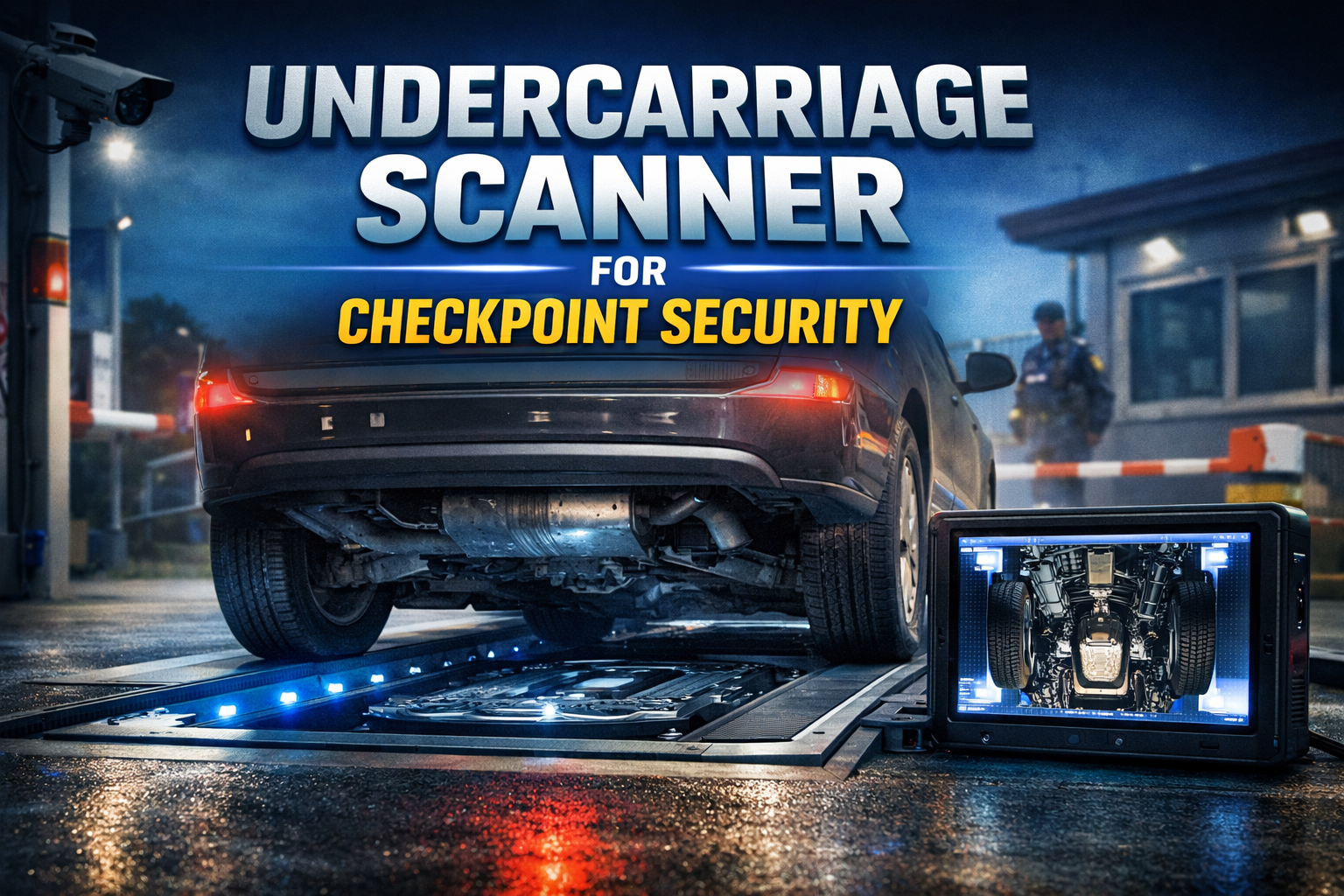
In today’s complex security landscape, threats can come from places you least expect — including beneath your vehicle. Traditional manual inspections using mirrors, flashlights, or guards crawling under vehicles are slow, inconsistent, and error-prone. That’s where undercarriage scanners come in — automated, intelligent technologies designed to detect threats hidden under vehicles and protect critical entrances.
Checkpoint security — whether at airports, border crossings, military bases, government facilities, or corporate campuses — demands precision, reliability, and speed. An undercarriage scanner for checkpoint security offers these in spades, transforming vehicle screening from guesswork to guaranteed threat detection.
What Is an Undercarriage Scanner?
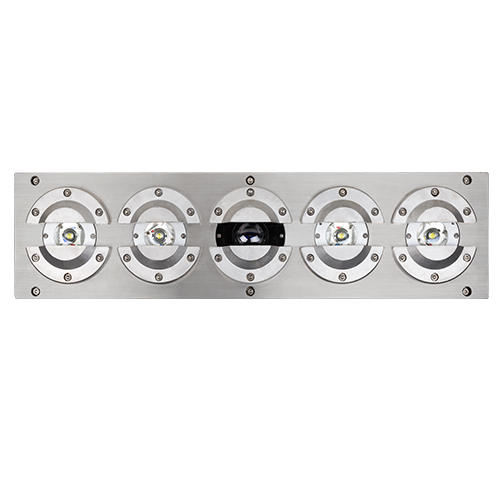
An undercarriage scanner — also known as an Under Vehicle Surveillance System (UVSS) — is a high-tech security solution that automatically captures and analyzes images of the underside of vehicles as they pass through checkpoints. Unlike manual checks, these systems use advanced cameras, smart lighting, and often artificial intelligence (AI) to produce high-resolution color images that can be reviewed instantly for suspicious items, hidden compartments, or modifications.
UVSS is widely adopted because the undercarriage — one of the least visible parts of a vehicle — can conceal explosives, weapons, contraband, and unauthorized devices. By inspecting this area automatically and accurately, undercarriage scanners close a major security vulnerability
How Does an Undercarriage Scanner for Checkpoint Security Work?
Understanding how undercarriage scanners operate helps security leaders appreciate their value:
1. Vehicle Entry & Image Capture
As a vehicle drives over the scanner — embedded flush with the roadway or mounted on the surface — synchronized lighting and high-resolution cameras capture a complete image of the entire undercarriage.
2. Image Processing & AI Analysis
Modern systems apply AI-powered analytics to automatically scan images and identify anomalies, hidden objects, or unexpected changes. The software compares current scans to stored baseline images to spot even subtle differences.
3. Alerts & Reporting
If a potential threat is detected, the system instantly alerts security personnel through a connected control system or security dashboard. This allows personnel to take immediate action.
4. Integration with Checkpoint Security
Advanced scanners can work alongside license plate recognition (ALPR), access control gates, CCTV systems, and command center software — creating a streamlined, unified security workflow.
Key Features of Modern Undercarriage Scanners
High-Resolution Imaging
High-quality cameras capture every detail of the undercarriage, delivering clear images that help detect threats that would be invisible to manual inspection.
AI-Powered Threat Detection
Machine-learning algorithms enhance detection accuracy by identifying anomalies, hidden objects, and unauthorized modifications in real time.
Rapid, Non-Invasive Scanning
Vehicles don’t need to stop completely, ensuring traffic flow continues without major delays — a key advantage for high-volume barriers and checkpoints.
Full Undercarriage Coverage
Sophisticated lighting and multi-angle imaging eliminate blind spots, providing a comprehensive view of the vehicle’s underside.
Data Logging & Comparison
Captured images and scans can be archived and compared against past inspections, helping security teams detect subtle modifications or recurring threats over time.
Seamless Integration
Systems integrate with existing security infrastructure (ALPR, CCTV, VMS, access control) for real-time alerts and historical analysis.
Top Benefits for Checkpoint Security
1. Enhanced Detection of Concealed Threats
Undercarriage scanners reliably uncover hidden explosives, weapons, & contraband — significantly better than manual checks.
2. Faster Processing & Reduced Congestion
Automated scanning dramatically speeds up checkpoint throughput, reducing vehicle queues and bottlenecks.
3. Reduced Human Error
Automated AI solutions minimize inconsistencies and fatigue issues seen in manual inspections.
4. Non-Intrusive & Respectful
Unlike manual methods that require physical probing, scanners inspect without touching the vehicle — preserving privacy and reducing complaints or delays.
5. Compliance & Audit Trails
Many systems provide secure data logging, encrypted storage, and access control, supporting audit and compliance needs.
Applications Across Industries
Undercarriage scanners aren’t “one-size-fits-all.” They support security in many environments:
Airports & Seaports
Secure terminals and cargo areas by inspecting vehicles before entry.
Borders & Customs
Checkpoint security needs fast, accurate scans to avoid delays and stop smuggling.
Government & Military
Protect sensitive installations with robust undercarriage screening.
Critical Infrastructure
Secures power plants, data centers, and industrial sites from vehicle-borne threats.
Events & Temporary Checkpoints
Portable or mobile undercarriage scanners allow security teams to set up rapid inspection checkpoints at events or VIP visits.
Types of Undercarriage Scanners
Understanding different scanner types can help security teams choose the right solution:
1. Fixed UVSS
Permanent installations embedded in the road — ideal for gateways with consistent traffic.
2. Portable/Mobile Scanners
Wheeled or transportable units that can be deployed quickly for temporary security needs — great for events or mobile patrols.
3. Integrated Security UVSS
Systems that combine undercarriage imaging with ALPR, ANPR, and biometric integrations for maximum checkpoint control.
Frequently Asked Questions (FAQs)
Q1: Can undercarriage scanners detect all types of threats?
A: While exceptionally effective at detecting objects on and under vehicle surfaces (e.g., hidden devices, contraband, modifications), scanners are part of a layered security approach and work best alongside other measures.
Q2: Do scanners work at night or in harsh weather?
A: Modern scanners use controlled lighting and rugged housings to ensure operation 24/7 and in all weather conditions.
Q3: How fast can vehicles be scanned?
A: Advanced systems can process vehicles in seconds, reducing checkpoint congestion.
Conclusion: The Future of Checkpoint Security Starts Beneath the Wheels
Security checkpoints are only as strong as their weakest inspection point. For decades, the undercarriage area remained one of the least checked — until undercarriage scanners changed the game. Today’s AI-powered UVSS solutions offer unmatched visibility, speedy inspections, accurate detection, and seamless integration into modern security infrastructures.
Investing in an undercarriage scanner doesn’t just improve security — it protects lives, streamlines operations, and future-proofs your checkpoint against evolving threats.
Leave a Reply